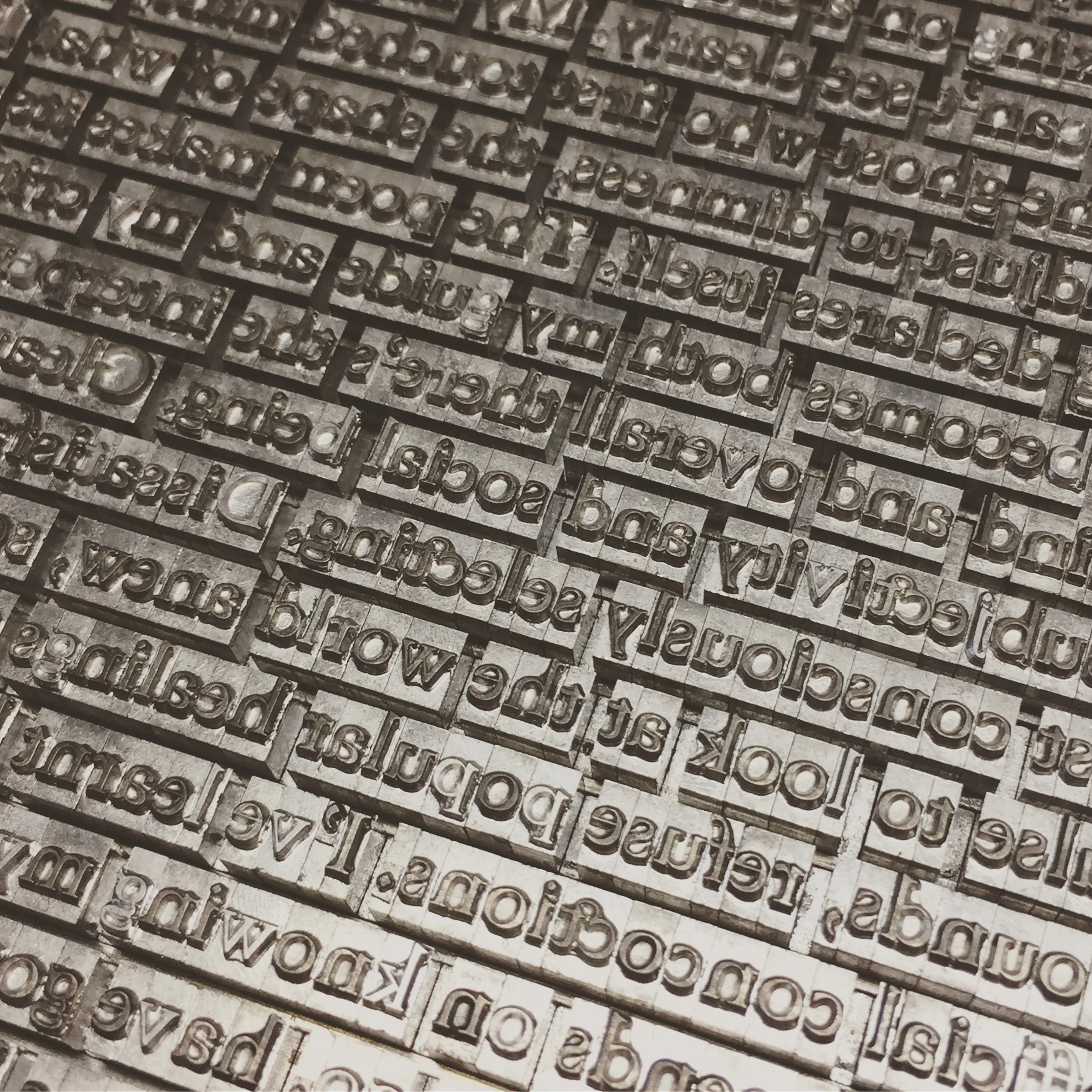
Book Looks: Selections from the Press Library, Part 1

6 Comments

Book Looks: Selections from the Press Library, Part 1

Books. It all begins and ends with books here at St Brigid Press. 

Personally and professionally, my life has been significantly shaped by the encounters I’ve had with literature ~ I bet many of you have similar stories. Early in my continuing apprenticeship to traditional printing and book-making, kind friends and mentors in the craft directed me to essential volumes about letterpress, typography, printing history, and more. Those folks and the books they recommended got me started on the right foot, and I return again and again to their wisdom. 

Over the years, through the generosity of others and through my own acquisitions, the library at St Brigid Press has grown into a rich repository of texts. I thought it might be fun for us all to take a brief look at some of these volumes ~ from type design to press maintenance, printer’s biographies to sewing books.

So, here’s the first installment of “Book Looks” ~ short spotlights on some of my favorite volumes from the Press library. Enjoy!


BOOK LOOKS, PART 1

Well, the beginning is a very good place to start, says the song, so I thought I would share a few of the very first books I read when I set out on this letterpress adventure (almost ten years ago!).

  1. Printing For Pleasure, by John Ryder

John Ryder’s Printing for Pleasure was the very first book I read on the subject. I’m grateful, as that delightful, witty, wise volume helped set the tone for the rest of my letterpress life. First published in 1955 and updated with new material in 1976, Ryder’s volume manages, in less than 150 pages, to tour us deftly through the basics of type, typography, inking and printing, and some fine examples of the work of small presses. He encourages the new printer to develop an eye for detail and a spirit of experimentation. Throughout, the book is chock-full of an inspiring curation of illustrations. Published in the US by Henry Regnery Company, Chicago, 1977.


2. Letterpress, by David Jury

In the beginning, of course, I had no idea what “letterpress” printing was. The second book I stumbled upon, a sort of alter-ego to John Ryder, was Letterpress: The allure of the handmade by book and print designer David Jury. As elegantly efficient as is Ryder, this tome is eclectically lavish. Jury piles illustration upon illustration to give an eye-popping tour of printing that may begin historically but is anything but “traditional.” It helped give me a sense of the broad applications of letterpress, introduced me to new ways of imagining the page, and allowed me to begin forming my own sense of what I was and was not interested in. Published by RotoVision, 2011.


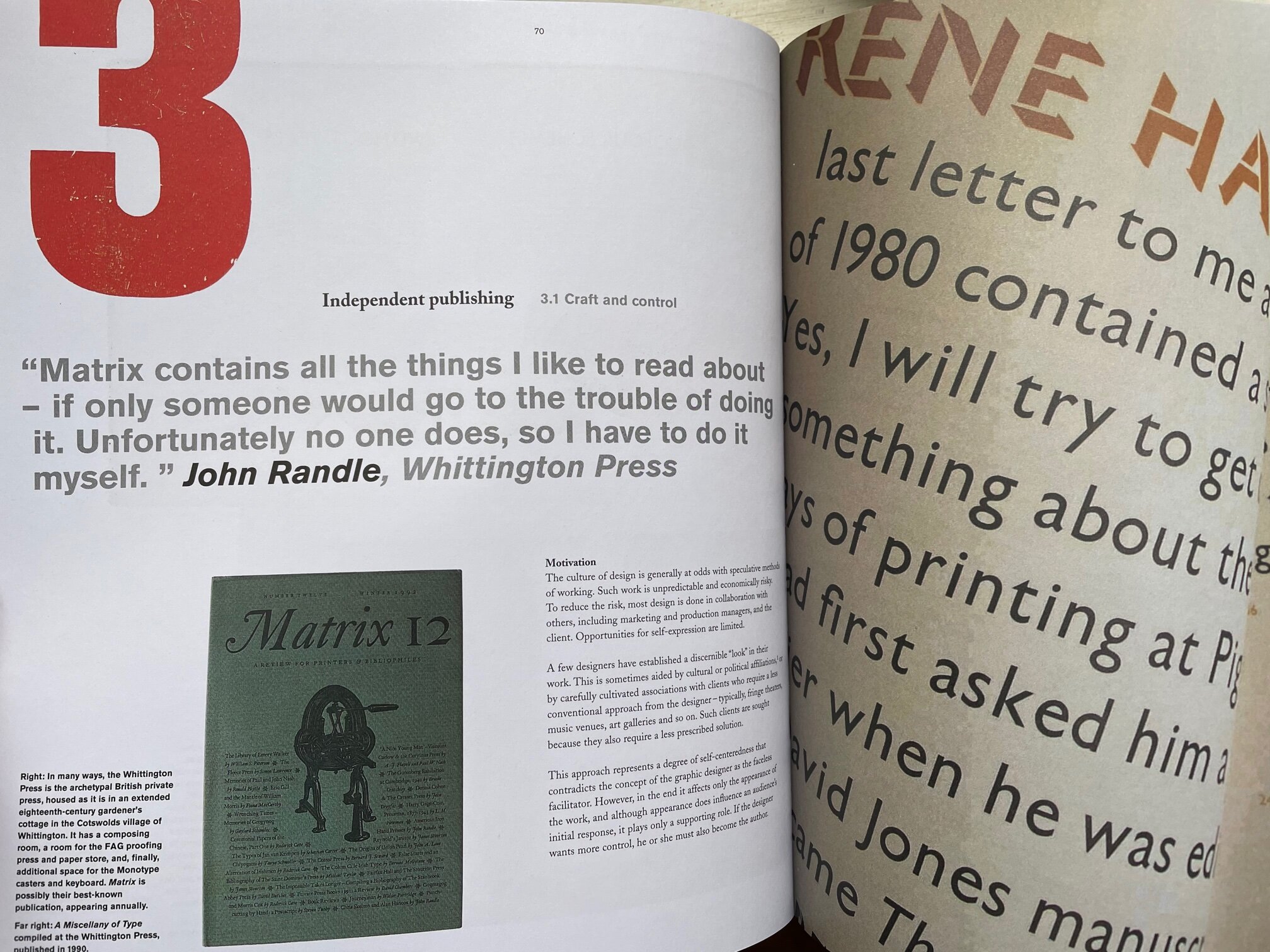
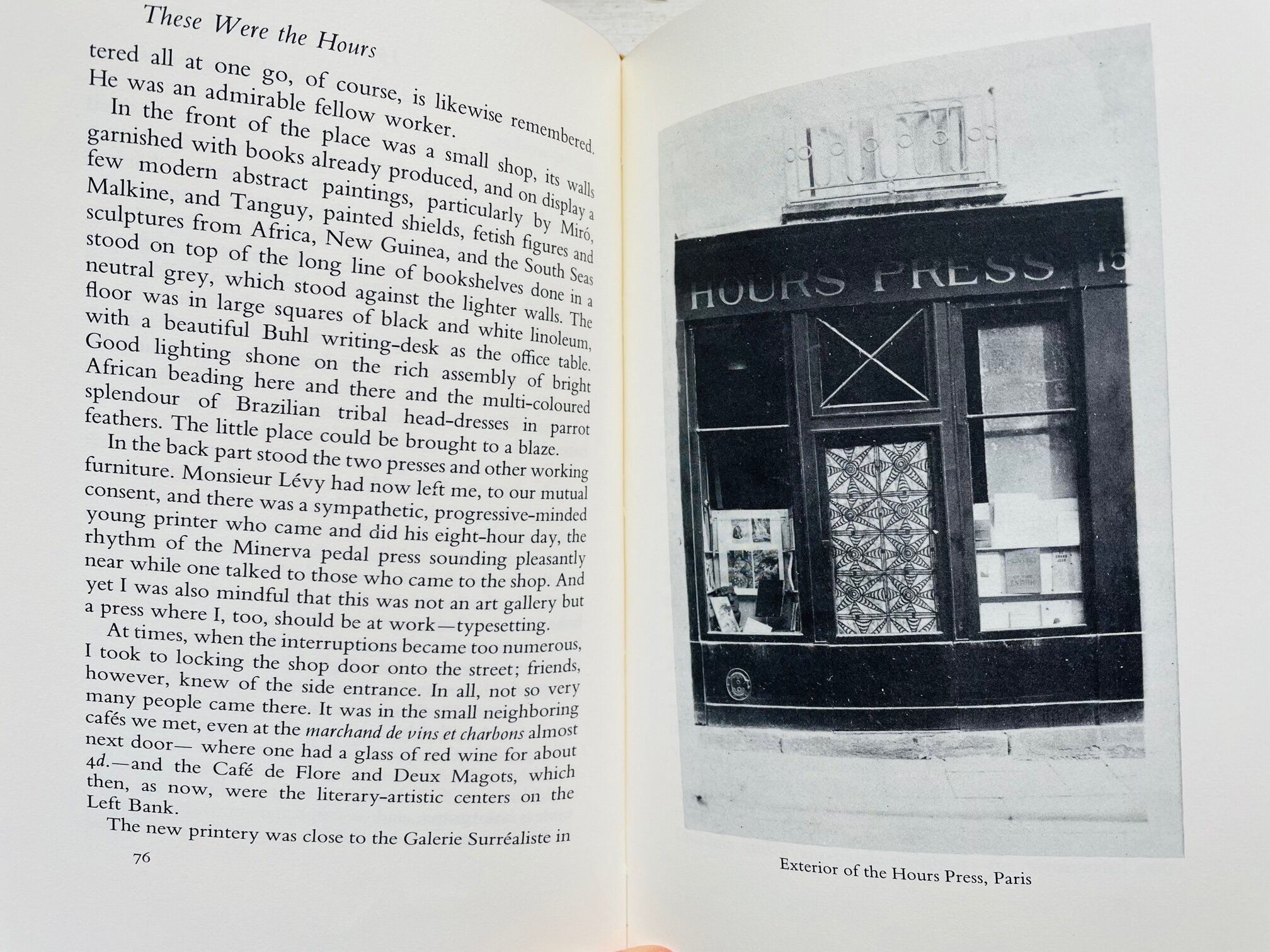
3. These Were The Hours, by Nancy Cunard

IMG_8525.jpg

Robert Graves. Ezra Pound. Henry Crowder. Samuel Beckett. Some of the early 20th centuries most well-known artistic names were published by a woman with a historic name of her own, Nancy Cunard. Granddaughter of the founder of the Cunard ship company, she was a British heiress who became a poet, printer, and activist against racism and fascism. In France, she established The Hours Press, where she published dozens of literary texts, songs, art catalogues, and more in a flurry of intense work between 1928 and 1931. This book is her fascinating first-person account of her experiences of printing, editing, and the luminous personalities she encountered. Published by Southern Illinois University Press, 1969.

The smell of printer’s ink pleased me greatly, as did the beautiful freshness of the glistening pigment.
— Nancy Cunard

Stay tuned for future installments of “Book Looks,” friends. In the meantime, be well and read on!

Emily

6 Comments

Shelf Life: an interview with Emily Hancock

1 Comment

Shelf Life: an interview with Emily Hancock
Hello, Friends,

What a fine time we had talking about printing and poetry with Kristin Adolfson! Thanks to all of you who tuned in to the live event this week. And a big bow of gratitude to our hosts ~ the Virginia Festival of the Book and the Virginia Center for the Book.

Did you miss it?? It's now freely available to watch!
https://www.facebook.com/vabookfest/videos/297255041699409/ 

Kristin and I chat about how I got started with traditional printing, the making of the latest book, and take a walking tour of the print shop.

Enjoy!

1 Comment

Repairing What Breaks

Comment

Repairing What Breaks

Hello, Friends of the Press,

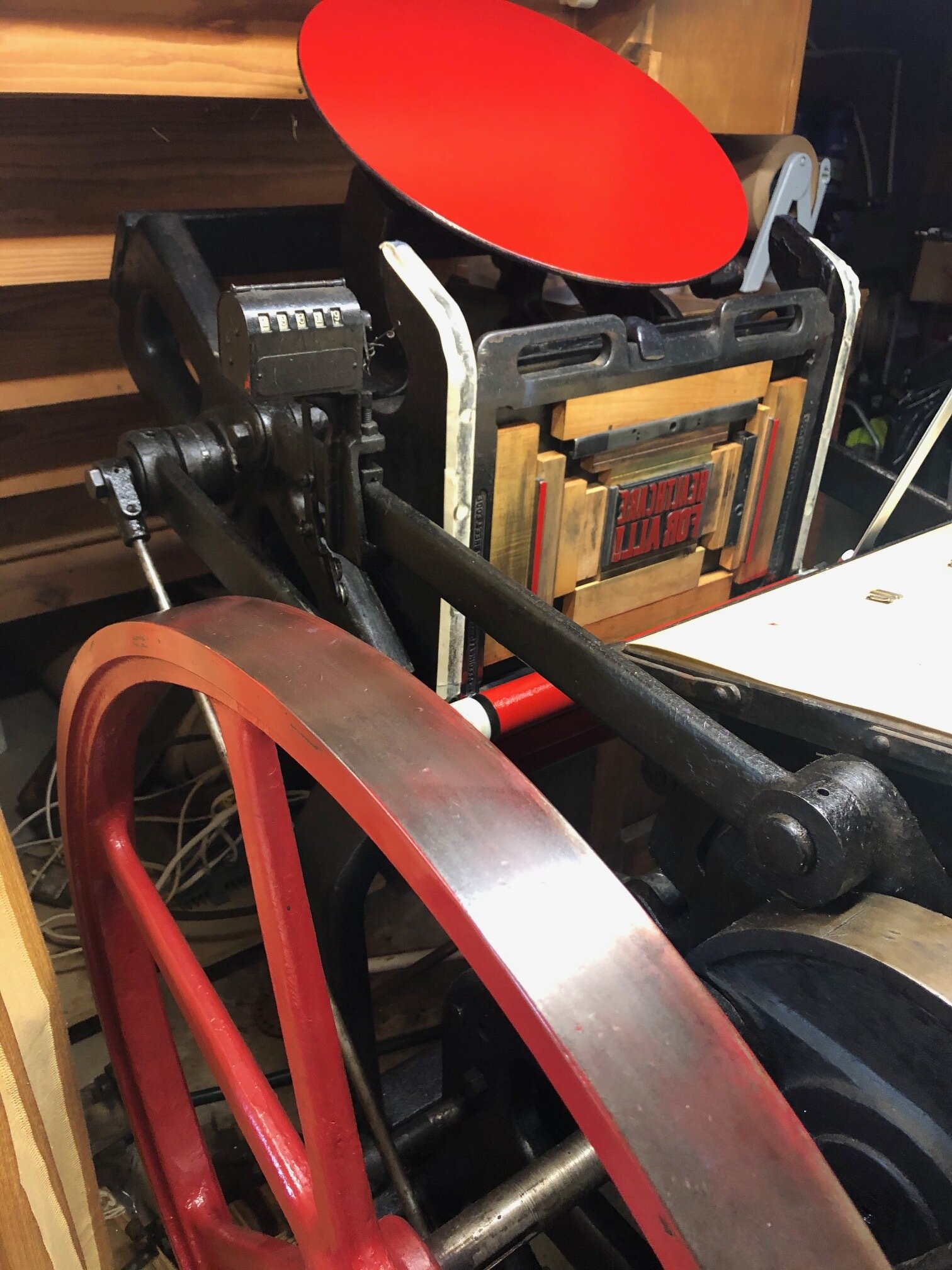
Sometimes, things break. Whether through long-use, misuse, abuse or neglect, or just plain time and tiredness. Last week a small-but-critical part on the 111-year-old cast-iron Golding Pearl press finally gave out: the chase clamp, which holds the chase (a metal frame which holds the type) in place against the press bed.

Circled in this photo is the chase clamp. With the aid of a spring, it pivots on a small metal pin, clamping the chase to the press bed.

Here you can see the chase clamp break ~ snapped in two right at the pin. Unfortunate, but not uncommon for these old pieces of cast-iron.

Sometimes, things can be fixed. I took the part over to a local welder to see if his expertise and tools could repair it. With a mixture of carefulness and long-experience, Stuart was able to bring the clamp back into working order, TIG welding the break with very hard nickel and then polishing it smooth. Thank you, Stuart!

You can see the bead of nickel where the part was welded back together. It now pivots easily around the pin. (You can also see a decades-earlier weld at the left-hand tip of the clamp.)

The next day, I reinstalled the clamp and inked the press up for a test drive. The part did its job perfectly, and I went on to print about 500 pages that afternoon!

Linji the shop dog was, as usual, unimpressed ;-)

It feels like there are some big things that are broken in our nation and world right now, and so many people are hurting. There are no easy fixes. The pandemic, centuries of racism and injustice, economic upheaval, and environmental degradation, are turning lives and livelihoods upside down. The suffering is real and deep. Our hearts and minds and hands must work with great carefulness and great courage to fully see, and compassionately meet, the needs of this moment, the needs of our brothers, sisters, and planet.

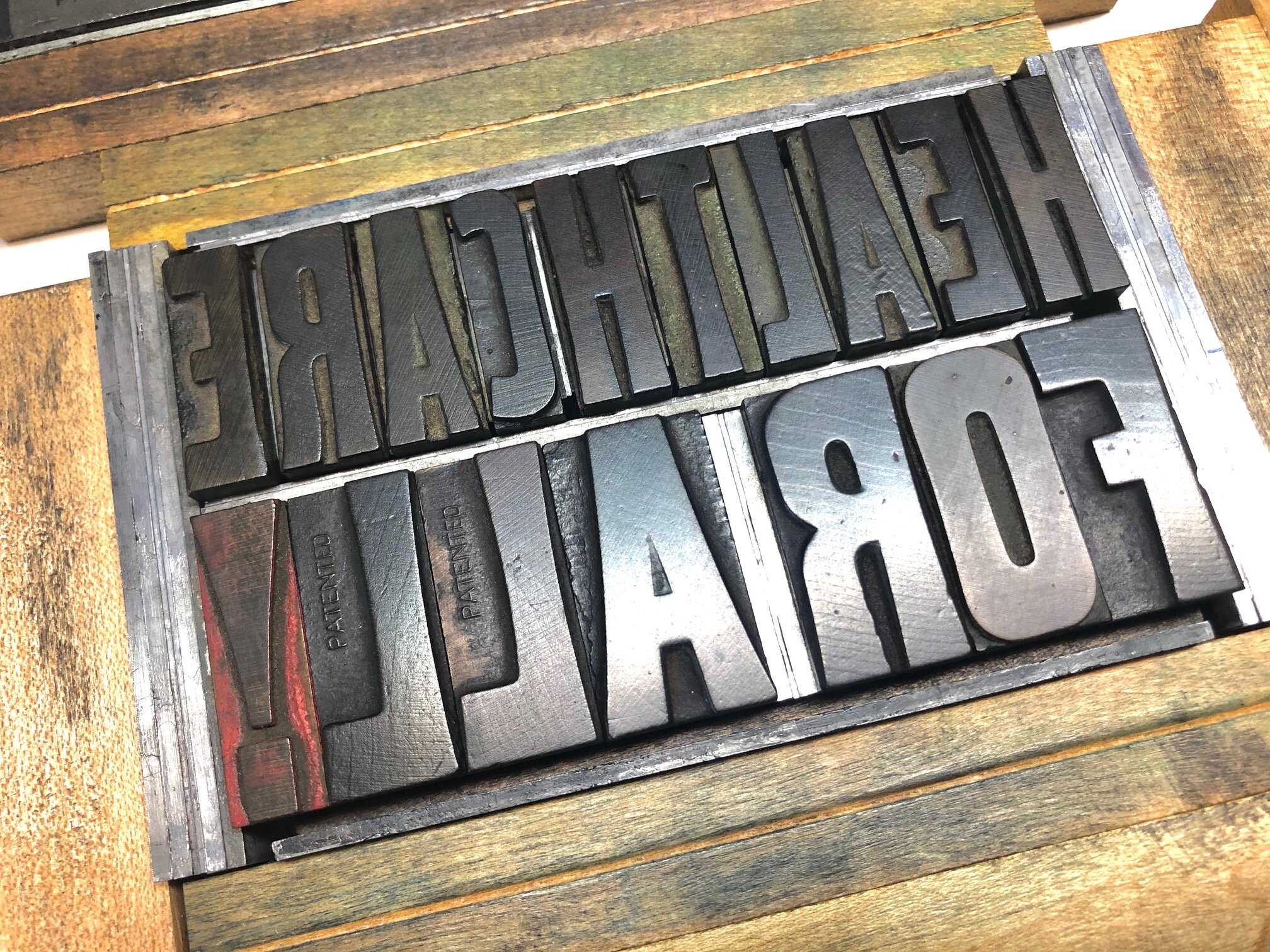
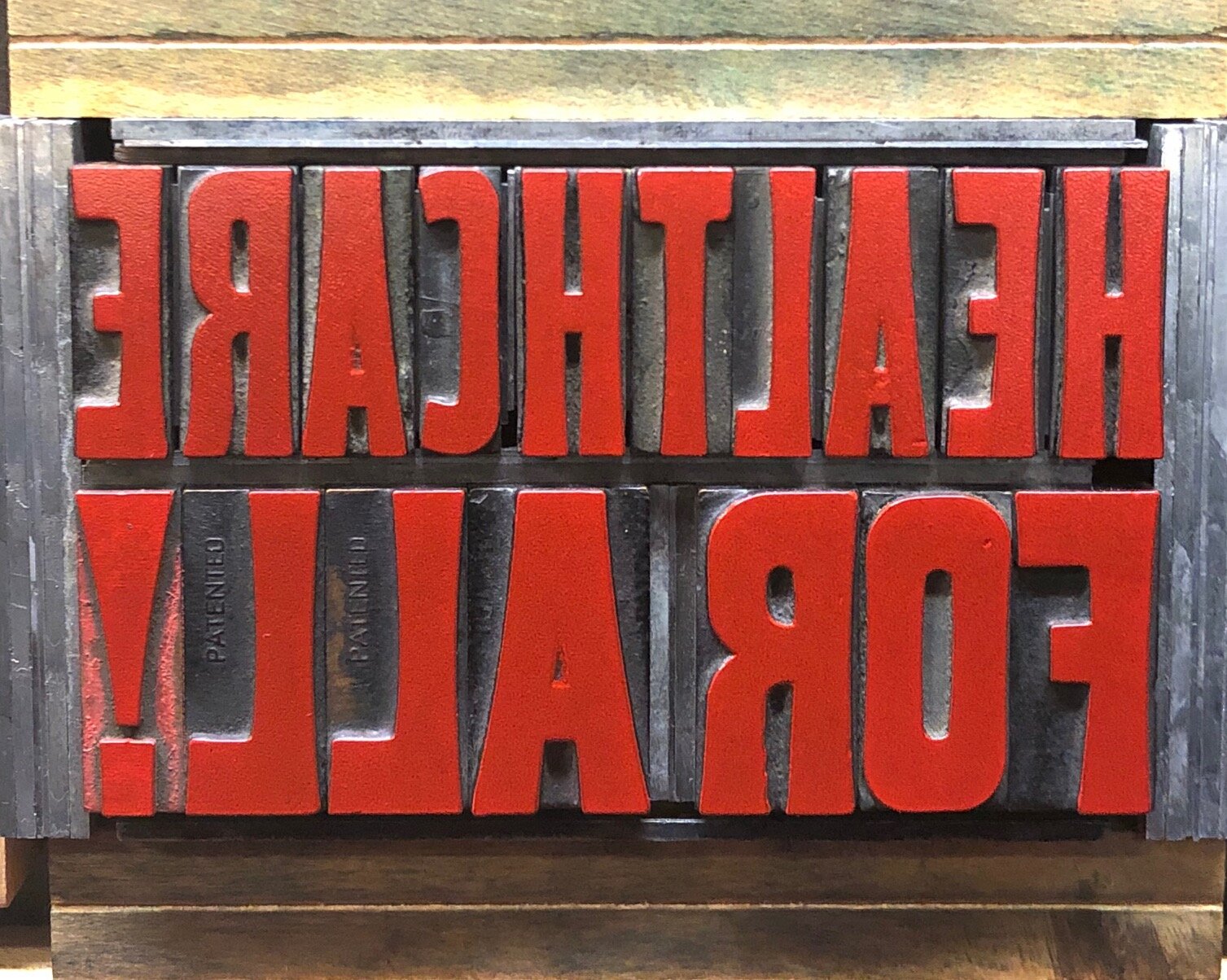
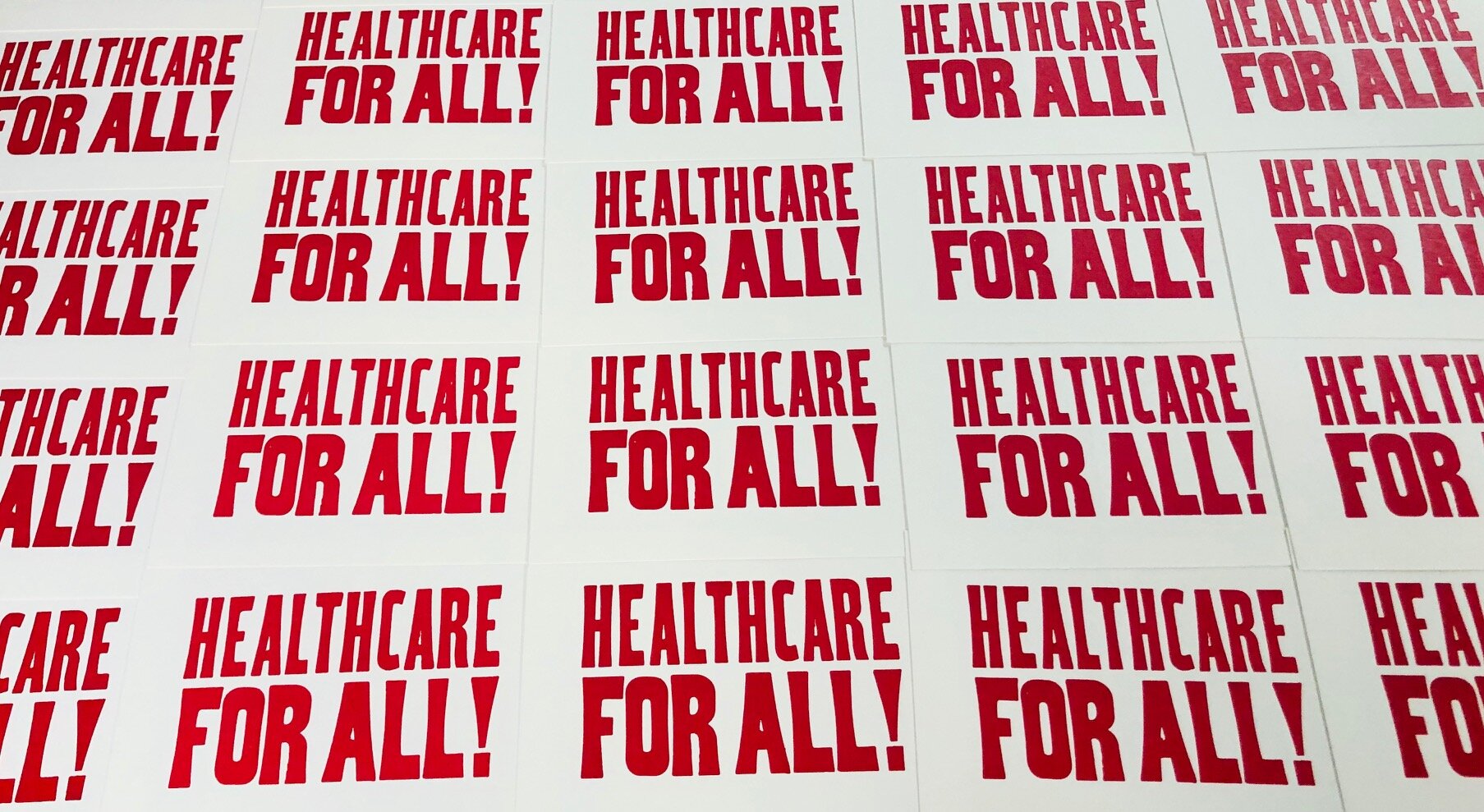
To help spread words of care and concern, solidarity and urgency, we are continuing to expand our line of The People's Postcards. This week, we debut declarations of Healthcare For All!

Like the Black Lives Matter postcards, these are pre-stamped ~ it's easy to pen a short note to your elected representatives and pop the card right in the mail.

The details:

  • Letterpress printed with antique wood type.

  • USPS postcard size 6" x 4.25"

  • Pre-stamped / postage-paid.

  • Packs of 10 ($10) and 25 ($25).

  • Proceeds donated to The Poor People's Campaign.

However you choose to join in, thank you all for your efforts towards a more just, loving, and equitable world. We're all in this together.

With gratitude,
Emily
Emily Hancock
St Brigid Press
Afton, Virginia

Comment

Pressing on together for change

Comment

Pressing on together for change

Hello, Friends of the Press,

The long, costly fight for justice and equality for all Americans is not over. The recent welling of protests against racism and police brutality, and in support of Black and Brown lives and livelihoods, has been unprecedented in the US and around this globe we all call home. Now is the time to press on further, to lift our voices higher, and lean in to the momentum for change across this land.
As Rev. Dr. William Barber and The Poor People's Campaign say, "We Rise Together!"

In support and in aid of the movement for justice and equality for all and the dismantling of racist policies at every level, I'm pumping out a new series of The People's Postcards. Lending the power of the printing press to empower you ~ to tell your elected officials what you think, how you feel, what you want to see accomplished in the next chapter of this experiment called America.

From small-town mayors to big-city senators, chiefs of police to environmental advisory boards ~ take ten minutes to send a note of thanks or challenge, question or urgent appeal. It matters. This is, you are, democracy in action ~ alive and embodied and an agent for meaningful change in the world.

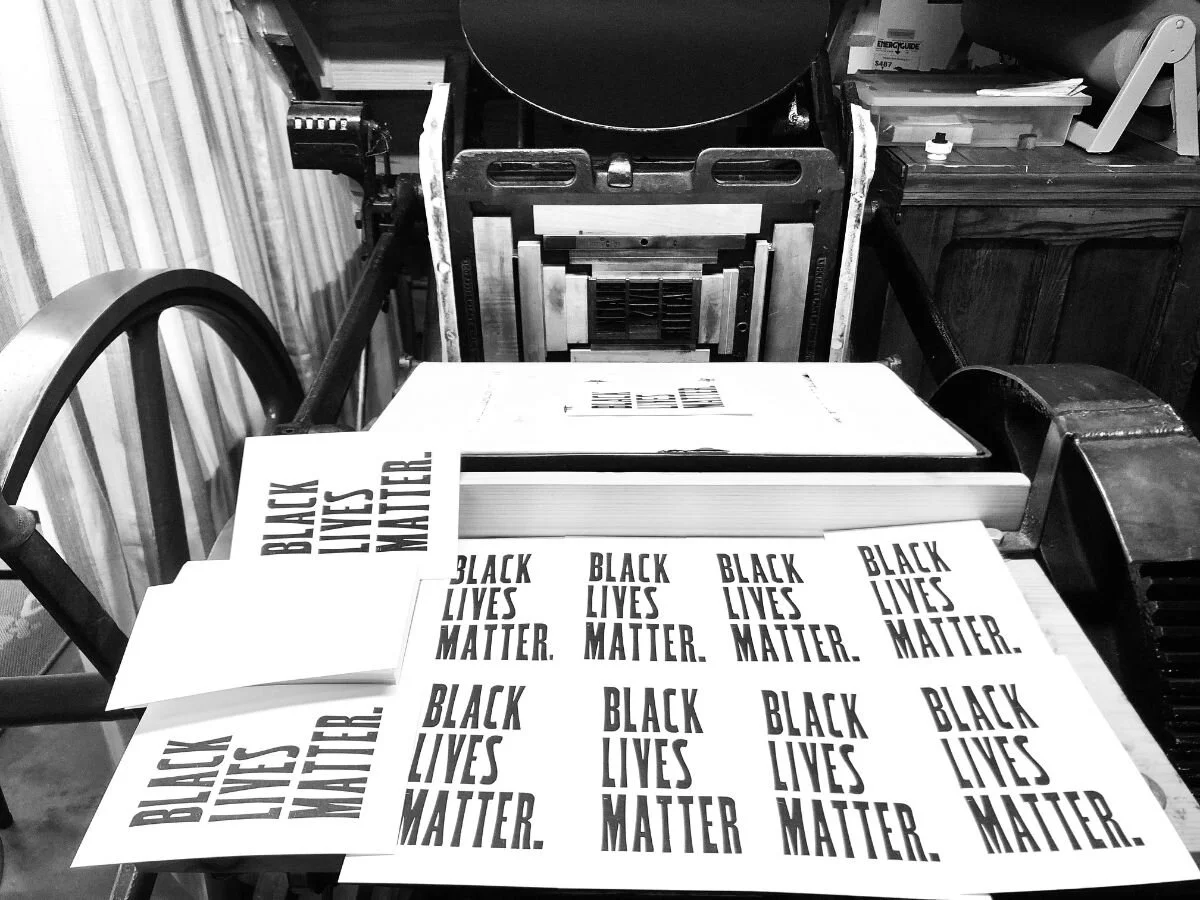
Building on previous editions of The People's Postcards featuring Hamilton, Adams, and Douglass, ready now is this edition for Black Lives Matter:

  • Letterpress printed with antique wood type.

  • USPS postcard size 6" x 4.25"

  • Pre-stamped / postage-paid.

  • Packs of 10 ($10) and 25 ($25).

  • Proceeds donated to The Poor People's Campaign.

A social movement that only moves people is merely a revolt. A movement that changes both people and institutions is a revolution.
— Martin Luther King Jr., in "Why We Can't Wait"

Let's be the change, friends.

In solidarity,
Emily

Emily Hancock
St Brigid Press
Afton, Virginia

Comment

In Conversation With Emily

Comment

In Conversation With Emily

This Spring I was delighted to be interviewed by the amazing Nicole Arnett Phillips of Typograph.her. Nicole is a designer, typographer, printer, and publisher based in New Zealand, and curates an indispensable monthly newsletter of “typographic musings.” Read our conversation about craft, creativity, and printing history: https://www.typographher.com/blog/2020/4/24/in-conversation-with-emily-hancock

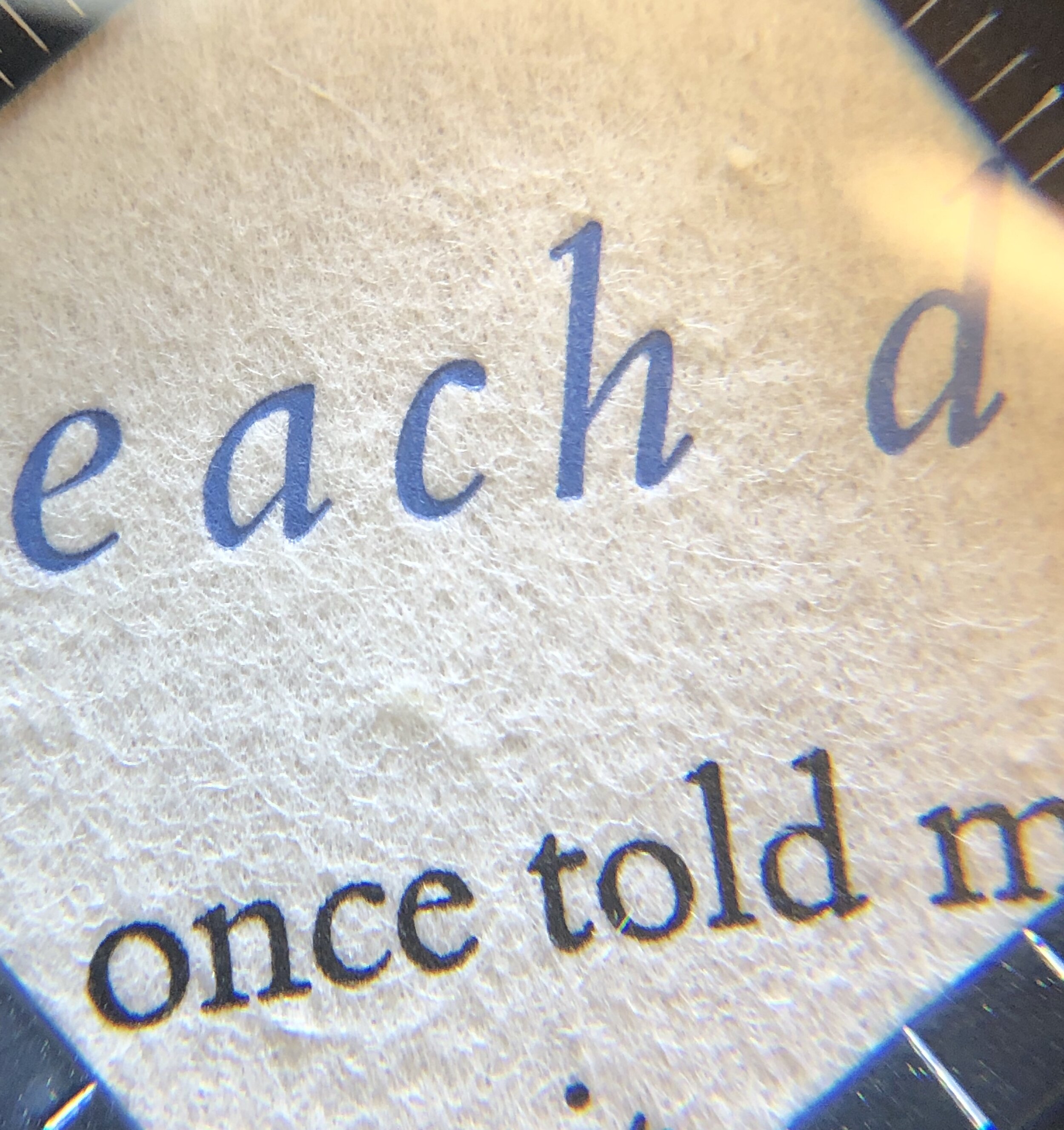
It is a uniquely intimate, valuable thing to hand-set poetry in metal type, letter-by-letter and space-by-space, to touch every textured page as my foot treadles the 125-year-old press, to sew every stitch tight, and then hand that book to someone who may be enlivened by it.
— Emily Hancock
4F75CF29-BF6D-4703-82B7-4695F1FC45B8.jpeg

Comment

The Ecology of Craft

5 Comments

The Ecology of Craft

In his book Smoke Proofs: Essays on Literary Publishing, Printing & Typography, Andrew Steeves talks about an “ecology of literature” — the writers, editors, printers, publishers, bookshops, readers, and more who connect and support each other in the complex web of print culture. There is a similar “ecology of craft,” a system of relationships that fosters—that makes possible—any made thing. 

Even before this era of social distancing, I spent most days alone in my basement print shop, making books. With the heightened awareness brought by increased long-distance correspondence, and by having just completed a new chapbook of poems, I’ve been thinking even more than usual about all of the people whose work makes my work possible. This post spotlights some of them, from the type founders to the thread-makers, who are indispensable to bookmaking at St Brigid Press.


JUST OUR TYPE

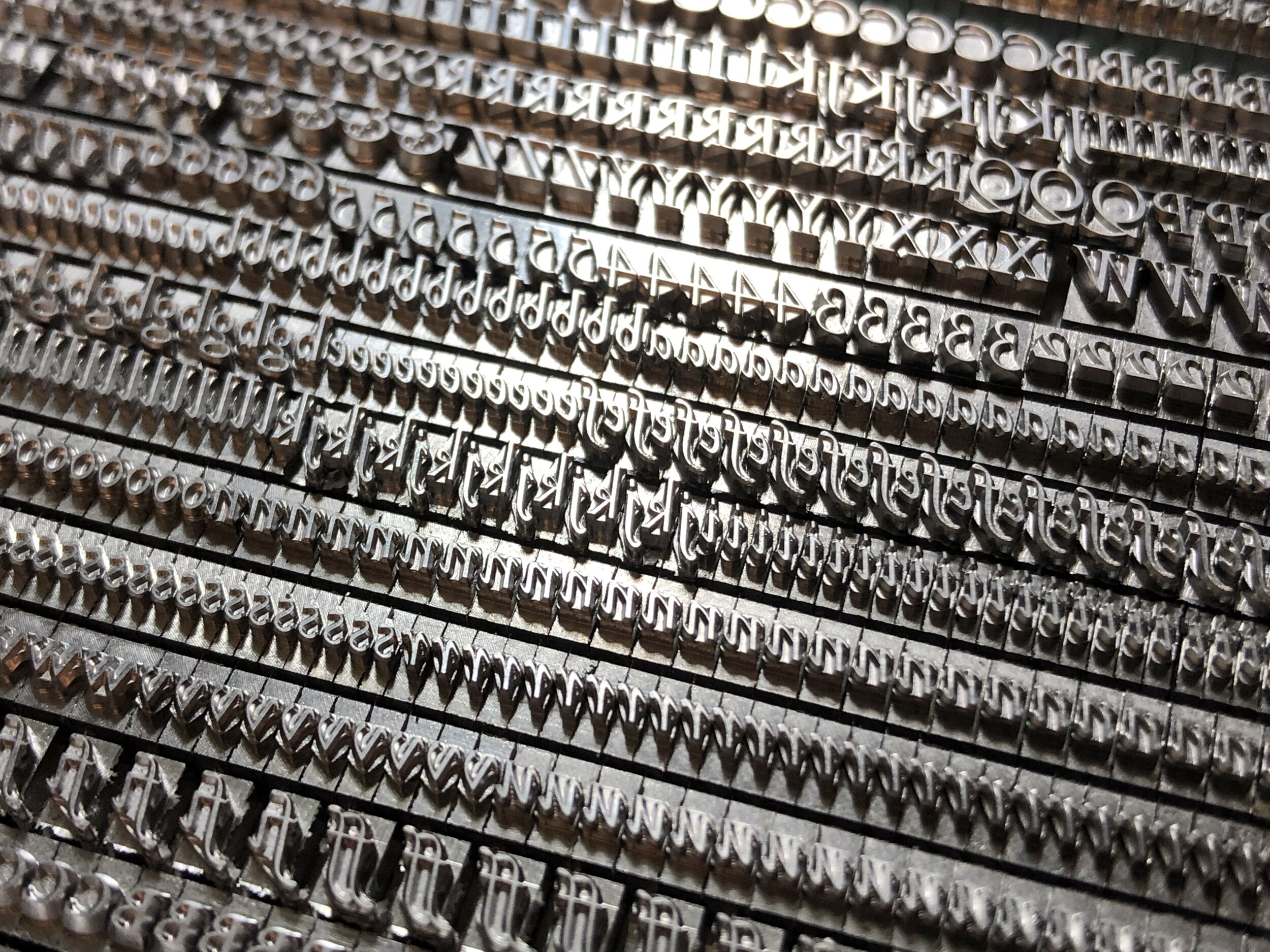
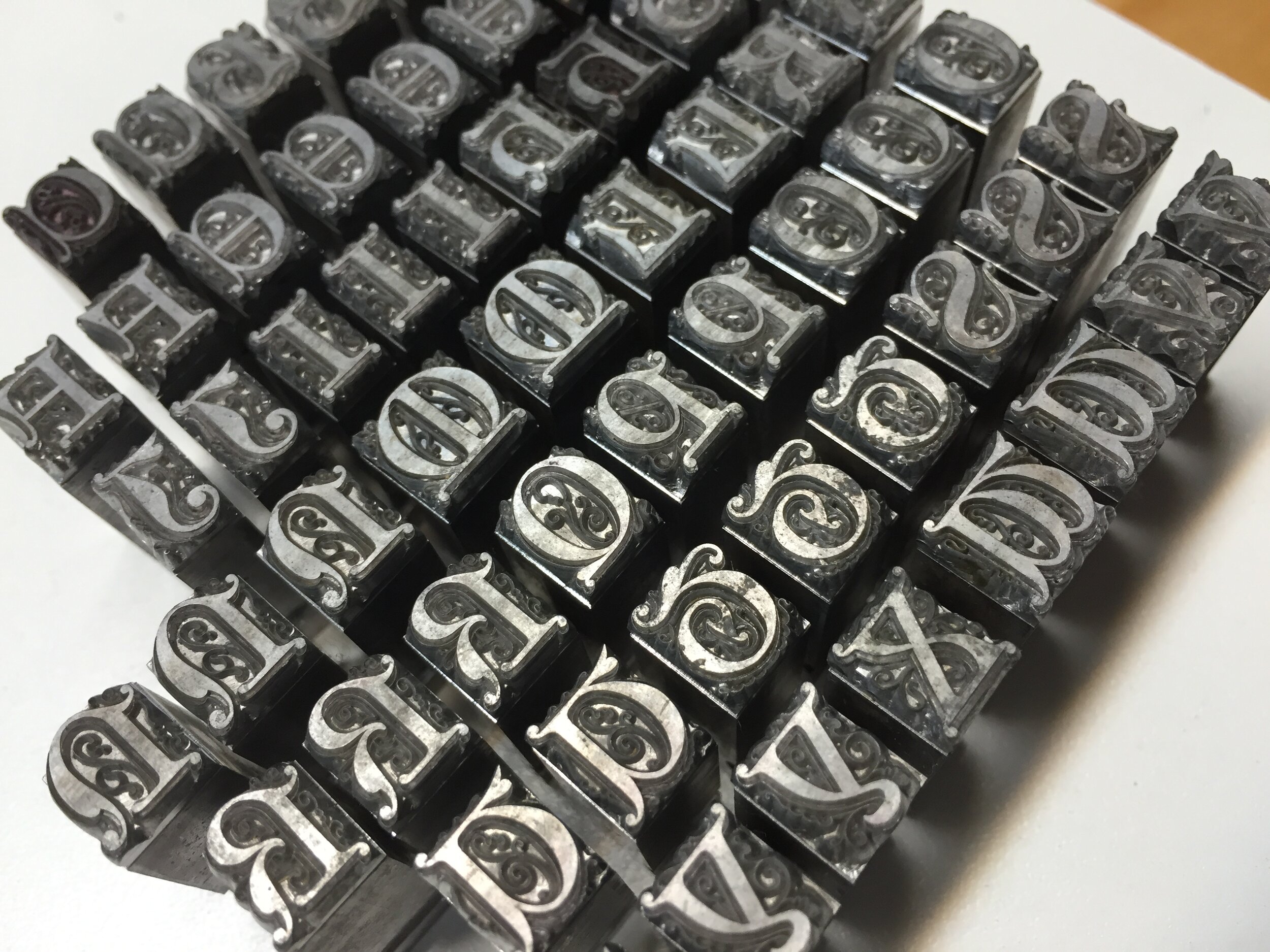
One of our most essential and cherished connections is with the people who make the metal type we use to print with. Type metal, a carefully balanced alloy of lead, tin, and antimony, needs to be precisely cast if it’s to print precise letters. Thankfully, there are a number of foundries in operation today, in the US and around the world. Much of our type comes from a few trusted sources: Michael & Winifred Bixler in Skaneateles, NY, Patrick Reagh in Sebastopol, CA, and Rainer Gerstenberg in Germany. These folks are all fine printers as well as have a deep knowledge and dedication to the historic craft of typecasting. Some of the superior types they’ve cast fill the cases here at St Brigid Press: Centaur & Arrighi, Bembo, Goudy Old Style, Koch Antiqua. In addition, we have a good deal of older type from various sources, precious hand-me-downs we’re honored to keep in use.


WHOLE WORLDS OF PAPER

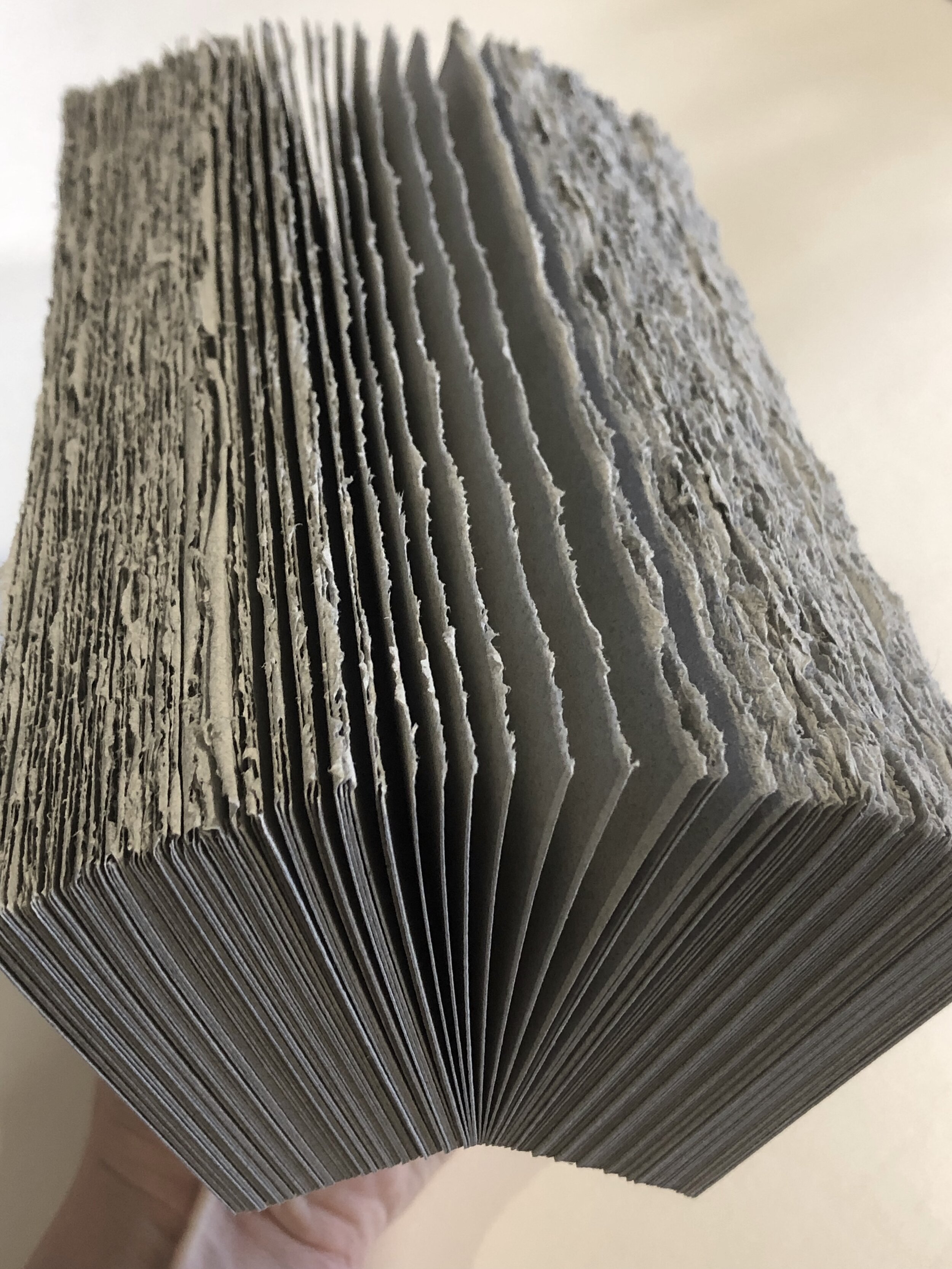
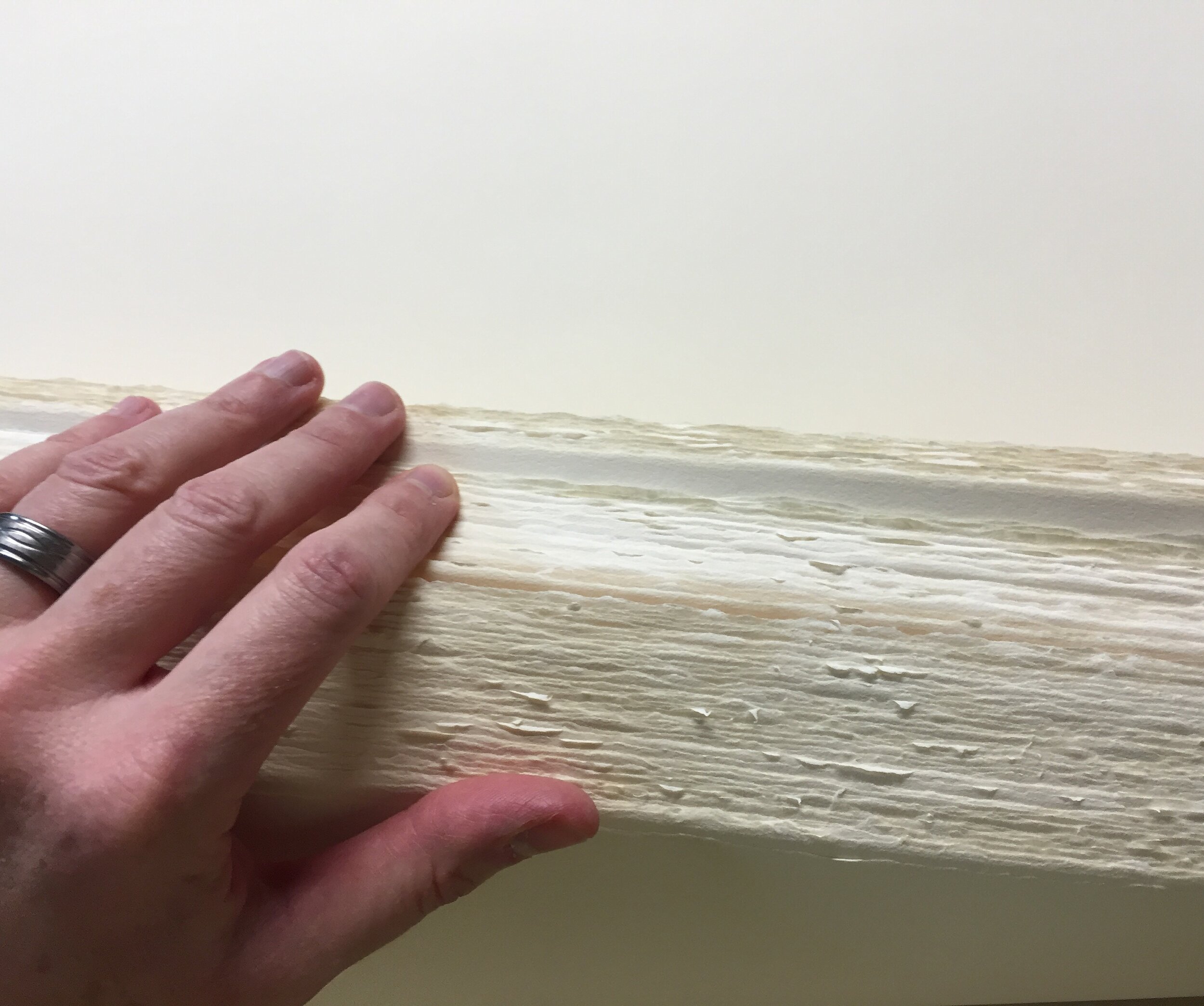
Sourcing beautiful papers with which to print beautiful words is a particular pleasure. And David Carruthers and his team at Saint Armand in Montréal have been supplying luscious sheets since 1979. We often use their thick handmade stock or machine-made stock for book jackets.

For text paper, we use Mohawk Superfine, French Rives, handmade Okawara, or others that are well-suited to the letterpress process. Our go-to paper sellers at Dolphin Papers in Franklin, Indiana, supply us with these, as well as with a kaleidoscope of Nepalese Lokta and Thai marbled sheets for decorative use. WARNING: Perusing pages and pages of fabulous paper is a serious rabbit-hole, and you may never emerge!


SEW IT UP

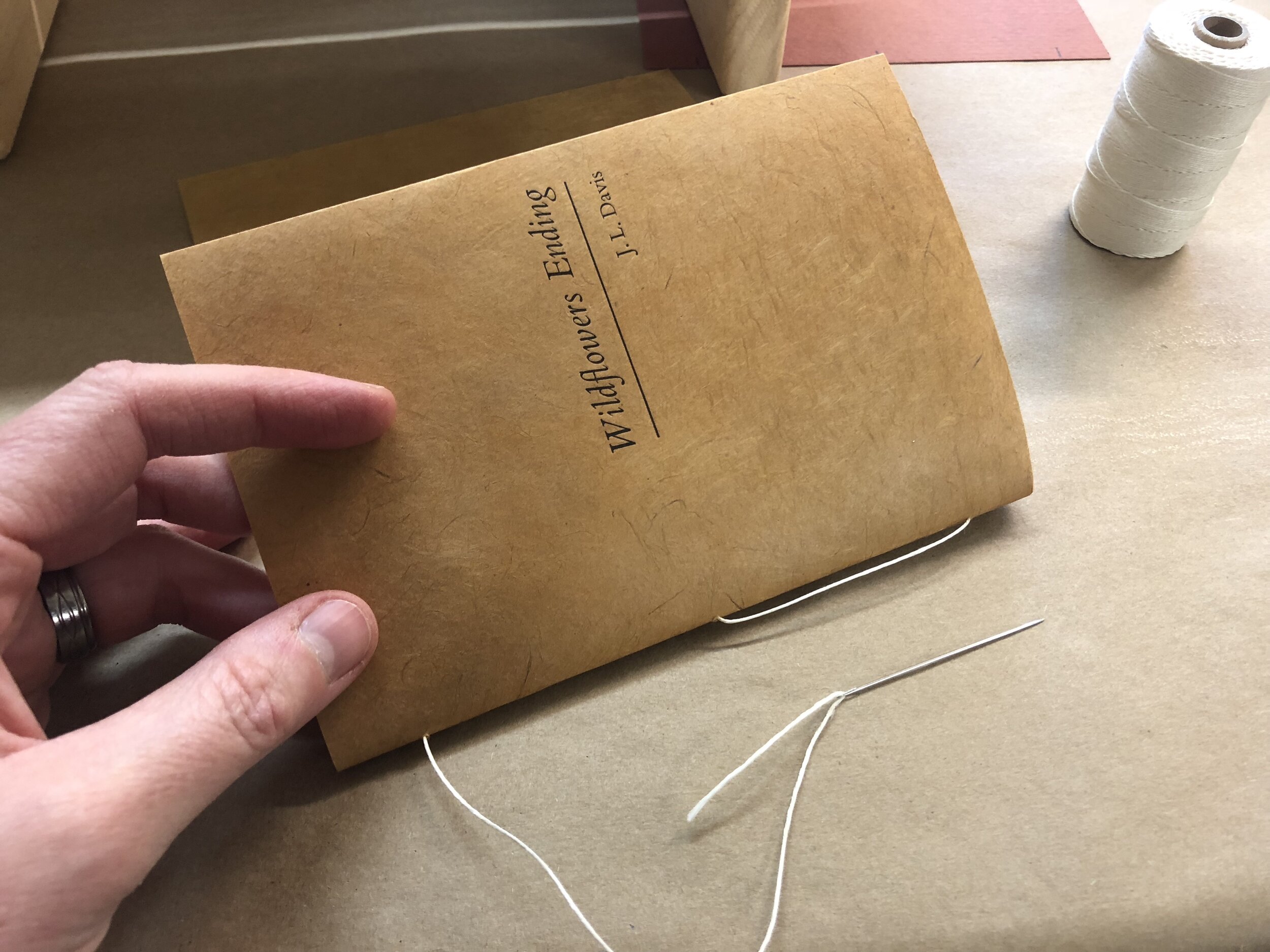
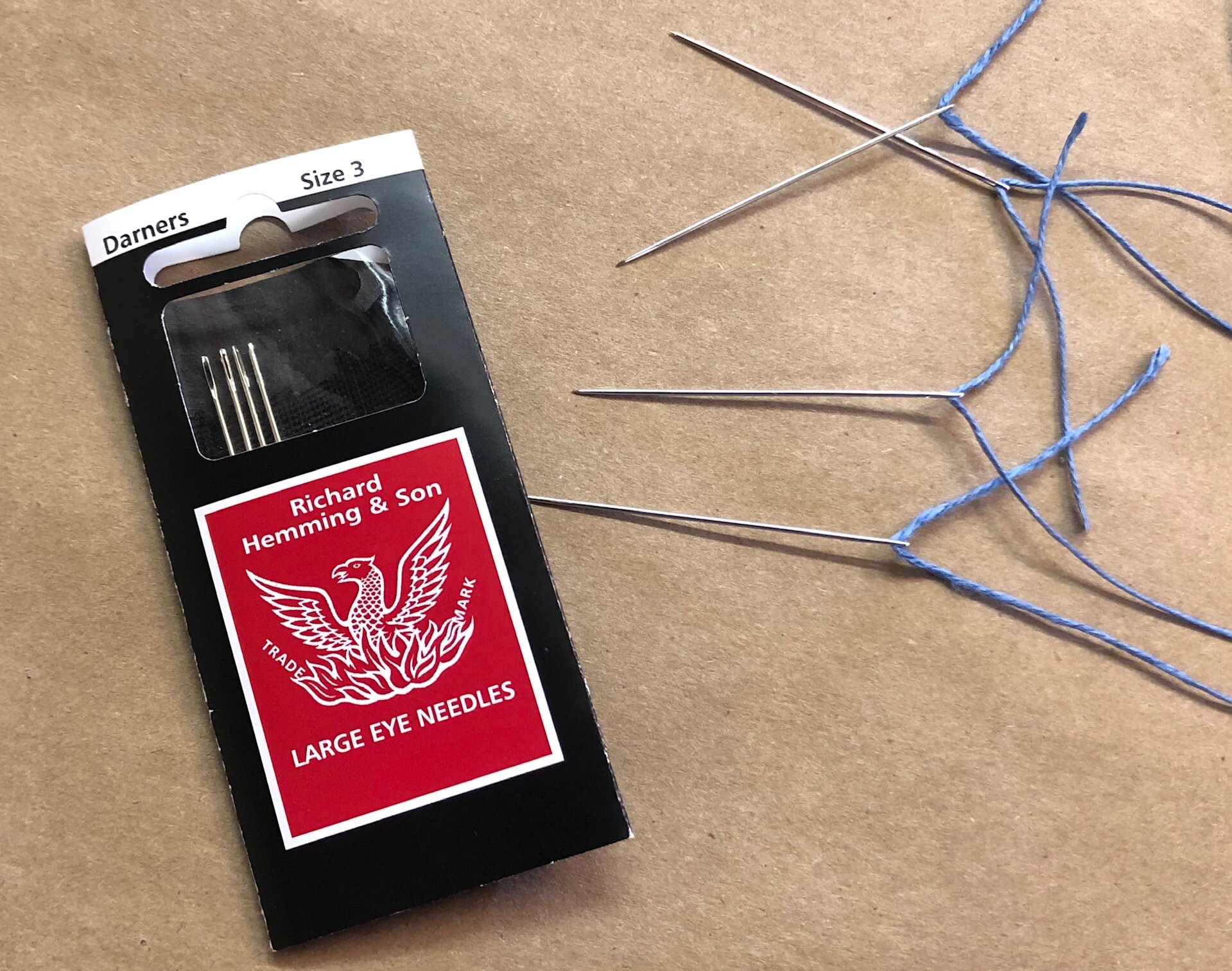
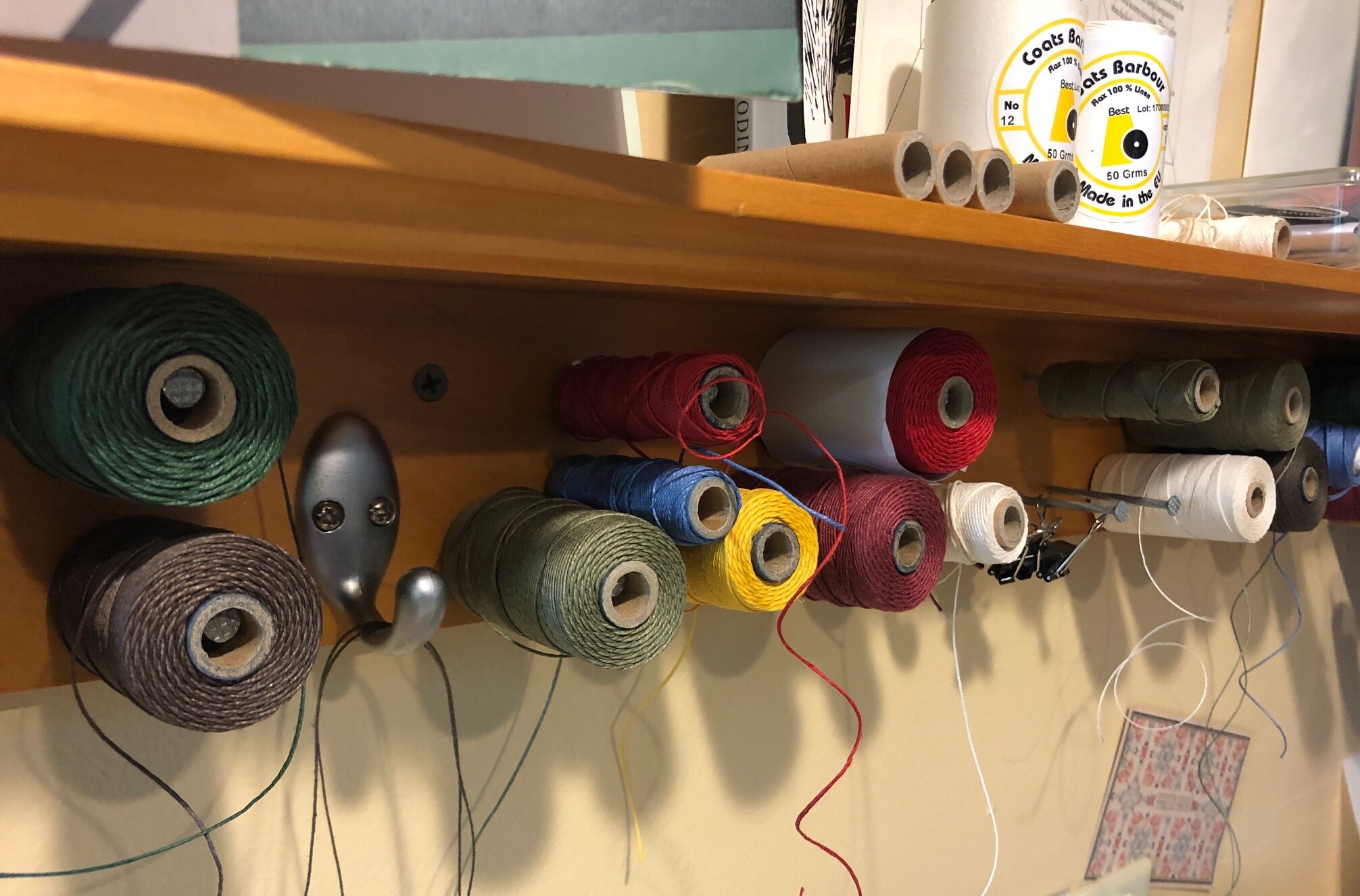
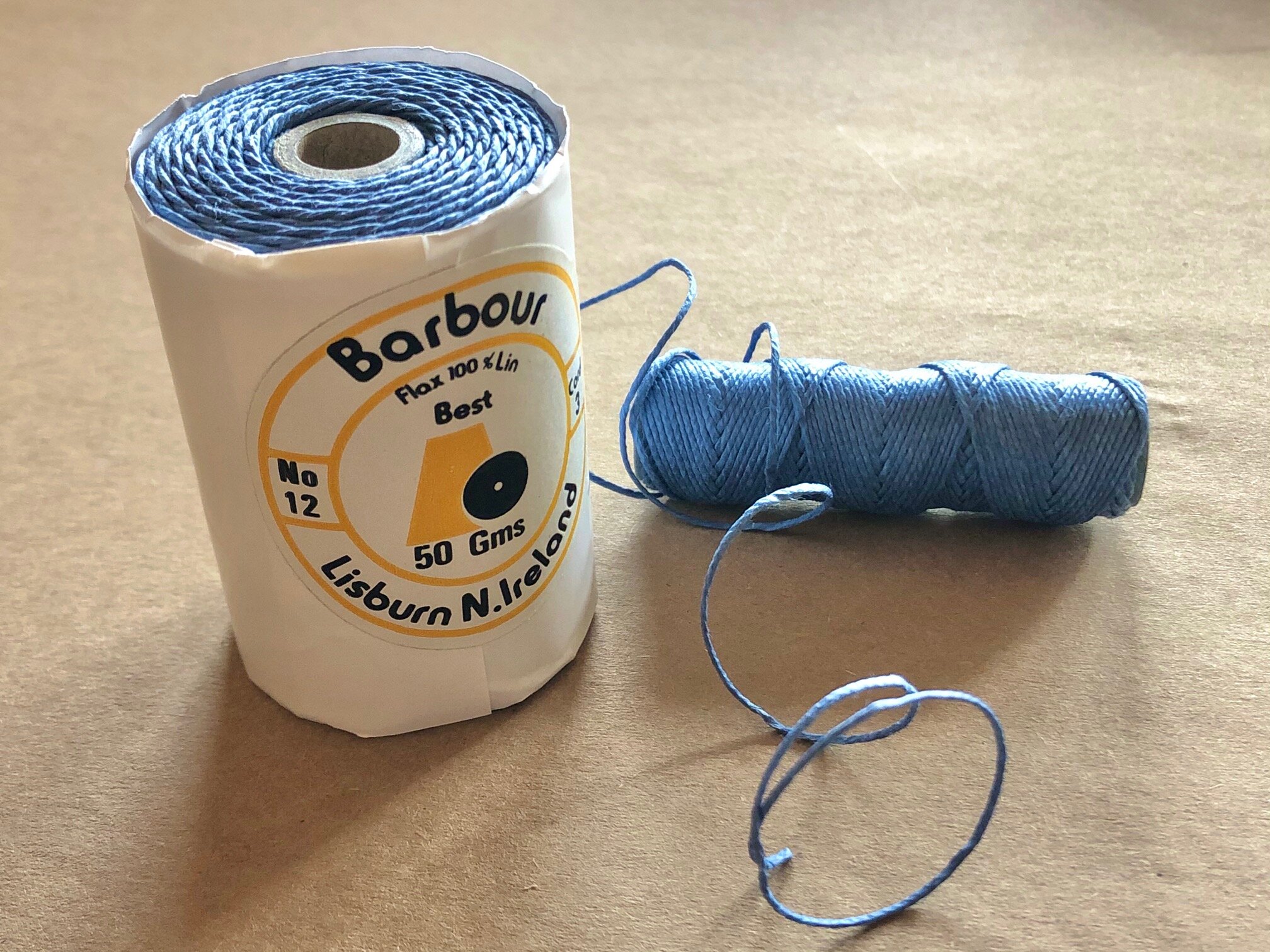
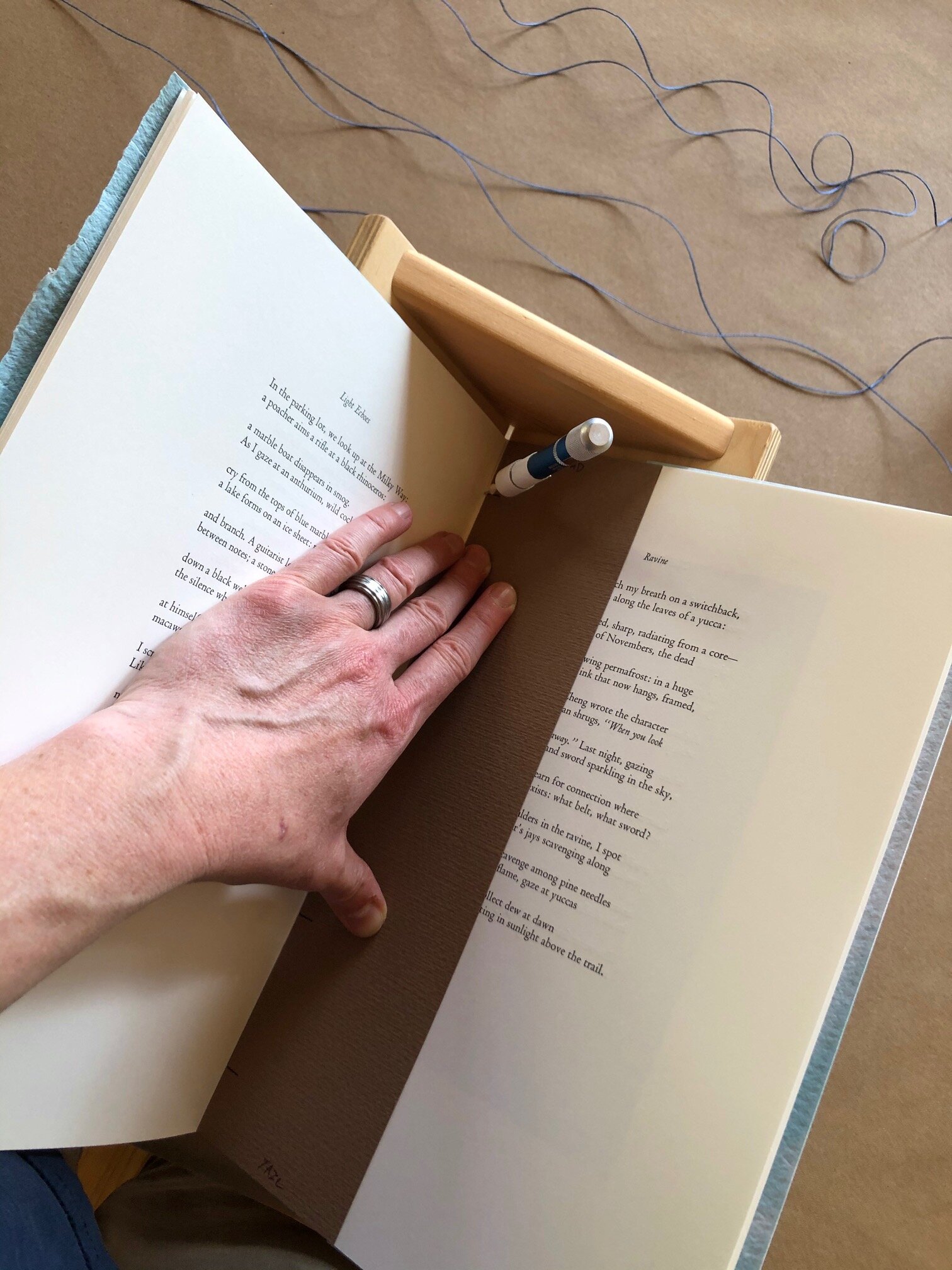
One of my early discoveries on this adventure was how much I enjoy hand-sewing. My mother, grandmother, and great-grandmother all sewed (garments and quilts), but I did not have much experience in this craft until learning the rudiments of making a book. I began experimenting with various needles, threads, and awls, working out which tools worked best for my purposes. For most books, I use Richard Hemming & Sons Darner #3 needles with unwaxed Irish linen thread in either 12 or 18 weight, both from Talas in NY. For years I’ve used a well-made cradle from Jim Poelstra in California to hold the book blocks while punching sewing holes.


GETTING INKY

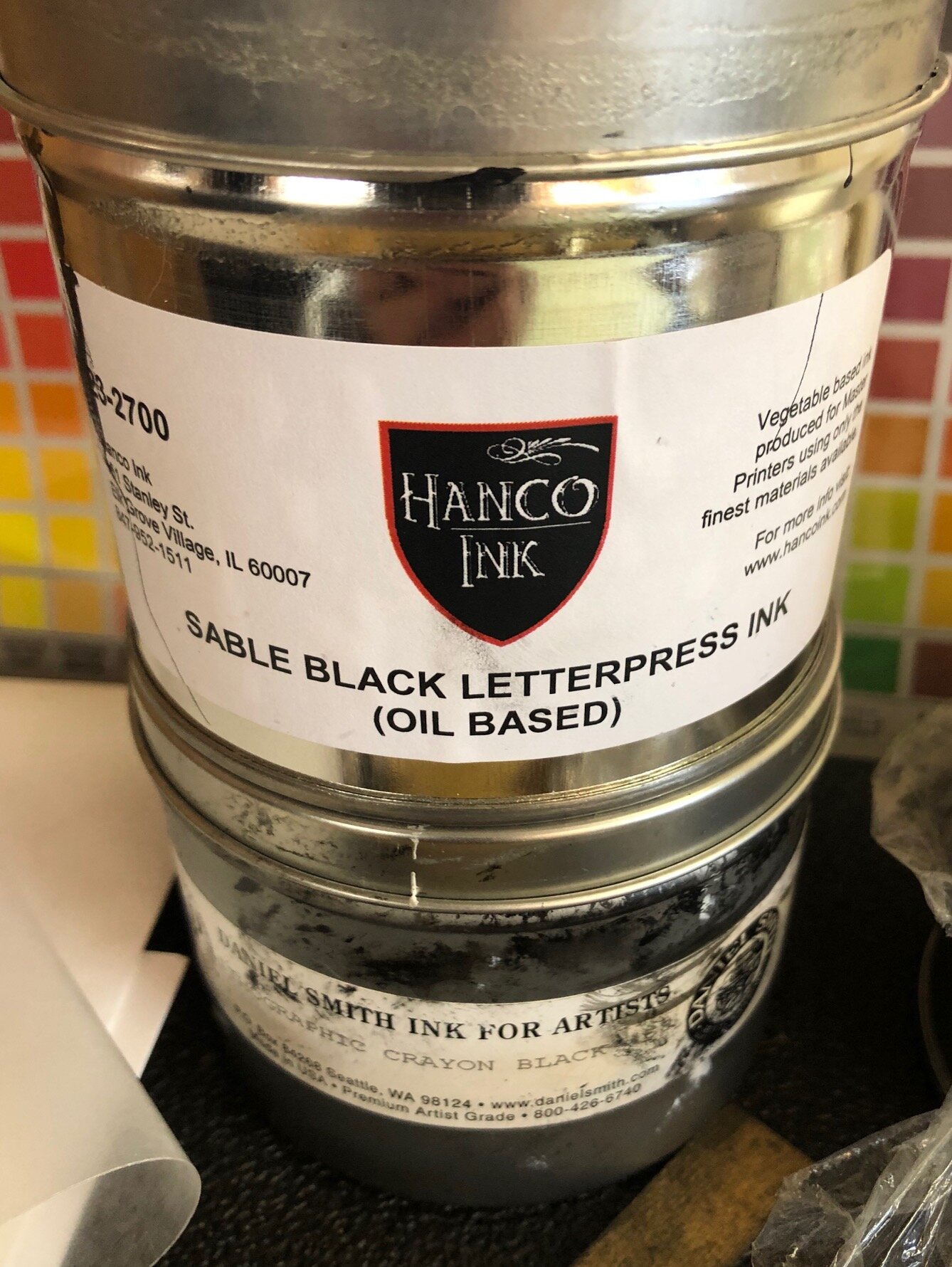
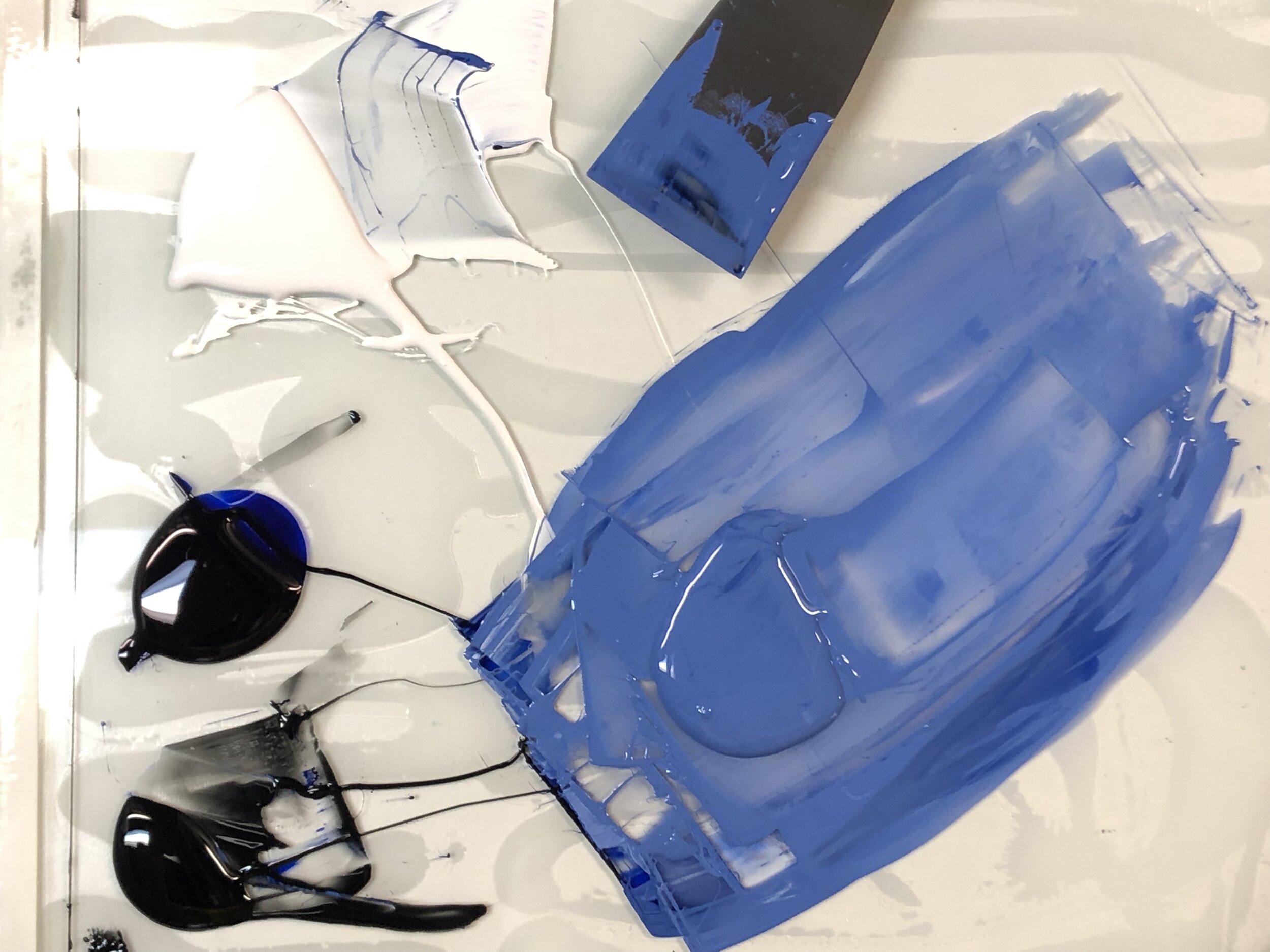
Ink for use in fine printing is another specialized component of the letterpress process. I favor oil-base ink, and have come to rely on the formulas of Hanco Ink Co (outside of Chicago, Illinois) which have very good color density and tack. For large areas of vibrant color, I use a lot of stiff opaque white added to a color base. This provides excellent ink coverage and solidity. Graphic Chemical and Hawthorn Printmaker Supplies also have very good inks.


Well, that’s a quick glimpse at some of the many folks, materials, and tools that serve the craft of printing and bookmaking. It takes a village—one that values, supports, and relies on each other. I am deeply grateful to all the people who make the stuff that makes making stuff possible.

5 Comments

The Song & the Silence: Metal Type & Spacing

Comment

The Song & the Silence: Metal Type & Spacing

Dear Friends,

When I first began my journey into traditional printing, there was much to discover (still is); many “a-ha!” moments of learning and insight into the forms, functions, challenges, and beauties of type, ink, press, & paper.

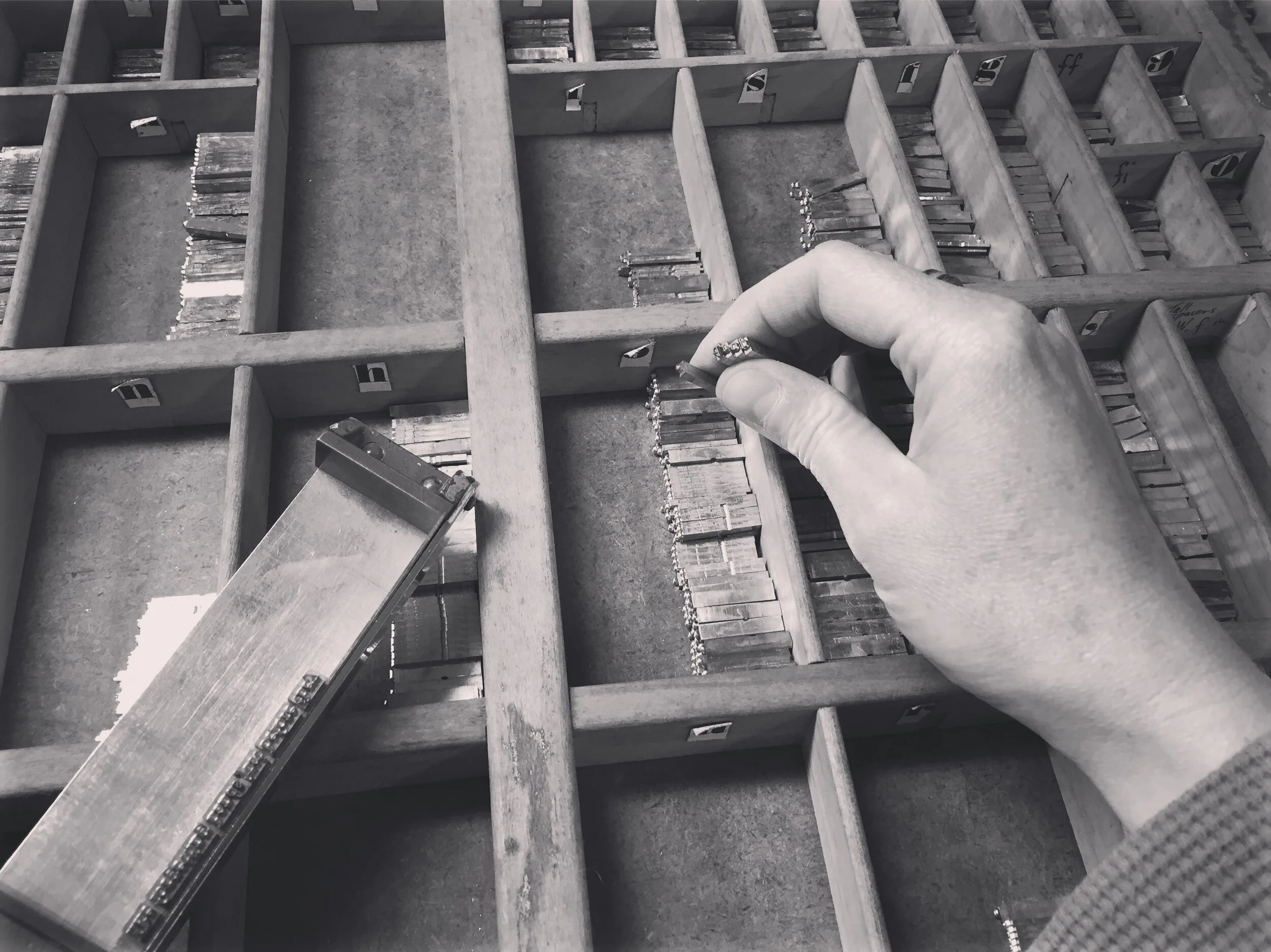
One of those insights happened very early on as I first stood at a case of type, setting lines of a poem.

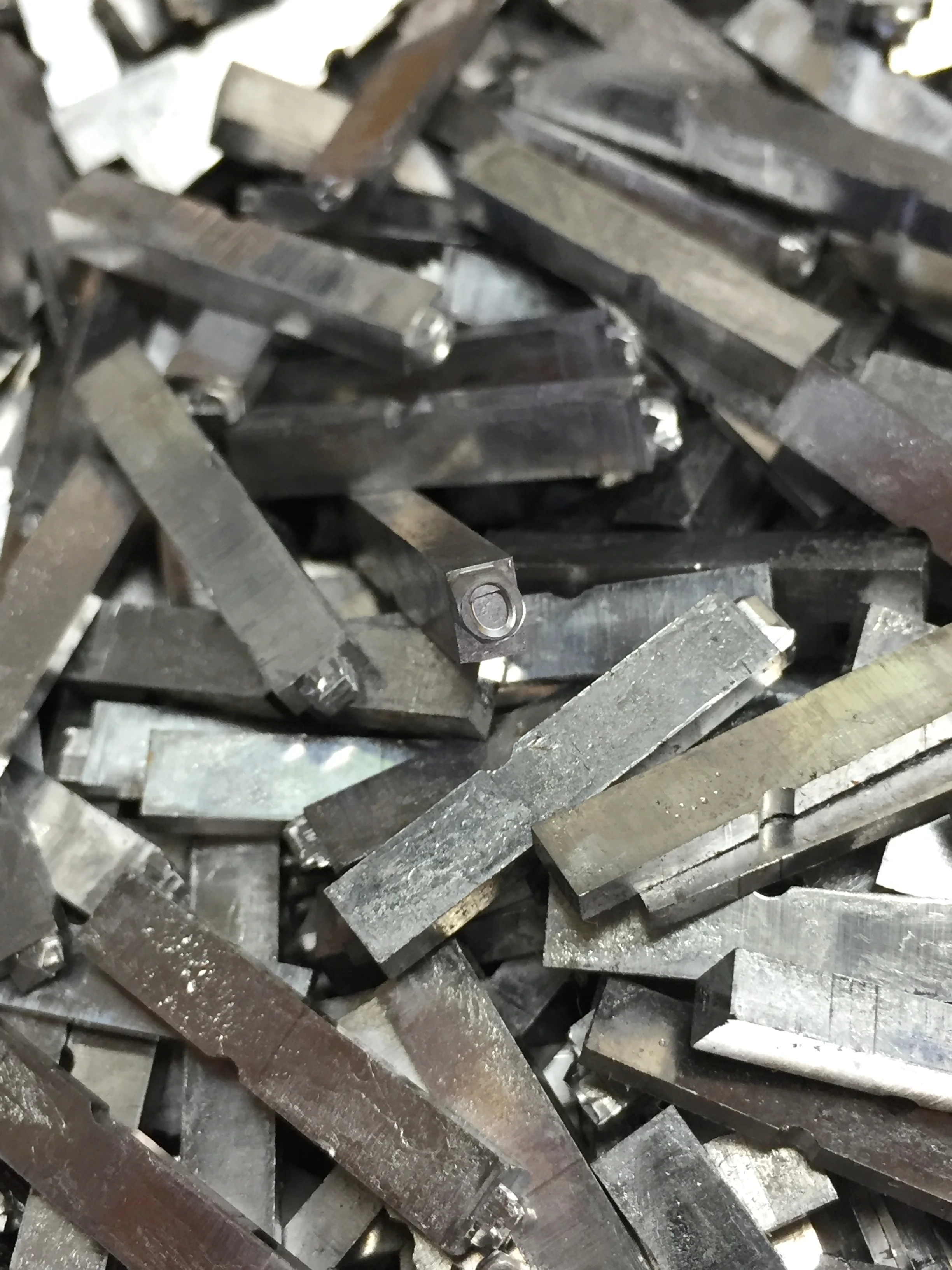
With a startle, I realized that the metal type that I was picking up and placing to form words, and the metal spaces that I was picking up and placing between words, were made of the same material: gleaming new “type metal” (an alloy of lead, tin, and antimony).

Each letter, in raised reverse on a “body," was cast from the very same thing as the spaces between words and lines. For a moment, I could visualize the alphabet rising from the once-molten metal to become printable poetry —  one and the same with the space, the silence, from which it came.

Seven years later, I still pause every now and then to marvel: at the beautiful and precise pieces of metal; at the centuries-old technologies and traditions that coalesce all these shiny shards into words, poems, books; and at the weight of language — all that is said and unsaid.

Thanks for joining me on this journey, friends.
All my best to all of you,
Emily

Comment

Women In Printing History:  Elizabeth Yeats

1 Comment

Women In Printing History: Elizabeth Yeats

Dear Friends,

One of our passions here is learning about the history of printing and book-making, and, in particular, women in this lineage of craft and art. Some weeks ago we shared about one of our heroes, Mary Ann Shadd Cary. Now, here's a little spotlight on another amazing printer and publisher: Elizabeth Yeats.

If the surname sounds familiar, you are right ~ Elizabeth (1868-1940) was the sister of famed Irish poet William Butler Yeats. Here she is alongside her brother, in portraits that were done by their father, John.

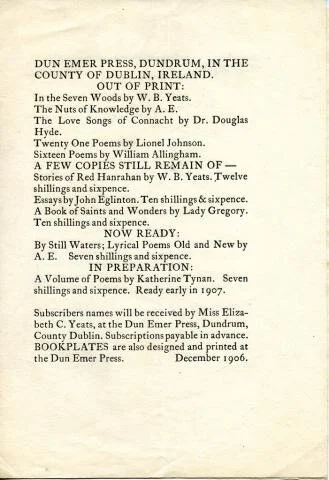
While the Yeats family lived in London, Elizabeth learned the craft of book printing at the Women’s Printing Society. Her sister Lily became a talented embroiderer (studying with William Morris' daughter). They eventually moved back to County Dublin, Ireland, and helped to found the Dun Emer Guild & Industries in 1903. Operating as a kind of co-op, the Guild provided occupational training for women in several crafts like needlework and book making, and played a central role in the Irish Arts and Crafts movement.

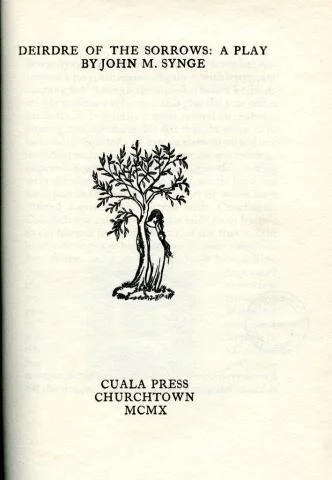
Elizabeth ran what was first called the Dun Emer Press (in 1908) and then was the Cuala ("Koo-lah") Press.

Elizabeth wanted expressly to “revive the beautiful craft of book printing” in Ireland. She concentrated on publishing new work by many of the day’s famous authors, especially those associated with the Irish Literary Revival, including Ezra Pound and her brother WB. They also printed cards, pamphlets, and a monthly magazine. They had a huge output — some 70 books. The Cuala Press outlived her, and continued publishing books until 1946 (smaller ephemera until 1969).

The Yeats sisters at their press.

Thanks for joining me, friends. We'll have more spotlights on women in printing history in the months to come. If you have a favorite example you'd like to see featured, let me know!

All my best to all of you,
Emily

Emily Hancock
St Brigid Press
Afton, Virginia

1 Comment

Women In Printing History:  Mary Ann Shadd Cary

1 Comment

Women In Printing History: Mary Ann Shadd Cary

Dear Friends,

As we celebrate and reflect on our nation's Independence this week, I am also thinking about and giving thanks for one of America's cornerstones: the freedom of the Press.

As a printer and publisher, my work is supported ~ is made possible ~ by the long lineage of people who have fought for and exercised their right to freely express themselves through various forms of media.

I'd like to introduce you to one of those people, a hero of mine from 19th century America: Mary Ann Shadd Cary.

Mary Ann Shadd Cary

Mary Ann Shadd Cary (1823-1893) was the first Black female publisher in North America. She grew up well-educated, in a family of free African-Americans in Delaware. Her family was very active in the antislavery movement and in the movement to relocate Blacks to places where slavery had been abolished. One of those relocation areas was what is now Ontario, Canada, and Mary Ann moved there with her brother, first establishing a school and then becoming a journalist and publisher. 

In 1853, Cary founded The Provincial Freeman, a newspaper “Devoted to anti-slavery, temperance, and general literature.” It also supported women’s suffrage, and it served the region’s African-Canadian community for 4 years. She traveled widely, wrote essays about racial and gender equality, and, after the Civil War and the death of her husband, she moved back to the United States and got a law degree from Howard University. Cary was an amazing woman blazing trails in publishing and civil rights in the 19th century. 

From Mary Katharine Goddard, who printed some of the first copies of the Declaration of Independence distributed to the states, to Mary Ann Shadd Cary, to today's smörgåsbord of print and electronic publishers, may we celebrate the freedom of the Press this 4th of July. And may we remain energized to participate and vigilant to preserve it ~ our democracy depends on it.

All my best,
Emily

Emily Hancock
St Brigid Press
Afton, Virginia


BELOW : The University of Virginia's replica of a wooden common press. For more information, see my post about attending a demonstration of this press at UVA with Josef Beery HERE!

1 Comment

The Tools of the Trade

Comment

The Tools of the Trade

Dear Friends,

Some days, the centuries collapse into a present that is rich with possibility. 

As I worked in the print shop this afternoon, I realized that that particular moment brought together people and their tools across an arc of time that stretched from 1850 to 2019, from Massachusetts to North Carolina, California to Virginia. I paused to let it all sink in.

Pictured here are multiple human tools, each with their own histories, hand-marks, and elegant uses. 

The brand-new shiny metal type in the case was cast for me by printer and type founder Patrick Reagh in Sebastopol, California. The typeface is Goudy Old Style, which Frederic Goudy designed in 1915. 

The text I’m setting is by Henry David Thoreau, from an entry in his journal in July, 1850, about cultivating one’s true work. 

I’m typesetting from that text as displayed on my laptop, which is propped up by the shaft of my great-grandfather’s wooden scythe. The computer is new(ish) and sports a fingerprint-resistant metal case. The scythe is probably close to 150 years old—the wood smoothed by long-use, fissured by sweat and time. 

Both my grandfathers were handcrafters who prized and cared well for the tools of their trades. My father’s father was a land surveyor, wood worker, and front porch whittler. My mother’s father was a carpenter, teacher, and army veteran. Both of them passed down to me a regard for the well-made, the joy and the worth of handwork, and also the pocket knives they each carried. 

The Native American stone blade pictured above with my grandfathers' pocket knives (and my hand) may be a thousand years old or more. As a young girl, I watched it emerge from a red North Carolina clay furrow one afternoon, as my paternal grandfather drove the 1952 tractor down his garden’s rows. Someone had worked this land long, long before my family. Someone who made, used, and cared for their tools, too. 

Now, I have the honor of doing the same.

From centuries-old implements to the latest digital tech, we wield powerful tools, friends. May we use them thoughtfully, and for a common good.

All my best,
Emily

Emily Hancock
St Brigid Press
Afton, Virginia

Comment