
New Letterpress Chapbook by Arthur Sze

Comment

New Letterpress Chapbook by Arthur Sze

Every line of poetry is a horizon. It opens worlds, near or far; it's a seam, a beckoning, an edge where everything intersects; a traversal.

Some poets are masters of horizon lines ~ the edges of light, loss, existence. One of those is Arthur Sze. His poetry has opened myriad new vistas for me, both as a reader and as a writer. His use of penetrating, layered, kaleidoscopic imagery shakes me awake, and I open to a vast, intricate world of simultaneous existences, events, emotions. Sze’s poems unfold new visions and meanings with each reading, and I discover something new about the cosmos and my life in it. 

I am deeply honored to work with Arthur Sze to create a new chapbook of his poems called Starlight Behind Daylight—a collection of twelve pieces that resonate singly and collectively, that engage us on the knife-edge of now. Grouped in three sections of four, these poems converse with each other and with us. They bring into focus the simultaneities, the shifting possibilities, of life on earth together. 
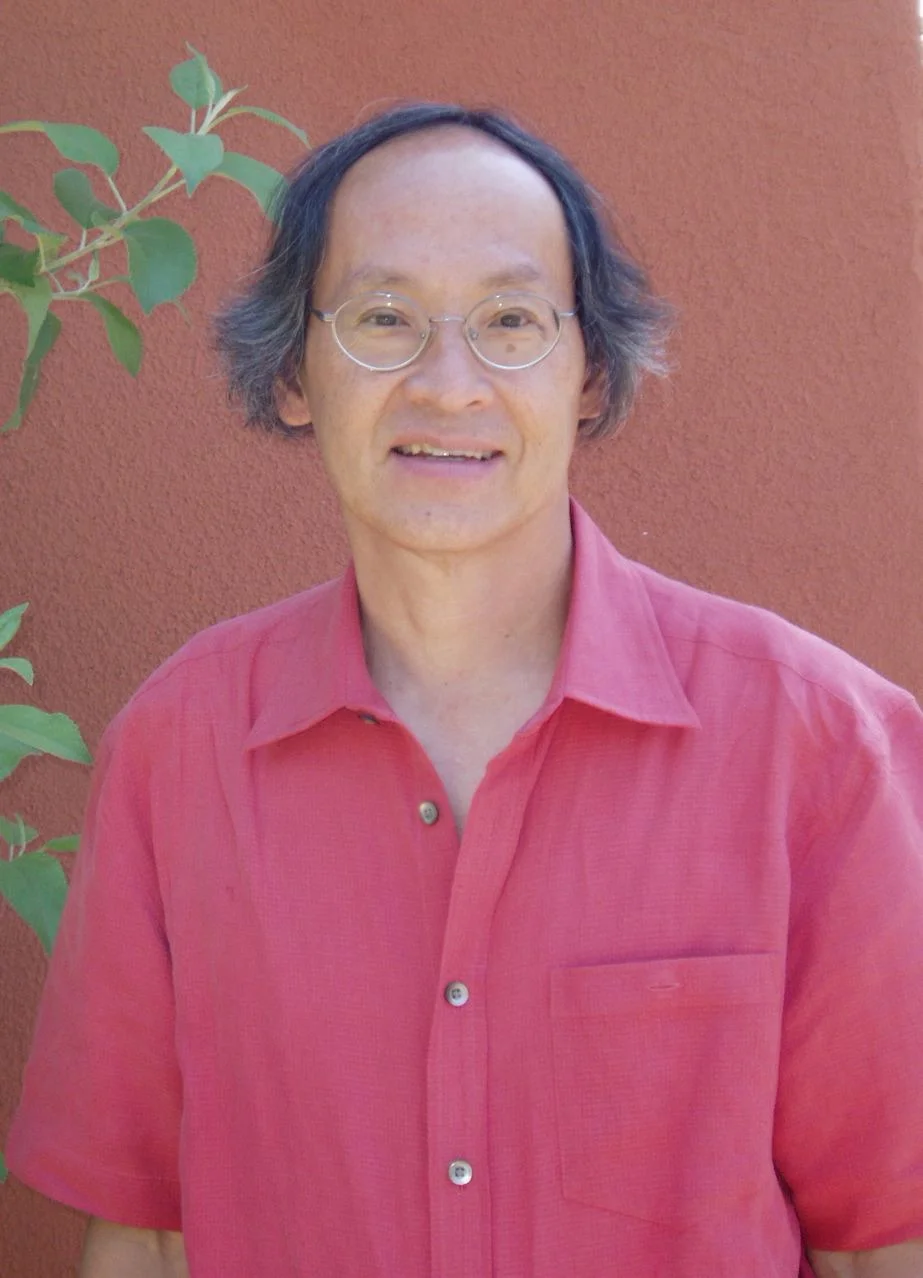

Arthur Sze Photo (Gander).jpg
Emily Hancock and I went back and forth discussing the poems that have been assembled in *Starlight Behind Daylight.* They consist of six poems from my latest book, *Sight Lines,* and six new poems that are in deep conversation with them. The process by which they came together was a true and exciting collaboration, and the ensuing poems move between snow and fire, darkness and light, emptiness and fruition.
— Arthur Sze

The limited edition chapbook will be hand-set in Centaur and Arrighi types, letterpress printed, and hand-sewn here at St Brigid Press. (Price TBA.) More information and photos will be forthcoming as the project progresses. To receive our email newsletter with updates, and/or to reserve a chapbook, please email us — info@stbrigidpress.net

Until next time, all best wishes to each of you as you traverse the horizons before you!

Emily

Emily Hancock
St Brigid Press
Afton, Virginia

The header image of the Cat’s Paw Nebula courtesy of NASA/JPL-Caltech/IPAC (https://photojournal.jpl.nasa.gov/catalog/PIA22567)

Photo of Arthur Sze by Forrest Gander.

Text by Emily Hancock and Arthur Sze.

Copyright 2019. All rights reserved.
Comment

A Michigan Journey

2 Comments

A Michigan Journey

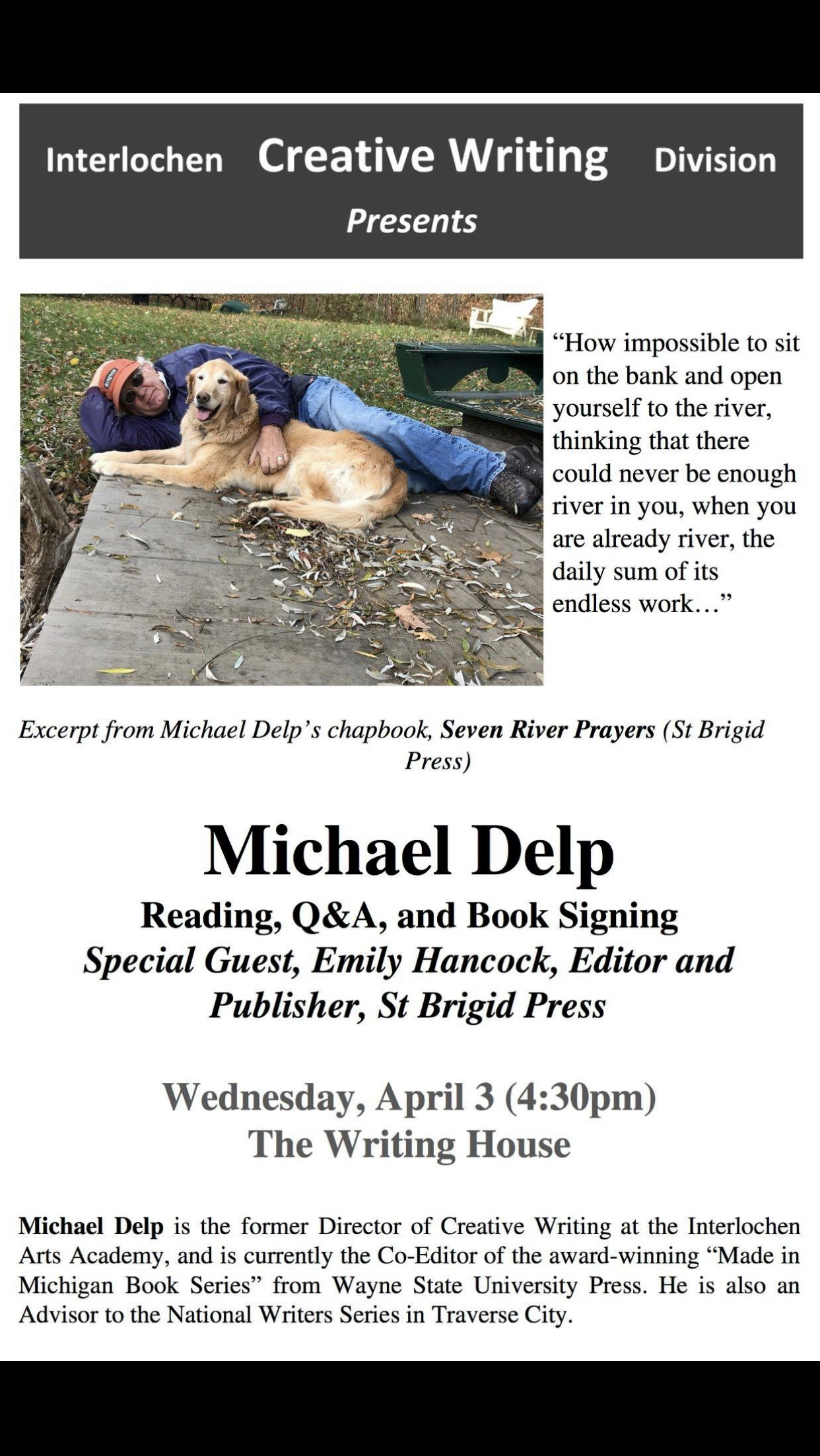
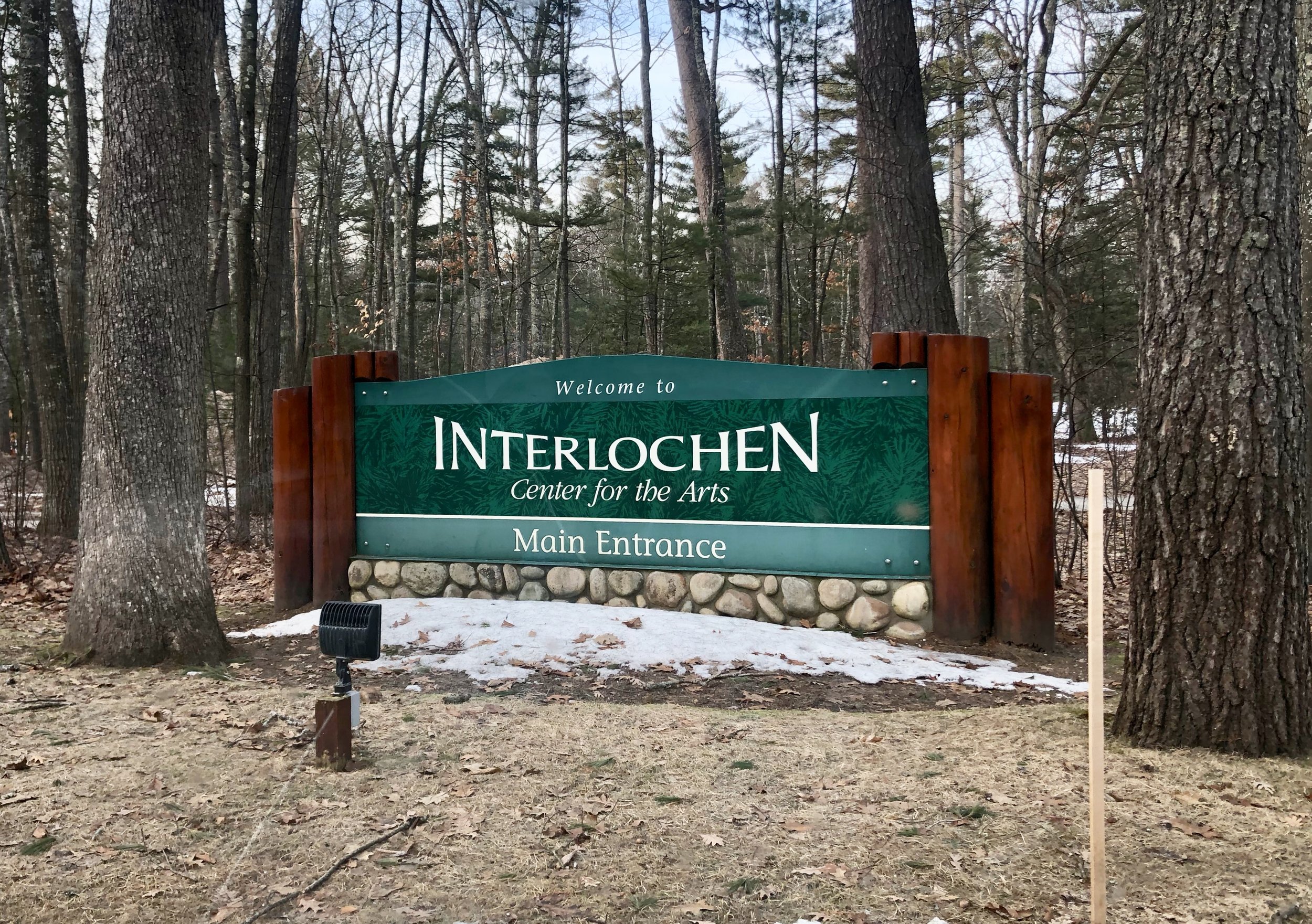
Last week I had the great pleasure of visiting poets and printers in Michigan, teaching a class on book making and traditional printing at Interlochen Arts Academy, and being present at the official launch of the newest chapbook from St Brigid Press—Seven River Prayers by Michael Delp. (There are only 5 chapbooks left, so if you’re interested, please see the webpage: www.stbrigidpress.net/books/seven-river-prayers )

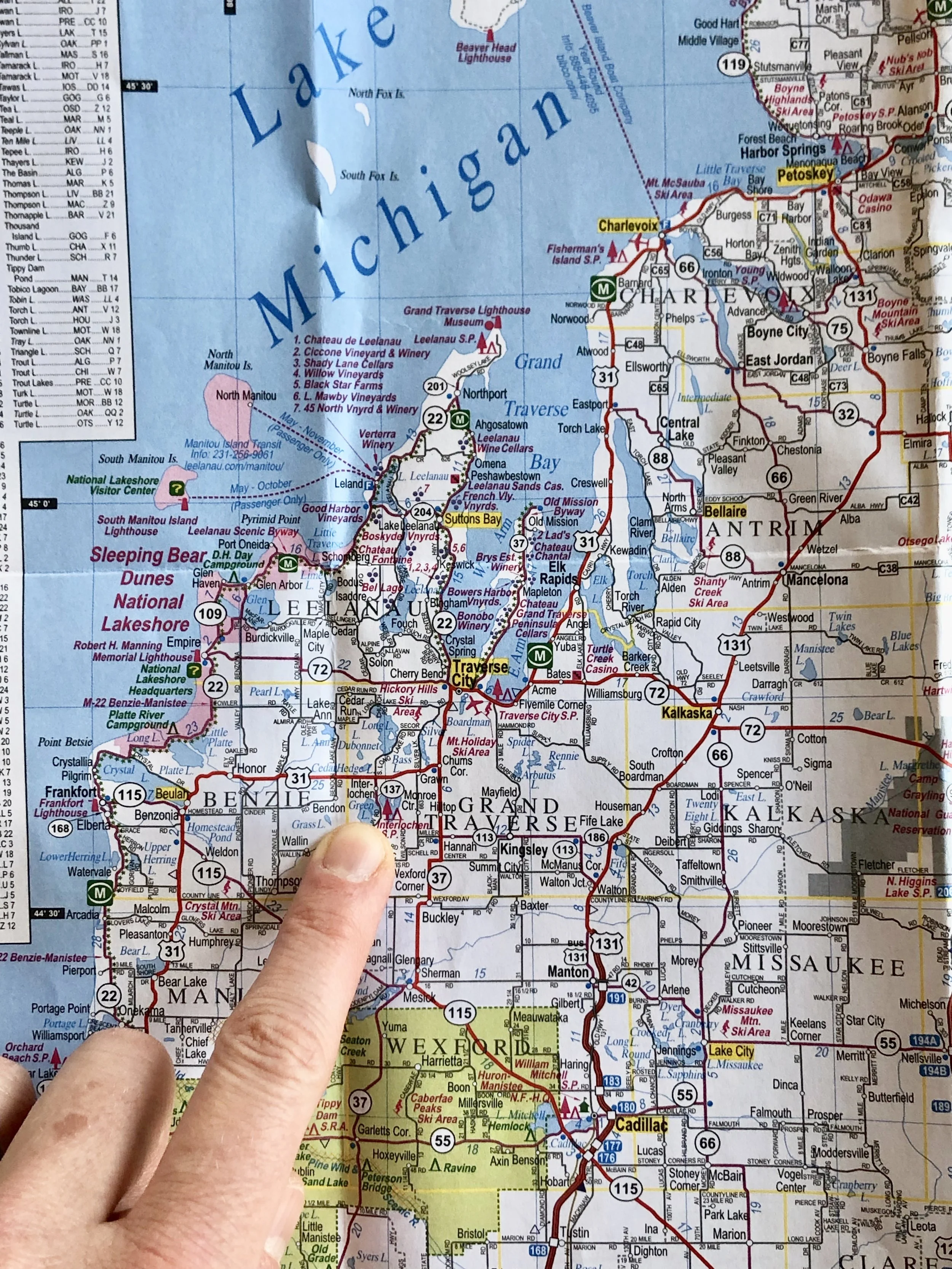
Pencil points to Interlochen, Michigan.

The seed for the journey was planted months ago, when Mike Delp and I were conversing about the chapbook’s final stages. “Long-shot thought,” I wrote to him. “It would be pretty special to have some kind of book launch event. Or at least to try. What do you think the chances are that Interlochen Arts Academy or some other place you think is good would allow us to hold such an event?” From that wondering-out-loud, a whole wonderful week’s worth of traveling, connecting, and sharing evolved.
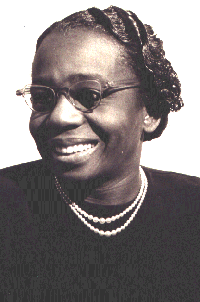
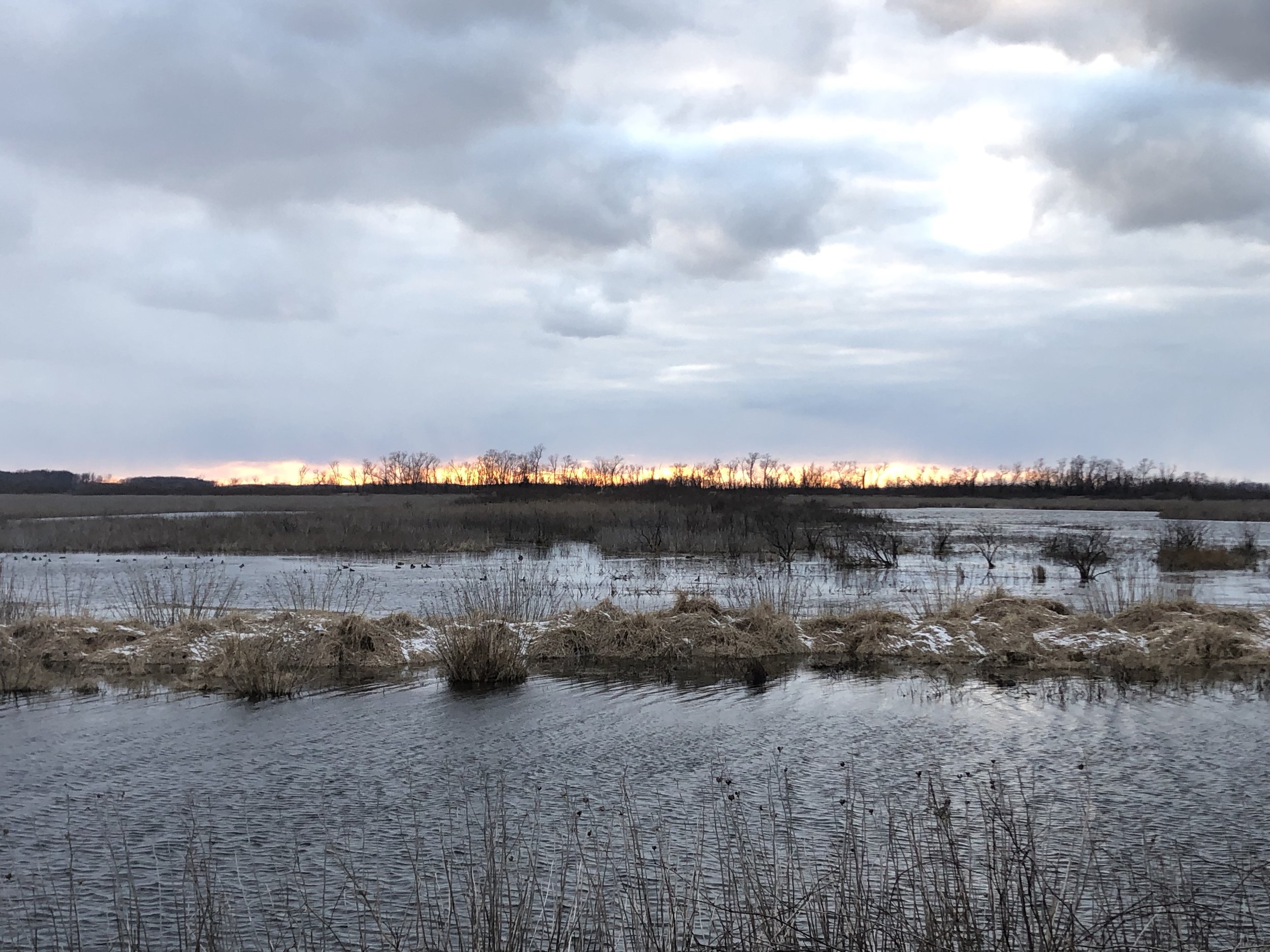
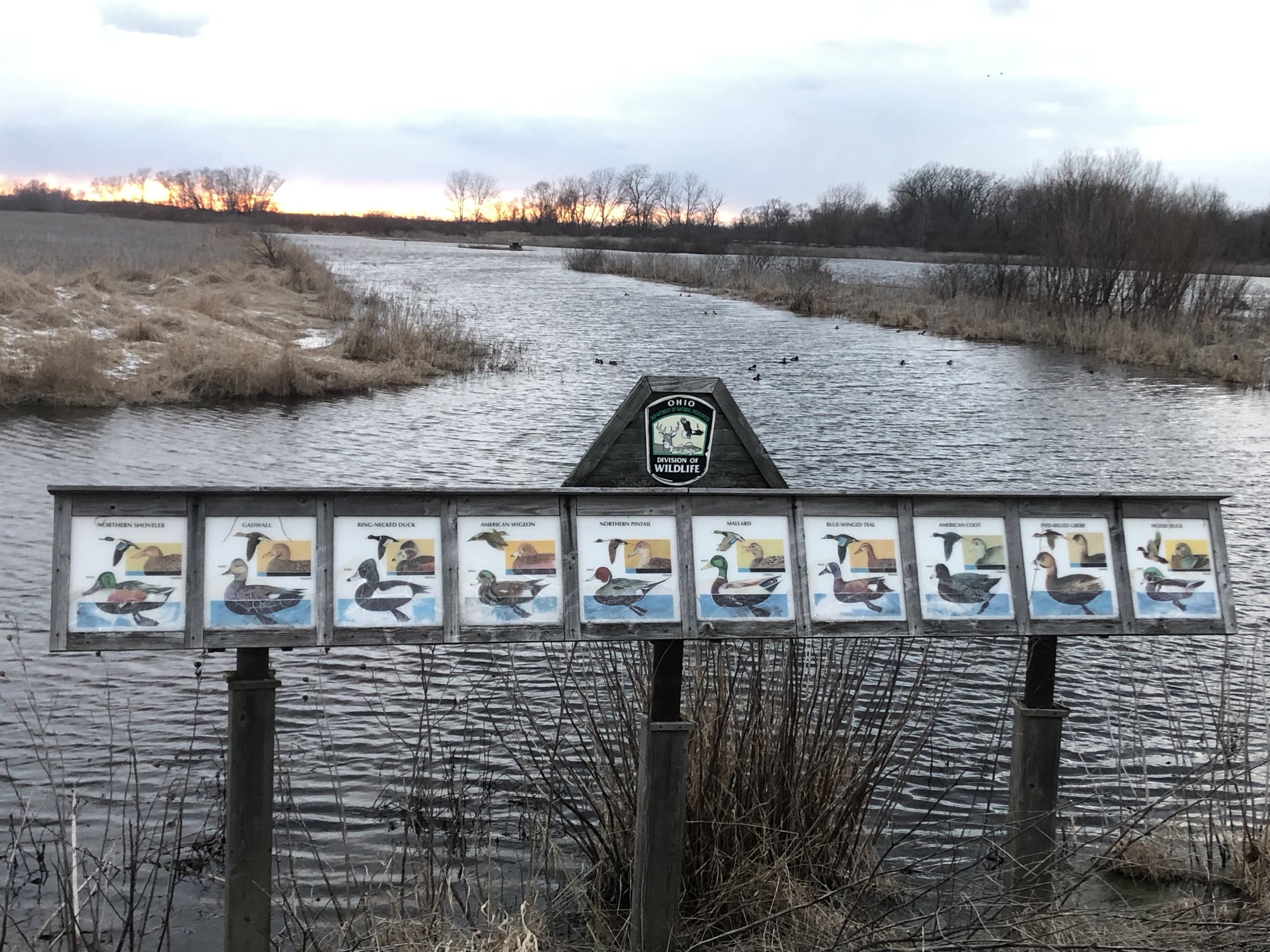
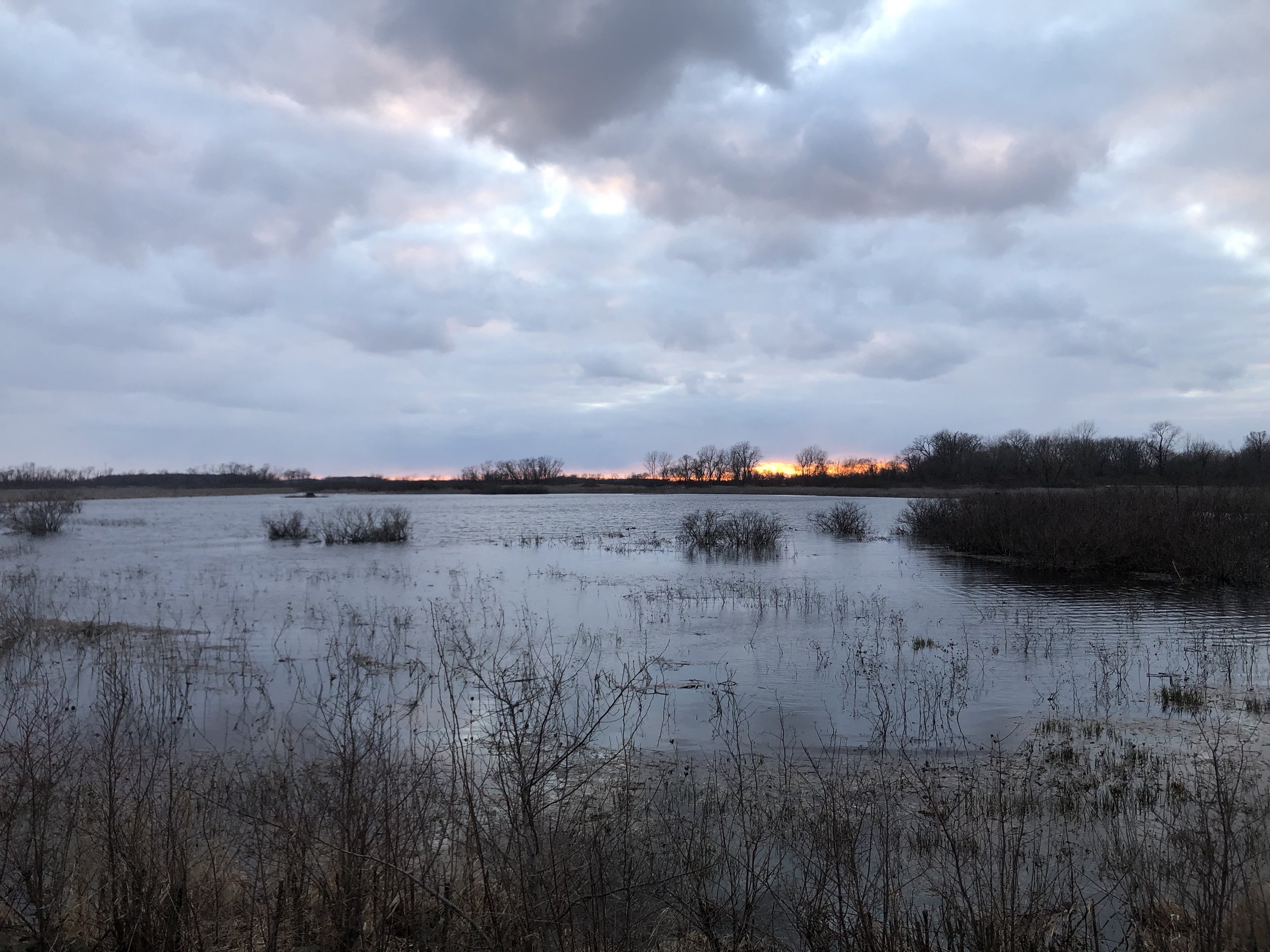
I left my Blue Ridge Virginia home on Sunday, March 31st, with a car-full of books, winter clothes, a tiny 1930s-era printing press, and an emergency tin chocked with my spouse’s homemade chocolate-chip cookies. I drove north-west through hours of snow showers. Eager to take a break from the highway, I got off the interstate in Ohio after seeing a sign for a natural area along the shores of Lake Erie east of Toledo. Around sunset, I pulled into Magee Marsh Wildlife Area (contiguous with Ottawa National Wildlife Refuge), and slowly drove the 1.5 mile park road. 

The wetlands were teeming with birds. Red-winged blackbirds were chatting in the brush along the edges of the road, and I rolled the windows down to take in their husky whistles (the air temperature was around freezing, but I didn’t care—this was the soundtrack to Spring!). As I rounded a woodlot into an expanse of wetland, two Sandhill Cranes banked over my car and settled down somewhere out in the marsh. Hundreds of waterfowl paddled, dabbled, and preened along the waterways—Pied-billed Grebes, Buffleheads, Ring-necked Ducks, gorgeous Northern Shovelers, and so many more. I stopped to listen and watch. Looking down at the darkening water at the road’s edge, I saw bubbles break the surface, a stream of them popping up for a dozen yards. Soon, the large chocolate-brown head of an adult beaver emerged. It swam past me, not twenty feet away, intent on its evening rounds. After the quick shadow of a Harrier strafed my car, I looked up—away to the west two Bald Eagles were flying toward their enormous nest, high in a tree along the lake shore. Stunned to grateful silence by it all, I resumed the highway just as last light was flaring neon yellow and pink through a distant snow squall.
The next day, already low on cookies, I drove in blessedly bright sunshine across Michigan to Hudsonville, just to the west of Grand Rapids and not far from the shores of Lake Michigan. There, I finally met-in-person the poet whose chapbook I had the honor of publishing in 2018— J. L. Davis. We had first connected through, of all things, Twitter. A couple of years ago, my admiration for her crystalline short-form poetry led to a conversation about the possibility of creating letterpress edition of some of her work. Wildflowers Ending debuted last November (and there are only 12 copies left; if you’re interested, see the webpage here— stbrigidpress.net/books/wildflowers-ending ). 

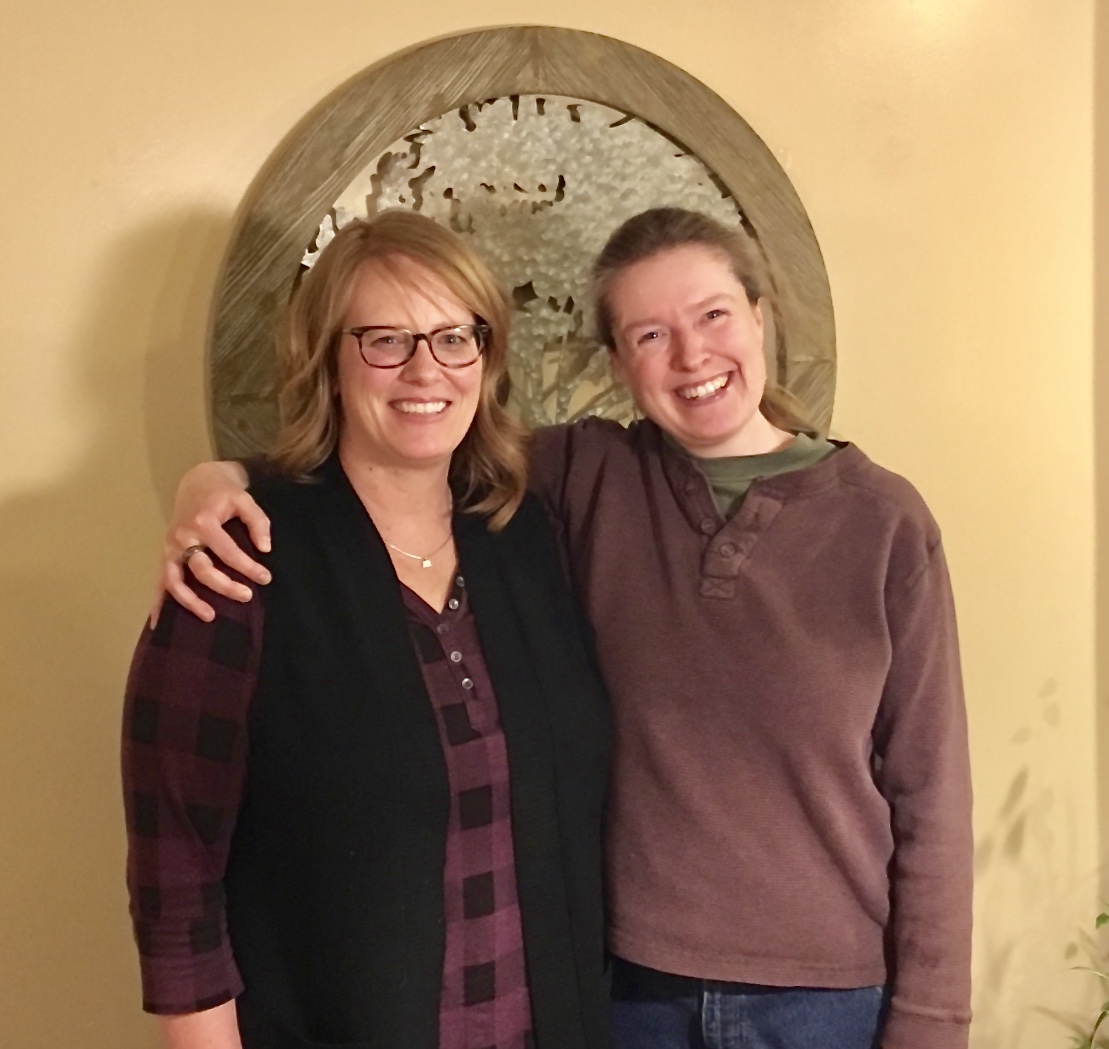
The poet Jessica Davis (L) and me.

The poet Jessica Davis (L) and me.

Jessica and her family generously put me up for the night last Monday, and we spent hours talking all things poetry-and-more over cups of ginger tea and, later, glasses of red wine. Like the beautiful oaks in her backyard, Jessica is an old soul; we traversed time and space, experience and emotion and creative expression, in our rich, wandering conversations. She’s as tuned to language and the heart as white pines are to wind and birdsong. Tuesday morning, I left their home filled with deep friendship, gratitude, and a baggie of delicious chocolate-chip muffins.

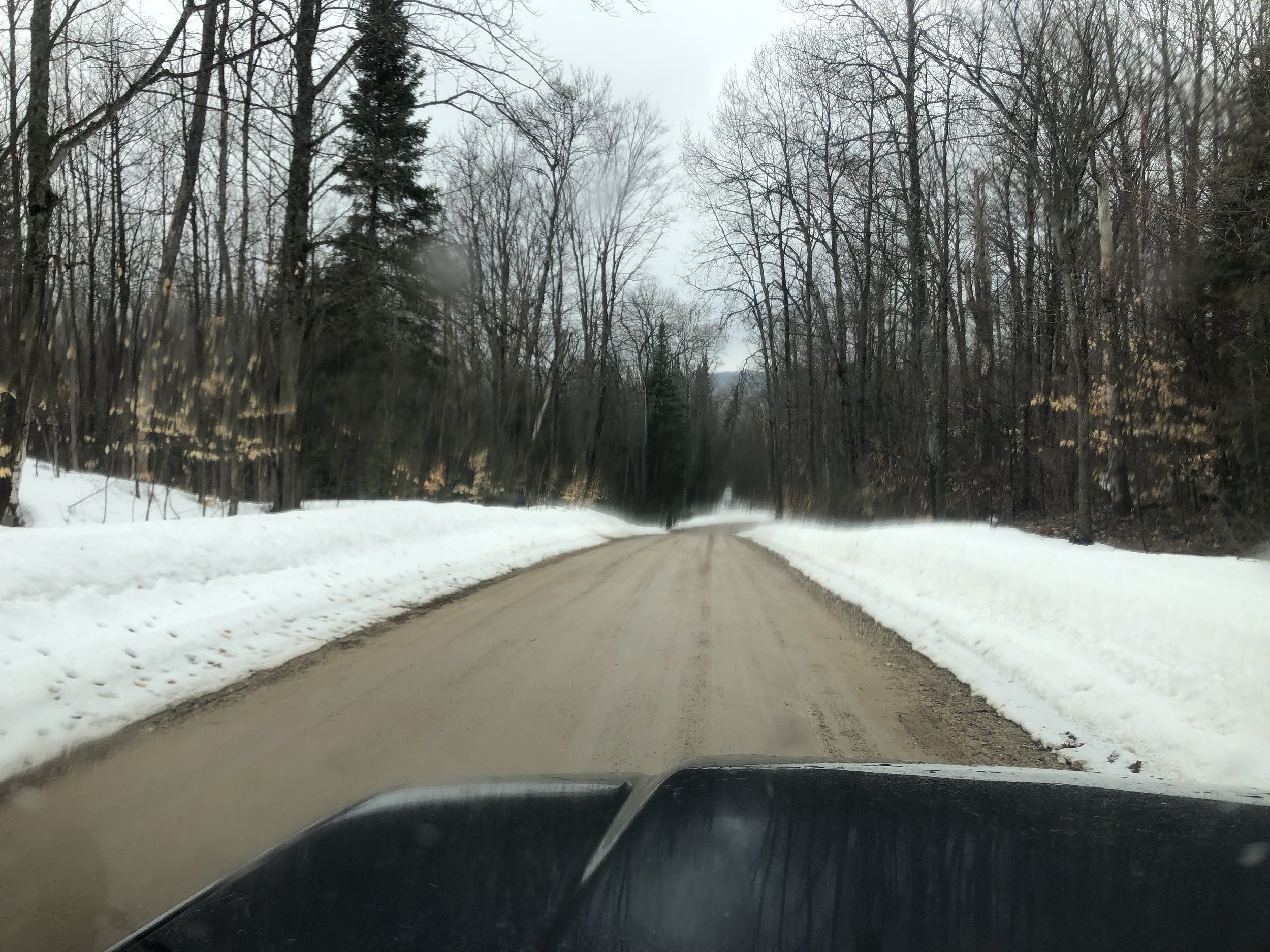
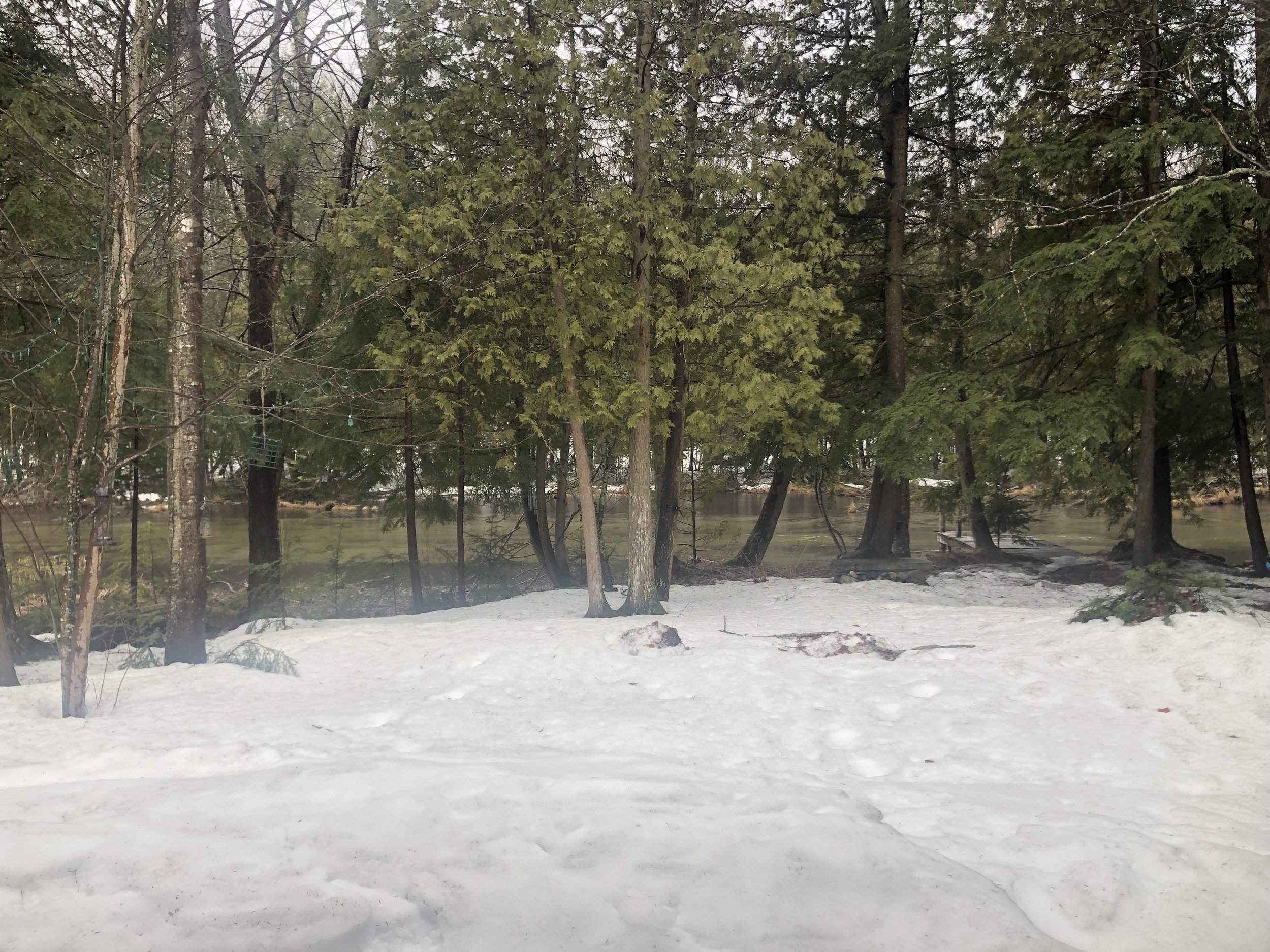
The road north lead into more snow. Due in Interlochen by late afternoon, I wanted to make a pilgrimage first to one of my early mentors in traditional fine press printing—Chad Pastotnik of Deep Wood Press. The ground began to whiten the further I went, until snow-plow piles of the dirty white stuff were banked higher than my head. I wound west and north of the small town of Mancelona until I found Chad’s place, tucked back in a grove of conifers along the swift Cedar River. Walking up to his shop across shoveled but icy walks, I inhaled the heady scent of the trees, the cold. A merganser floated past; a few chickadees announced me to the woods. 

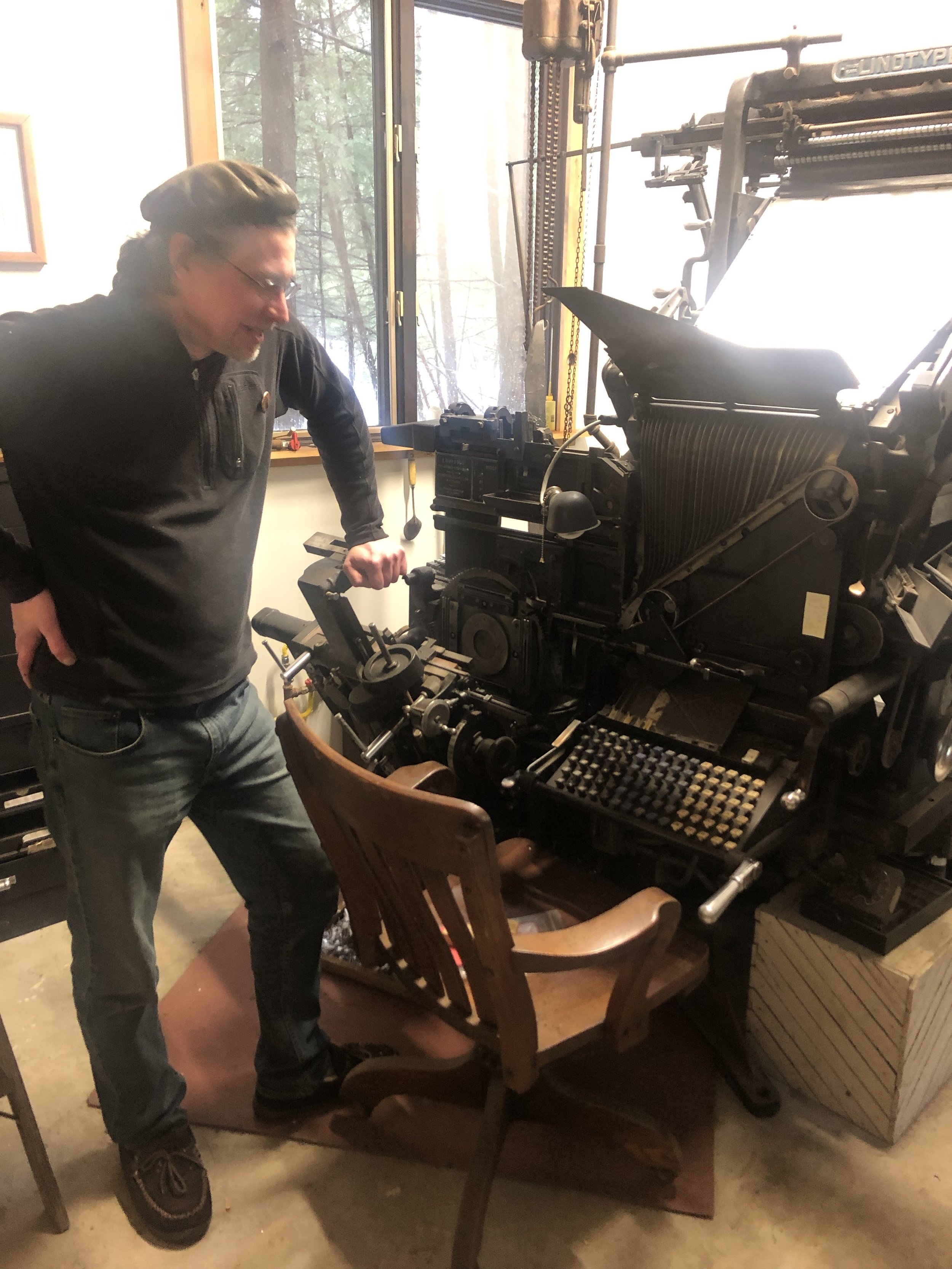
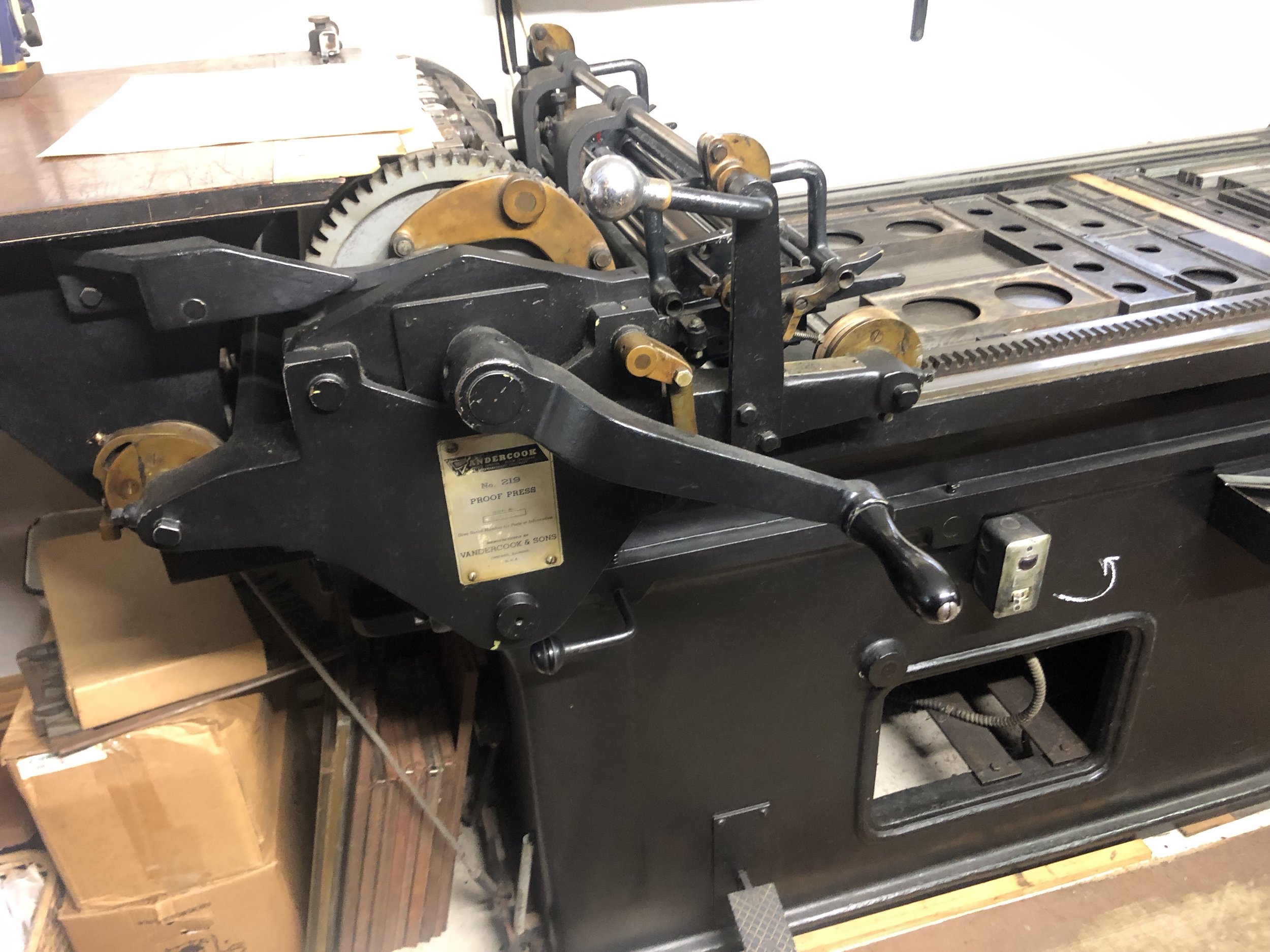
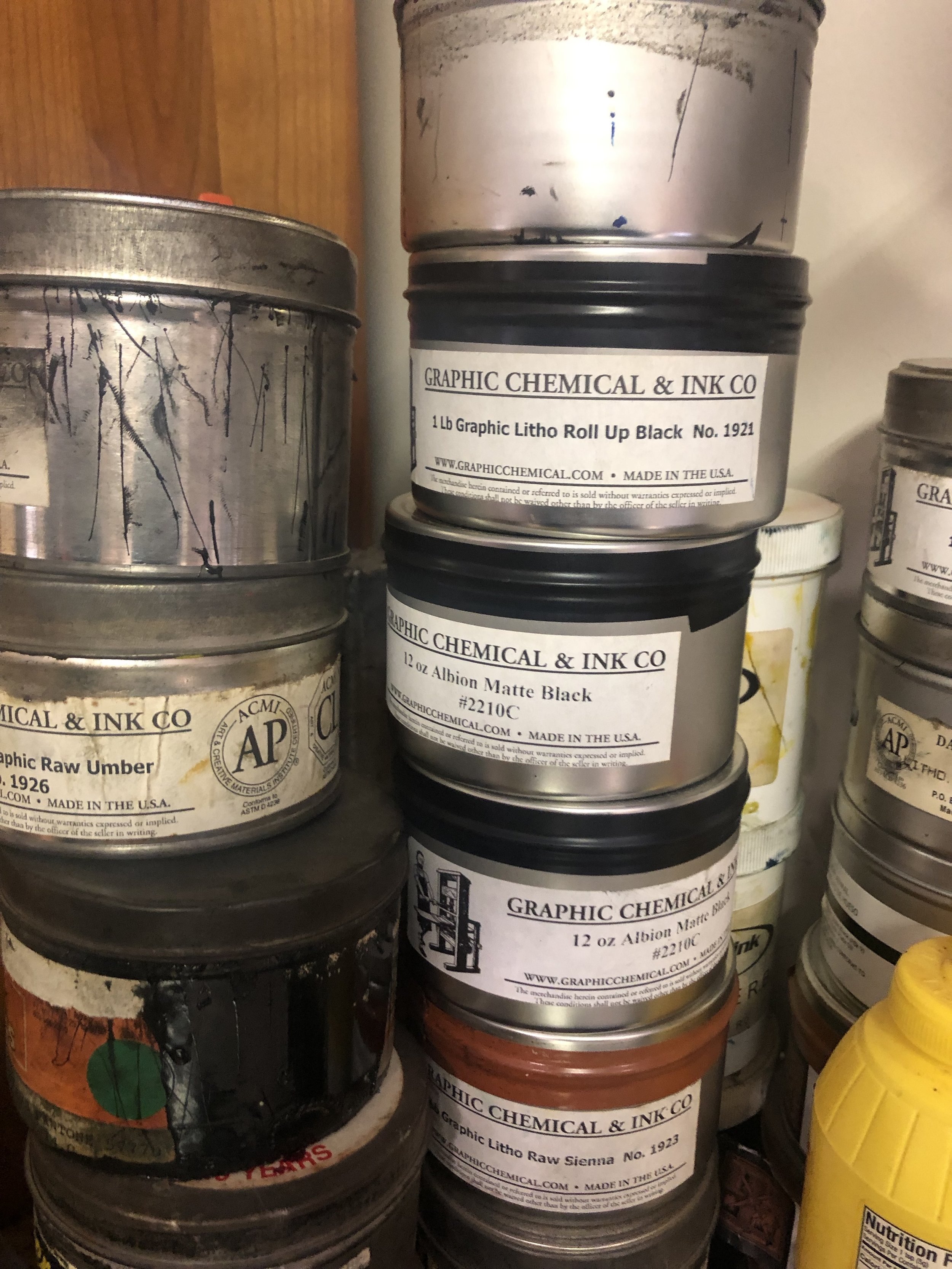
Opening the studio door at my knock, Chad ushered me into his world—ink and iron, lush papers and sharp tools, eagle eyes and exactitude. One of the most accomplished fine press printers on the planet, he has operated Deep Wood Press since 1991. I came across images of Chad’s work early on in my learning about traditional printing and bookmaking, and it was truly an honor to experience DWP first-hand. He has an excellent collection of hand-set type and Linotype matrices for book work, and prints mostly on a venerable old Vandercook 219. In the time he generously shared with me, we talked over equipment, inks, his stunning library of fine press books, the business of book arts, and some of the finer points of colophon construction. I left filled with new knowledge, inspiration, and more gratitude.

Winding my way southwest in the late afternoon cold drizzle, I glimpsed frozen Lake Michigan from Traverse City before dropping down to the world-renowned Interlochen Center for the Arts. I checked into the Stone Hotel on campus, where my second-story window looked out on frozen Green Lake. The sky and the ice were nearly the same pearl-grey color, with a green-black scar of coastline between. A few crows careened from the top of a pine and out across the expanse. 

Green Lake, Interlochen, Michigan.

At 6pm that evening, I went downstairs to the hotel lobby, where Michael Delp was waiting for me. The connection and rapport I’d felt with him through social media and email was immediately incarnated with a hearty hug and a deep dive into conversation. He took us a few miles down the road to Bud’s Coffee Shop, a local hangout. Over burgers and coffee, we rambled all over the woods—poetry and the poets we’ve known, families and dogs, his 30 years of teaching and administrating at Interlochen, his passion for words and rivers. As with Jessica Davis, after so long in electronic communication it was fantastic to actually sit across a table from each other and talk. It felt like we’d just got started when it was time to head back to campus and try to get my brain unwound enough for sleep.

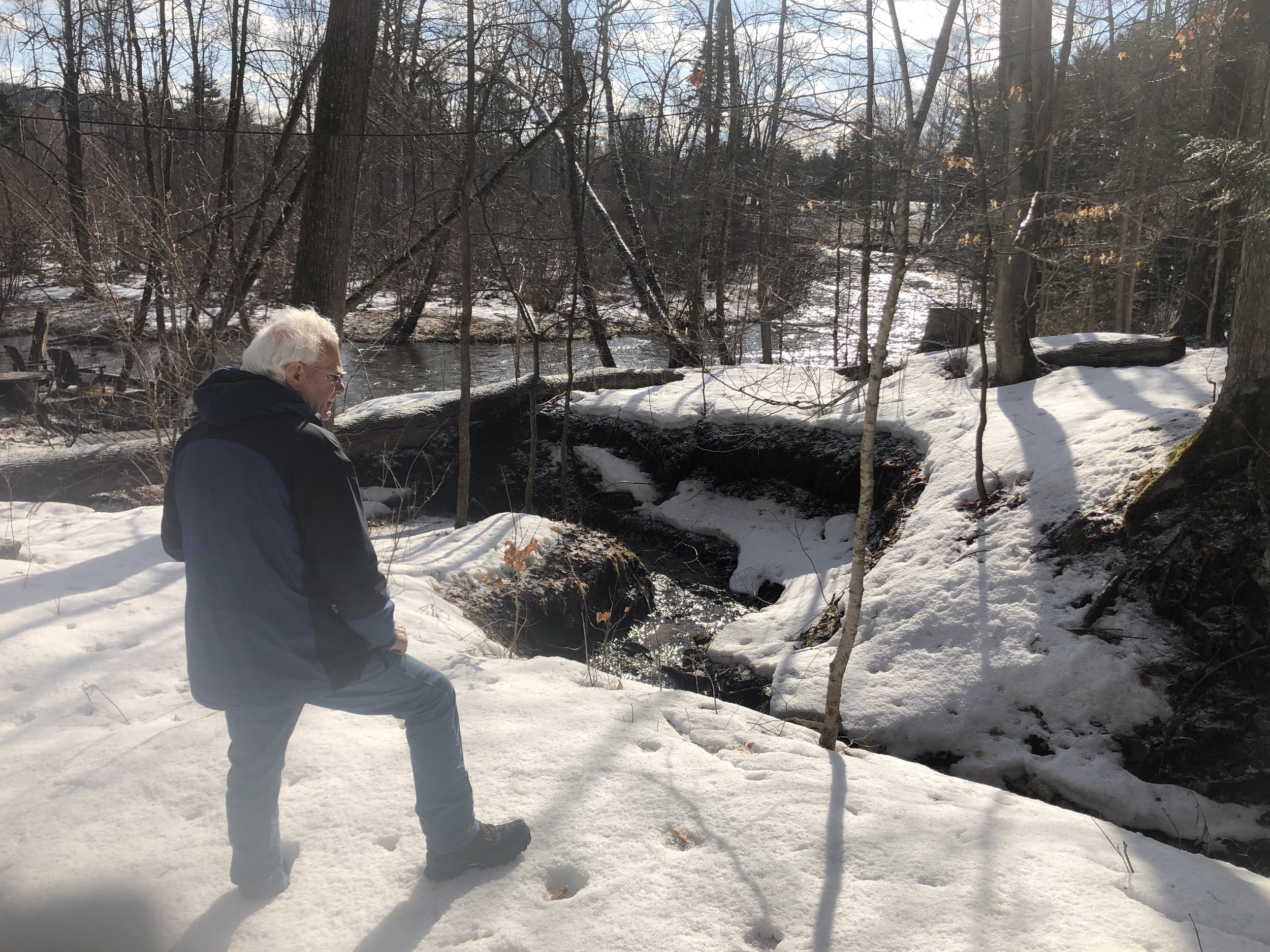
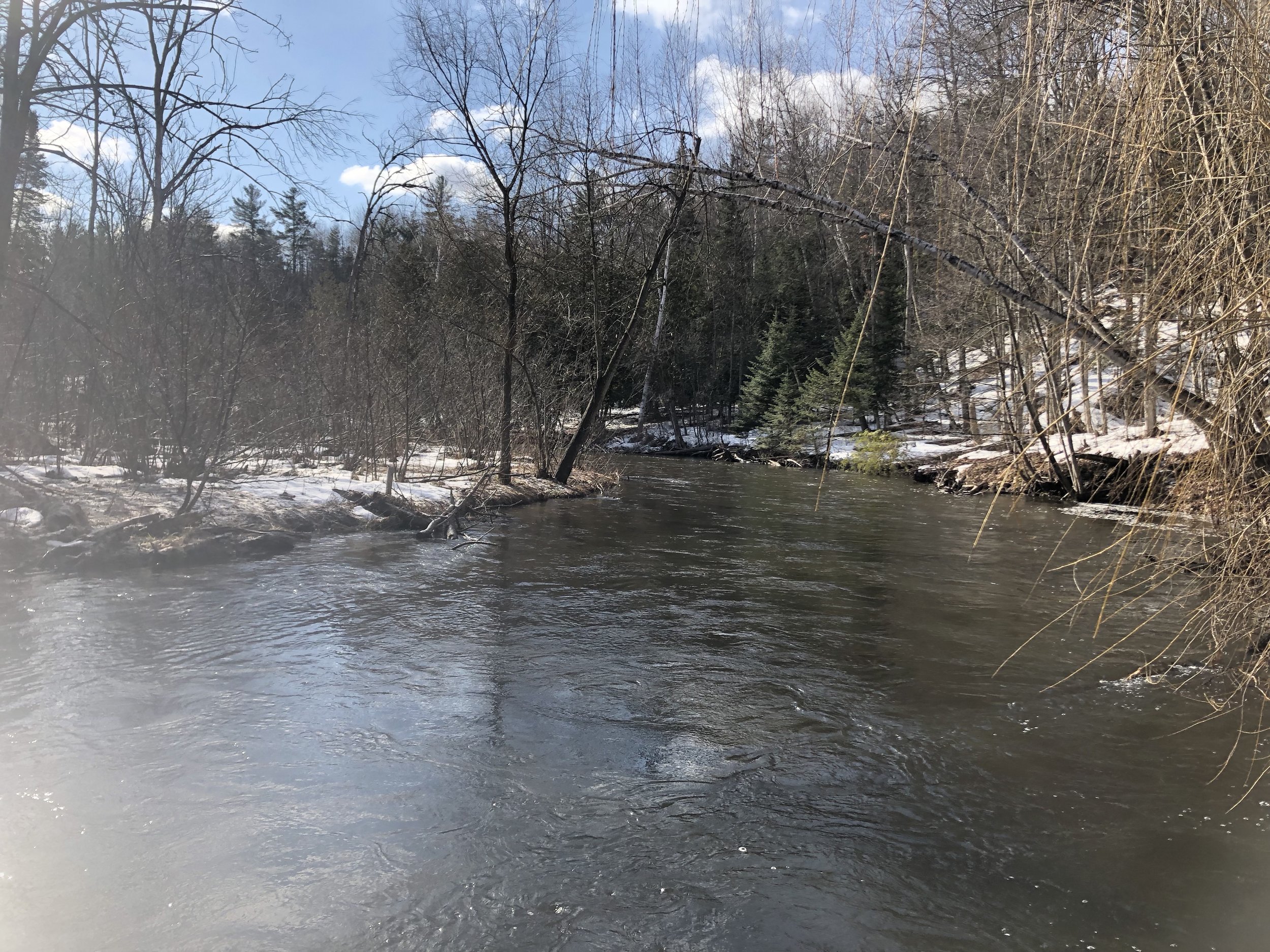
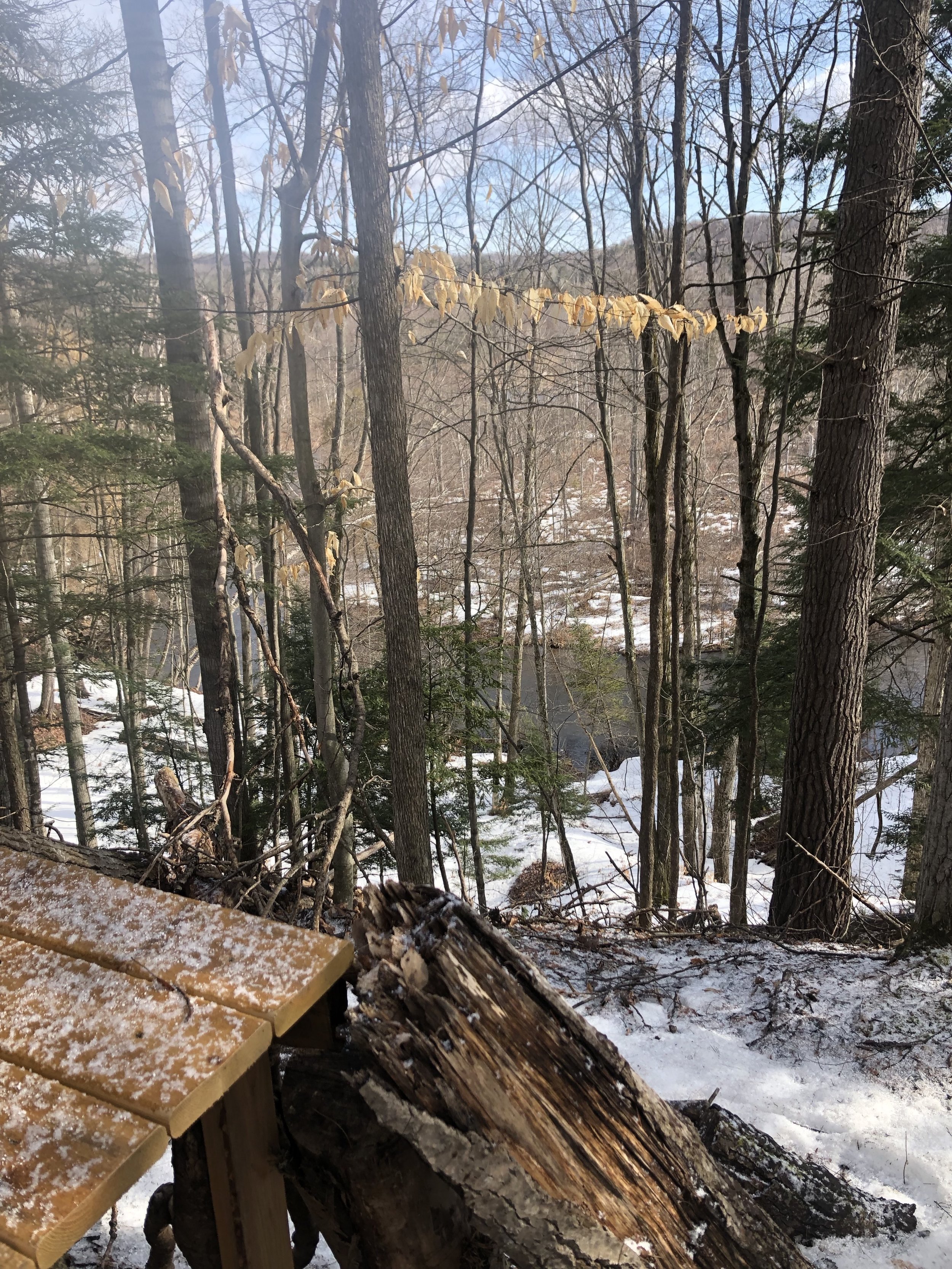
The next morning dawned bright and cold. Mike drove us a short ways east of campus to the spectacular little retreat he and his wife have on the banks of the Boardman River. We crunched down the slick slope of old snow to the fast-moving water—sunlight and eddies whorled across the surface. “It’s pretty high right now,” Mike said of the water level. “Usually I can walk across here to the other bank.” The small old cottage, renovated and enlarged over the years, held comfy furniture, fly rods, a wood stove, and a view of heaven. Before we left, I followed Mike up the steep grade through open stands of hemlock, poplar, and ash (the latter mostly decimated by the green ash borer beetle), stepping in his boot-prints for purchase in the crusted snow layer. Just a handful of miles as the crow flies from Interlochen, this place was a world away. And the beating heart of Mike and his family.

We headed back to campus in time for lunch with the Creative Writing Department Faculty. Mika Perrine, a friend and former student of Mike’s, is the Interim Director of the department, and the one who made it possible for me to come visit. She and Joe Sacksteder (the incoming Director, as of June 1st) and Bri Cavallaro and her husband Chase all welcomed me generously amid a cafeteria bustling with high-school boarding students carrying instrument cases and be-stickered laptops. The energy, intensity, and vigor of students and teachers alike was palpable. After an hour, this middle-aged introvert was excited and exhausted at the same time!

Photo courtesy of The Writing House Instagram account.

The master class on book arts that the department had invited me to do started at 3:30pm. By 3, the splendid Great Room of The Writing House was filling with students. After a bit of fiddling with the projector, Mika and Joe got my computer slideshow running, and I launched into a brief presentation on the history, immediacy, and vitality of traditional printing and publishing: “The Body of the Book: Toward an Embodied Ecology of Literature.” The students and faculty listened as I prattled on for a bit, until the talk drew to a close and it was time to get busy and actually make something. 

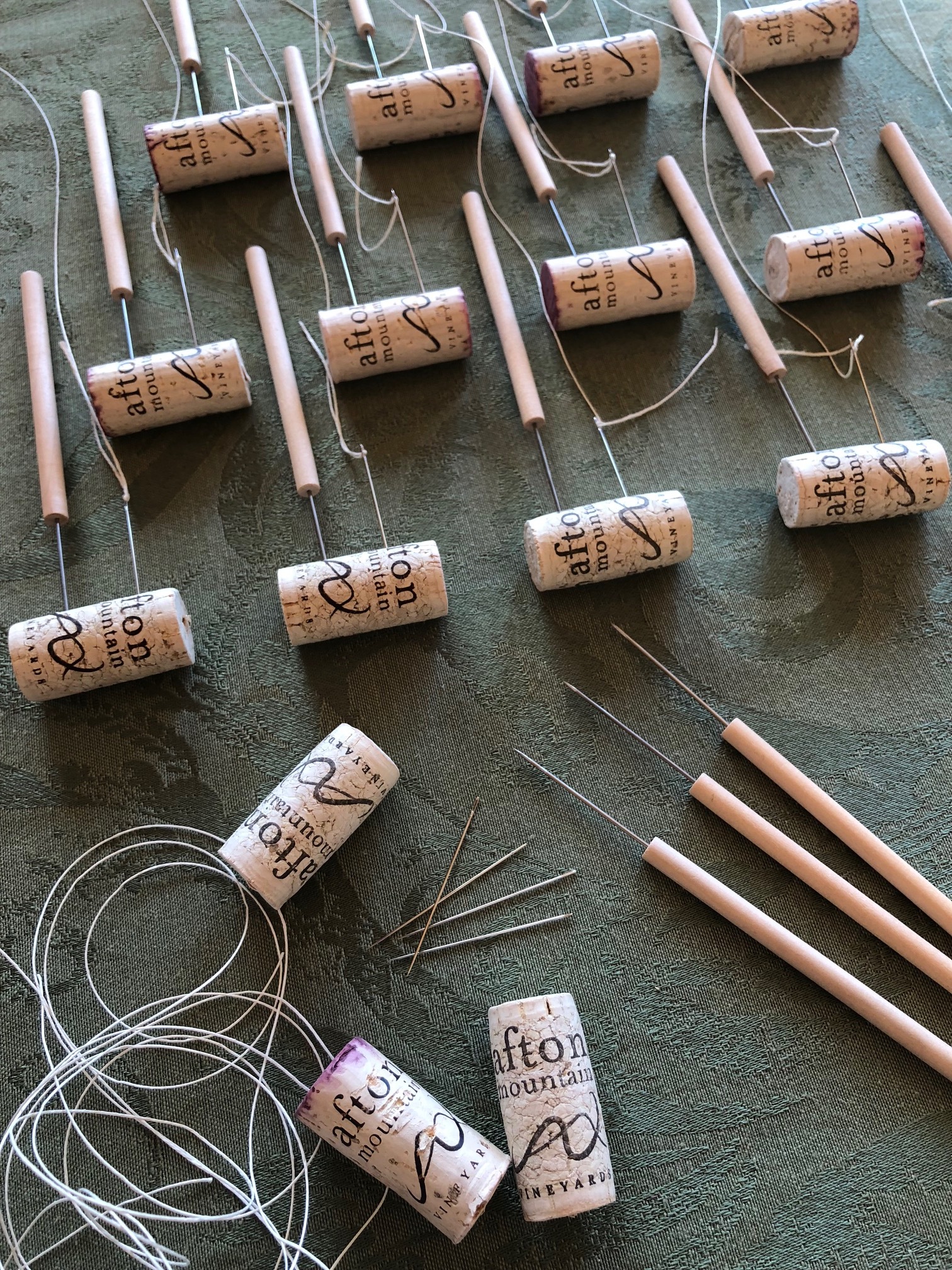
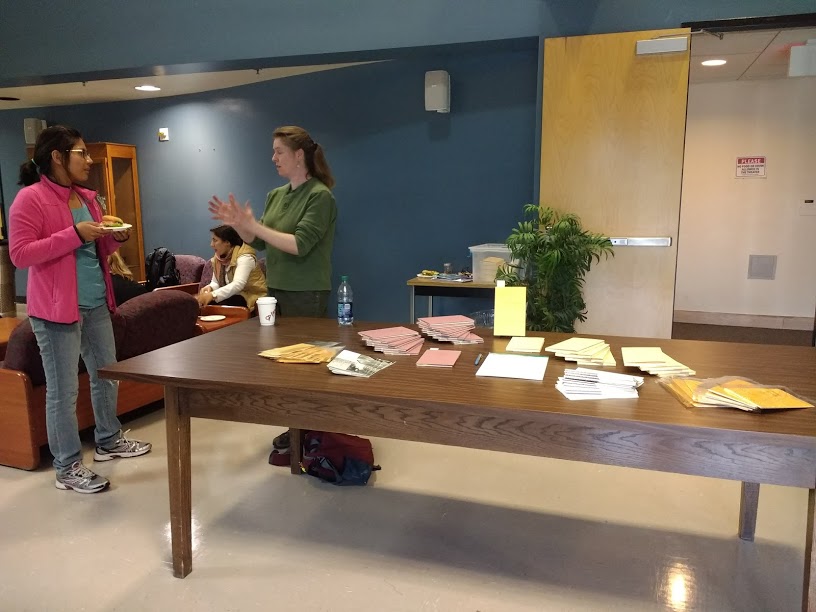
I passed around baggies of paper, punching awl, needle, and thread. In a short while, these dedicated, accomplished authors (students and teachers alike) had made a couple of blank books to hold their new ideas and creations. As they finished, I invited each one up to the table where I’d set up the only printing press I can lift—a sweet old 1930s-era hobby press—and everyone pulled a keepsake print. Huzzah! What a delight to meet and work with these young folks and their teachers. What an honor to spread the gospel of handmade books and letterpress printing to the likes of these brilliant human beings! 

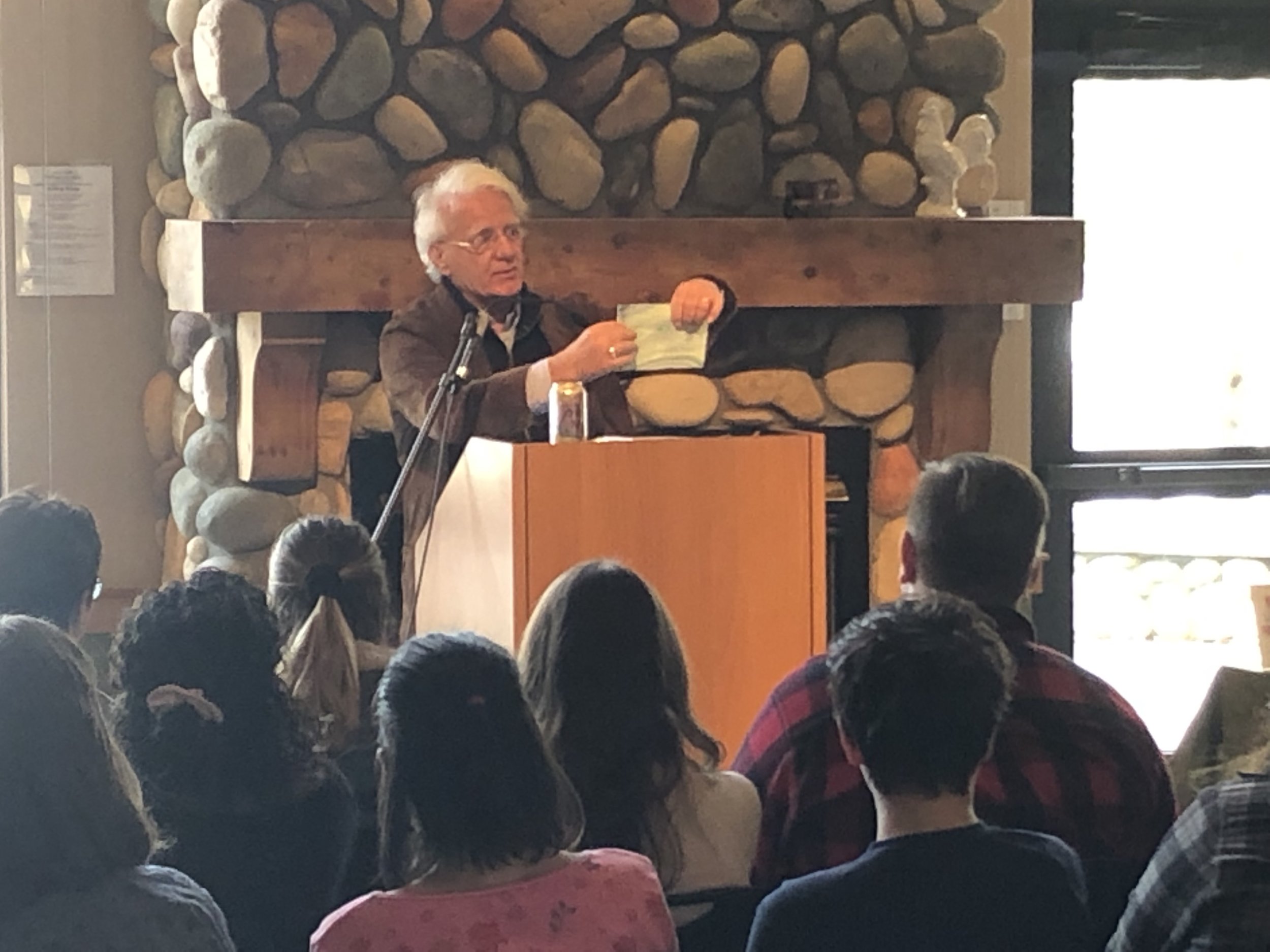
Directly on the heels of the class was the official launch of Michael Delp’s Seven River Prayers. The students moved en masse from the tables where we made the booklets to front row seats near the lectern. Faculty, friends and family of Mike’s, and community members filled the other seats. Mika called us all to attention and shared Mike’s bio, then turned the proceedings over to him. An old hand with a gathering of literature-lovers, Mike held us rapt with his particular rhythm of reading—sharing a poem; sharing part of his process as a writer; a quote by Jim Harrison; sharing another poem; a quote by Thoreau; sharing about the making of the book; one more poem. Five minutes in, we were all converts to this force-of-nature poetic experience. Including, apparently, Mike’s own grandson—four month old Wilder, bouncing in his parents’ arms at the back of the room, gurgled and burbled at his Grandad reading poetry. The expression of love and joy on Mike’s face was transcendent. 

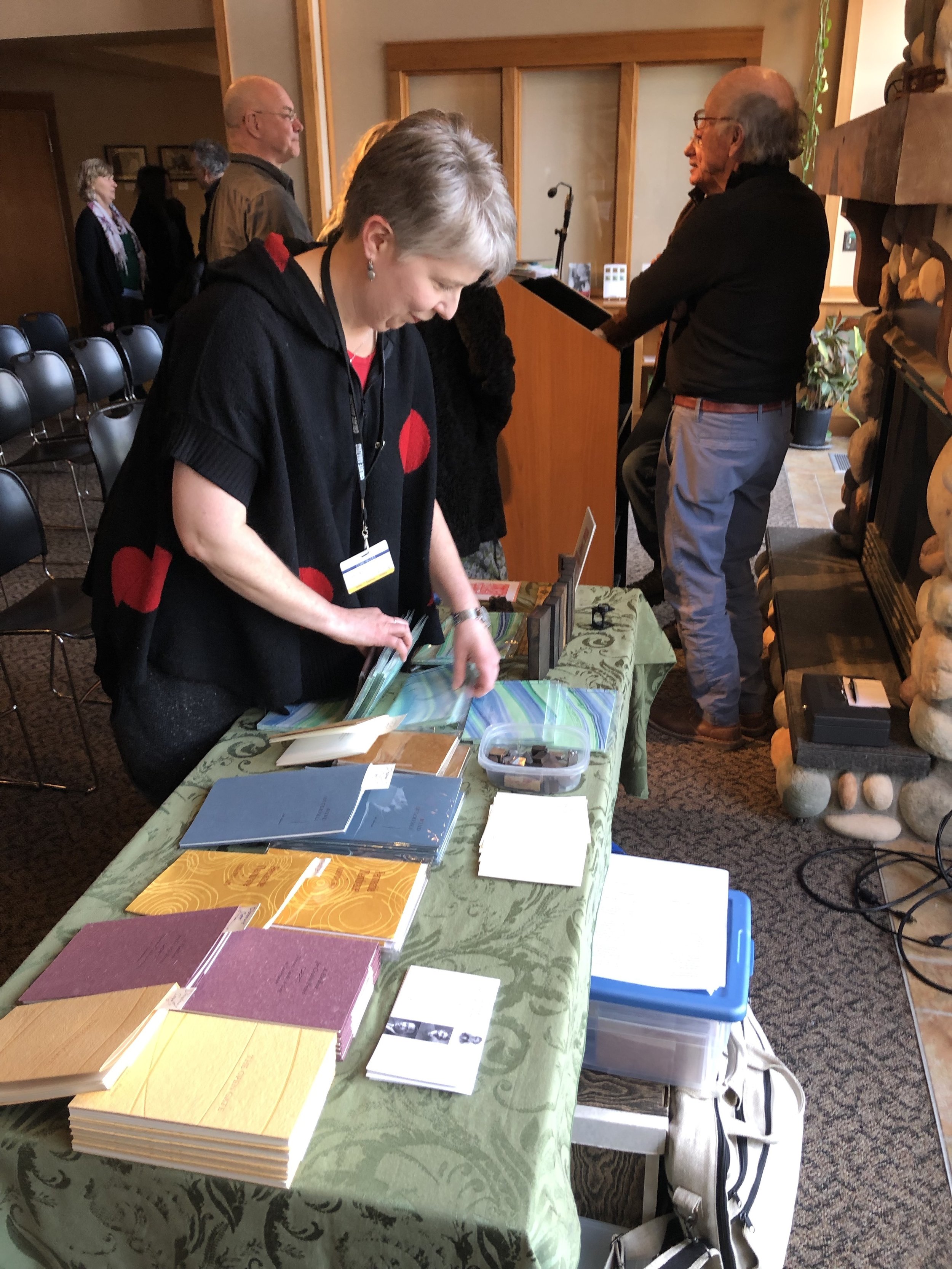
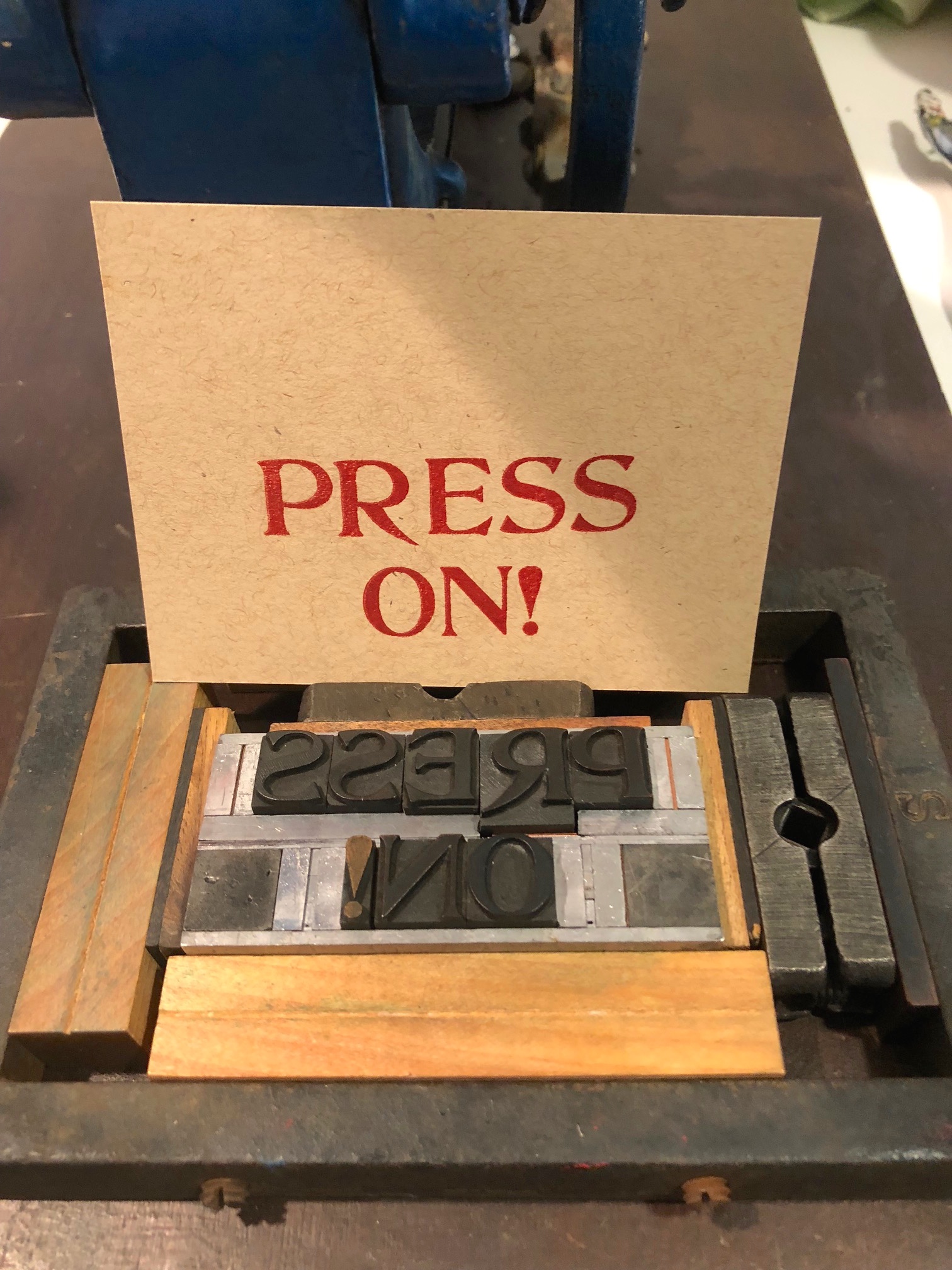
After the reading, folks hung out for a bit and talked, got their copies of the chapbook signed, and came up to the St Brigid Press table to peruse the show-and-tell display of type and tools. I had left one of Mike’s poems composed in metal type, so that folks could see some of the process of traditional printing, and also took along 125-year-old wood type letters to heft in hand. There’s nothing like picking up and holding language in its three-dimensional forms.

Mike and his wonderful wife Claudia, Joe Sacksteder, and a couple of their dear friends and I went out for a delicious supper that evening. (My first taste of Lake Superior whitefish was terrific.) More engaging and inspiring conversation flowed, first over food and later over a celebratory glass of wine at Mike’s and Claudia’s sweet, dog- and book-filled home on the shore of Green Lake. When Mike dropped me back off at the hotel, I stood outside my car for a while, cleaning ink off the press under cold starry skies. As with each experience on this trip, when night fell and I crawled back into the hotel bed, I felt at the same time exhausted, elated, and full of profound gratitude. 

The 1930s-era traveling printing press.

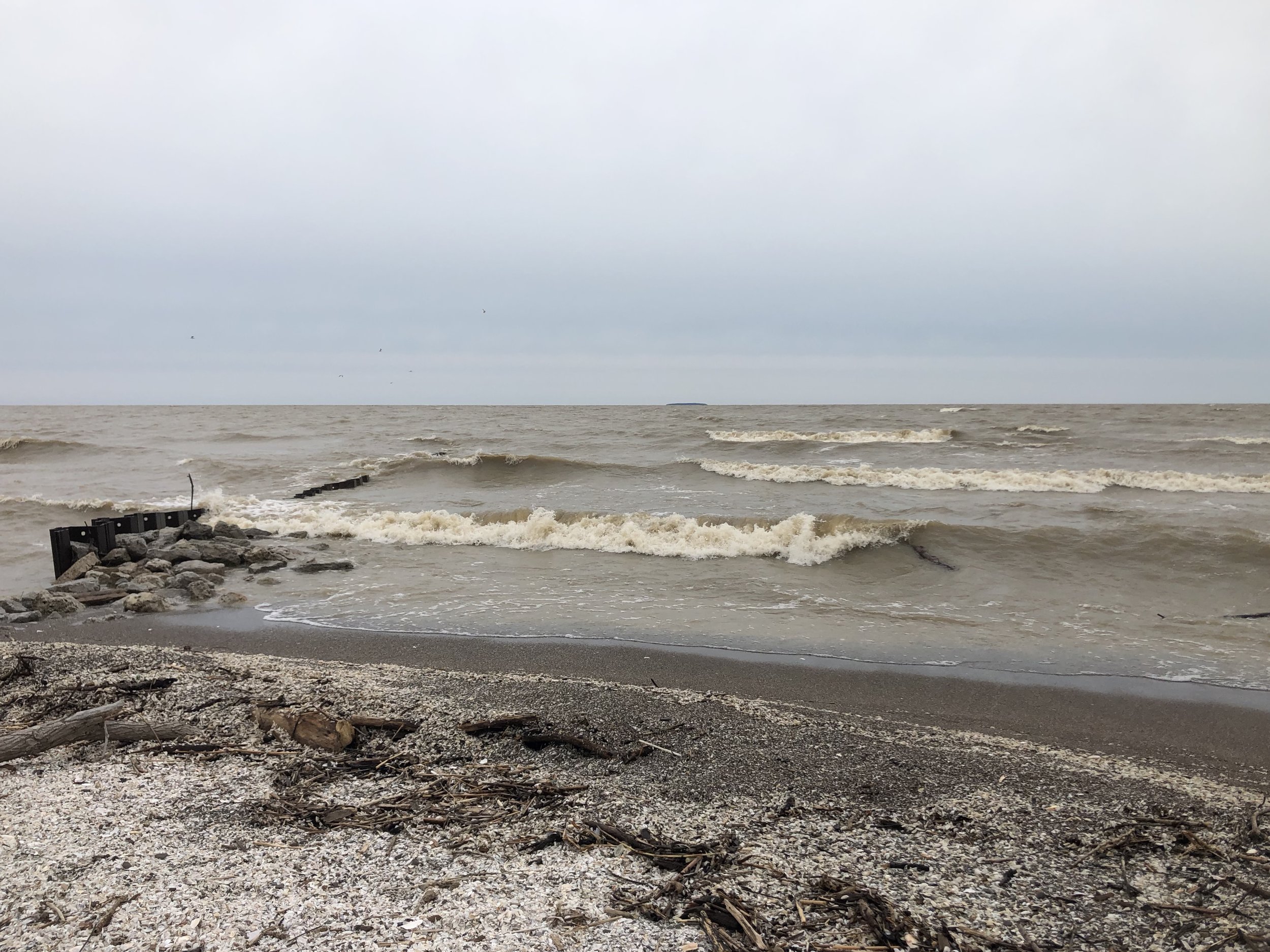
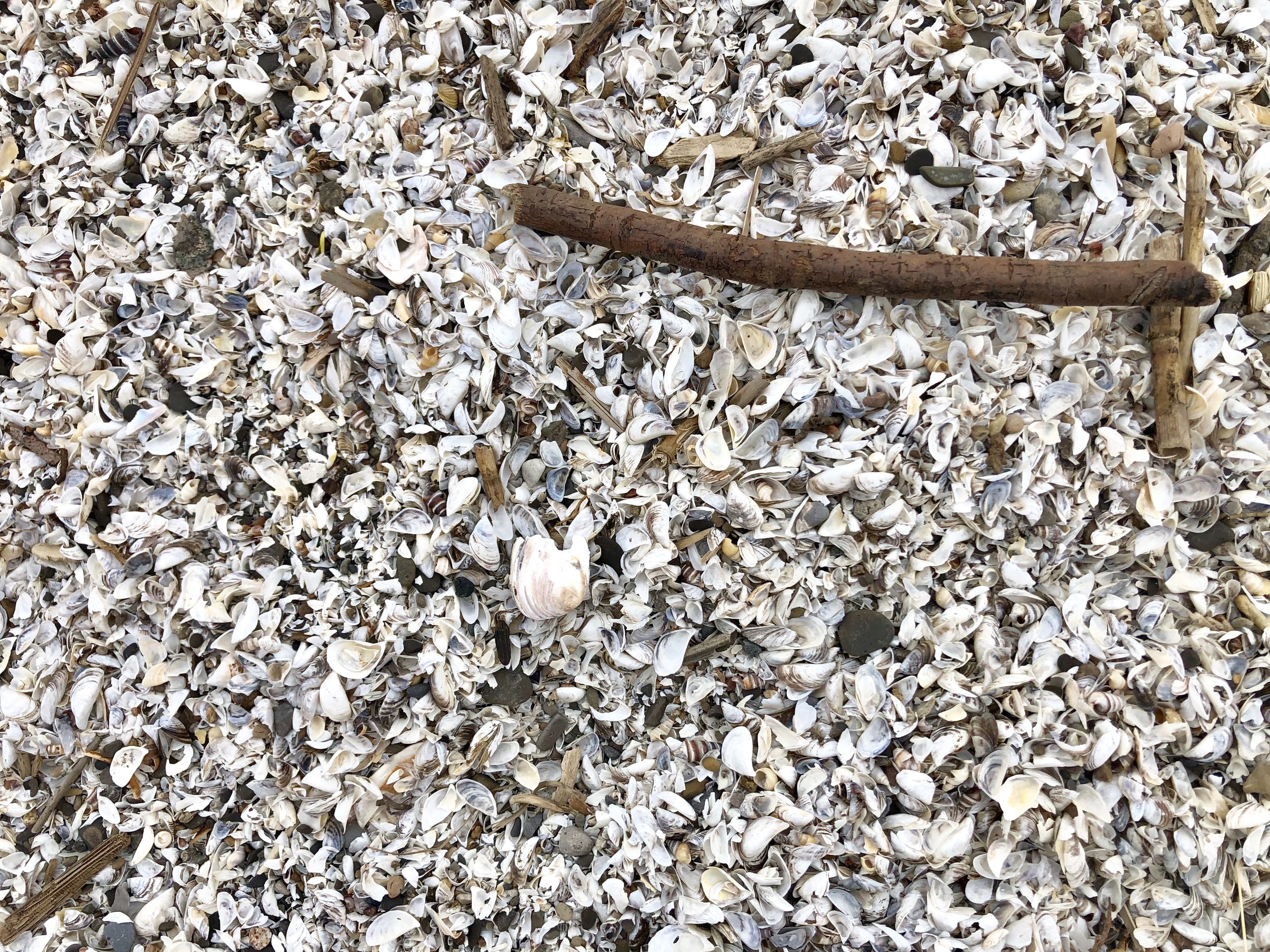
Next morning, there was only one thing left to do—head home. And I was ready! By 7:52am I pulled out of the campus parking lot and headed southeast, into a bitter cold but blessedly bright day. Around mid afternoon I reached the outskirts of Toledo, and decided to stop back by the wildlife refuge. Tree swallows were swooping and swirling over a pond near the entrance to the visitors center, and a Great Blue Heron and several Egrets stalked the edges. I drove the marsh road again, past clusters of waterfowl, to where it ended by the shoreline of Lake Erie. The fierce wind nearly blew me over as I approached the pounding, latte-colored lake edge on foot, crunching over low berms of empty shells . Seagulls winged by, west to east, unfazed by the gale. Turning back from the razor wind to the thin line of woods separating shore from marsh, I spied two Bald Eagle nests high in still-bare trees. Both were occupied, and I regarded with awe those parents hunkered against snow and cold, sheltering new life.

As I left the wildlife area and worked my way towards the interstate past fields of stubble, I must have seen a dozen more eagles. The day, and my energies, diminished as I left Ohio and pressed east into the ridges and valleys of western Pennsylvania, and I stopped for the night on the outskirts of Pittsburgh. The next morning broke with a cold rain, and I finished the long road-trip in soggy fog. It was all worth it, though, when I finally rolled up our driveway and was welcomed home into my spouse’s open arms and the pup’s ecstatic leaps. 

What an amazing, 1757-mile journey—new places, new people, new experiences, and enduring friendships, memories, and deep gratitude. 

Home very-sweet home.

2 Comments

A Day of Peace

2 Comments

A Day of Peace

Late this afternoon, as I was hauling wood by hand up to the house in the growing twilight, I thought of Wendell Berry’s poem, “The Peace of Wild Things.” In it, the speaker asserts that being present with nature—with the wood duck and heron, still water and stars—restores him, returns him to the state of wild grace that our fraught human existence often fractures and masks. 

I was tired, the tractor wouldn’t start, and sleet was forecast overnight. Grabbing a small dolly, I loaded fragrant splits of white oak onto its frame. The second time trudging up the hill from the woodshed, I suddenly woke up to the sound of birds. Without the tractor’s rattle, I could hear all the small lives that were preparing for night—the cheeps and whistles of sparrows, titmice, a phoebe. Instead of the heaviness of the wood, I felt light. Breathed in chilly, smoke-scented air. Looked up to clouds purling in from the west. Said, thank you.

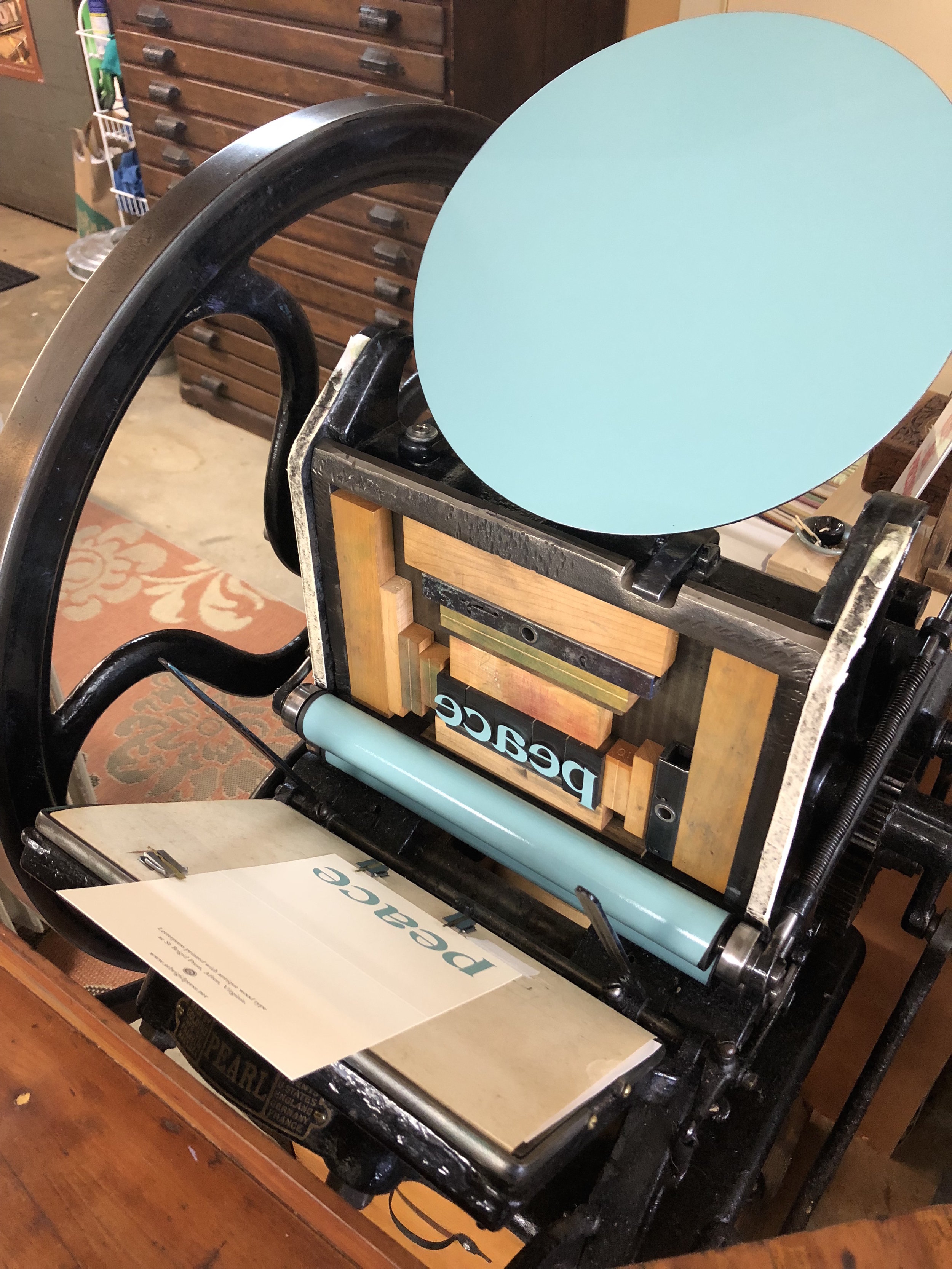
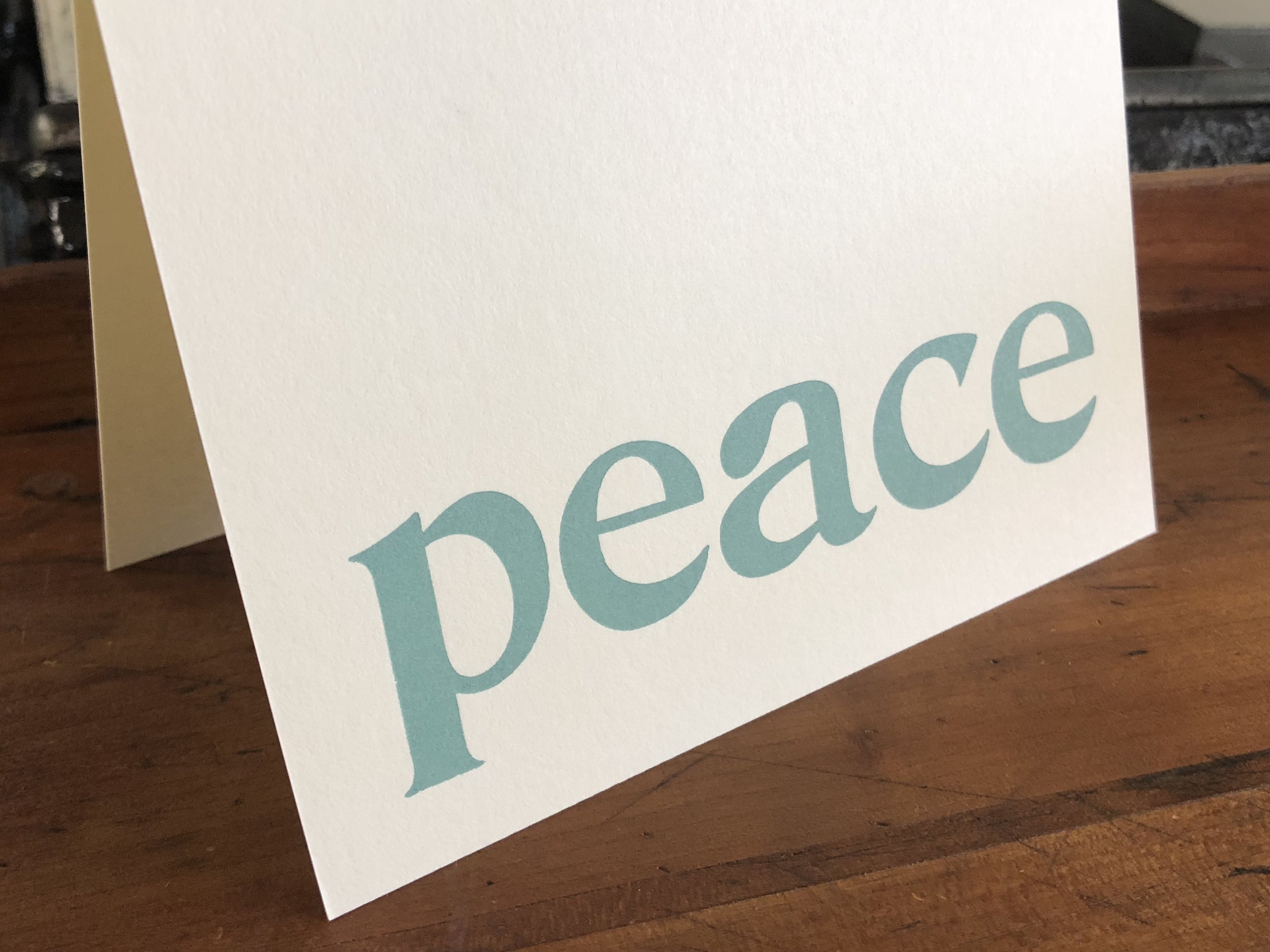
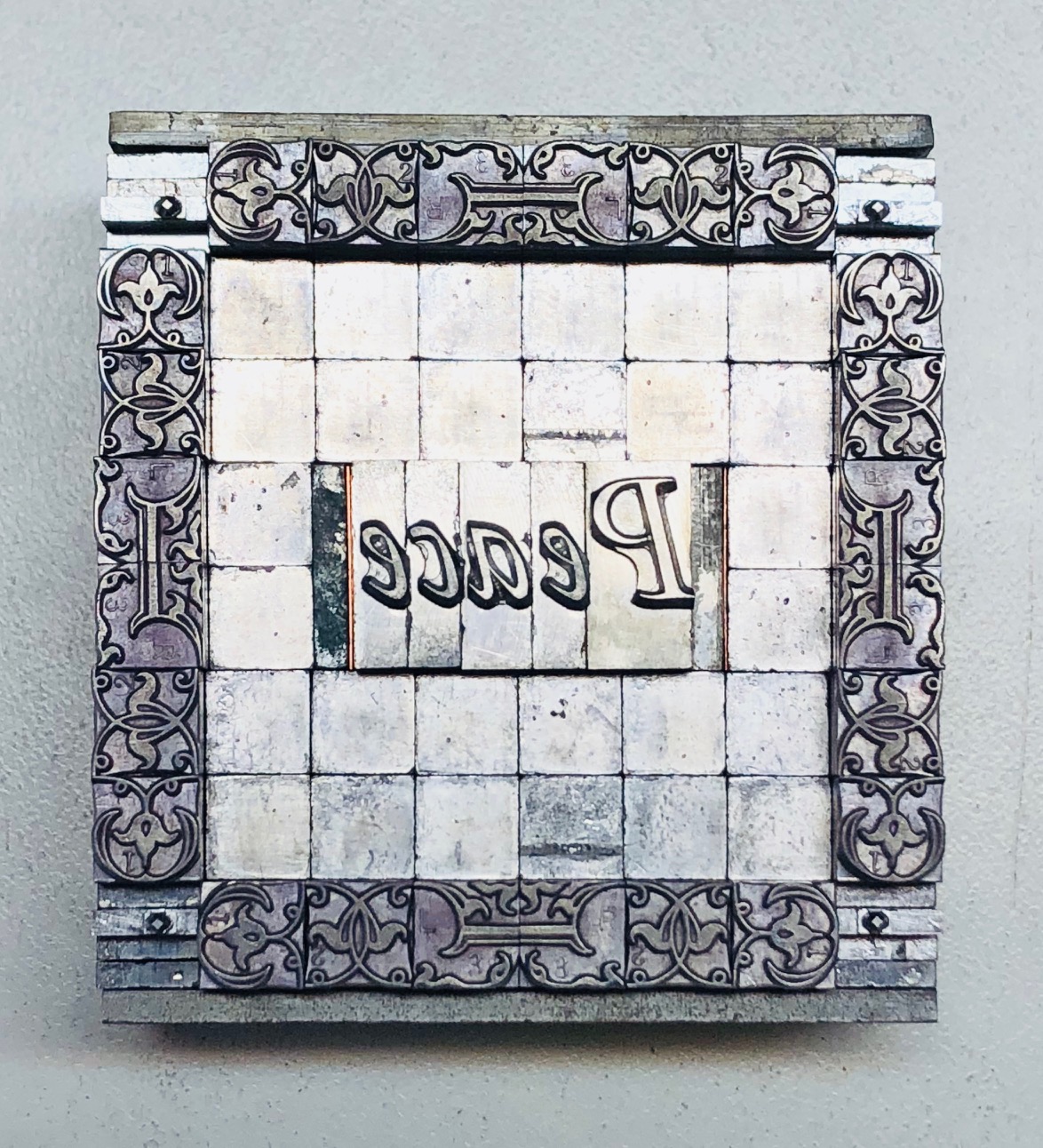
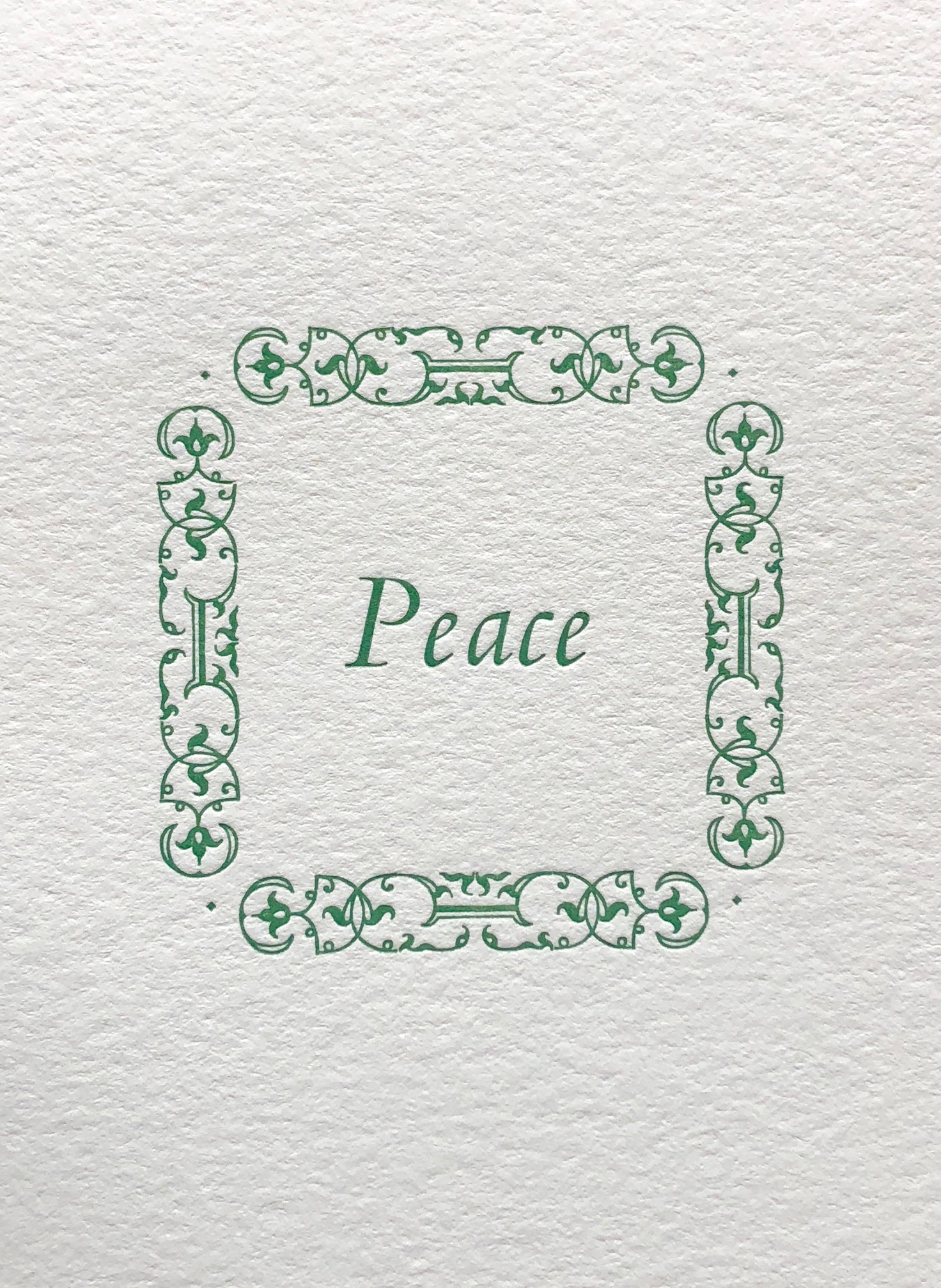
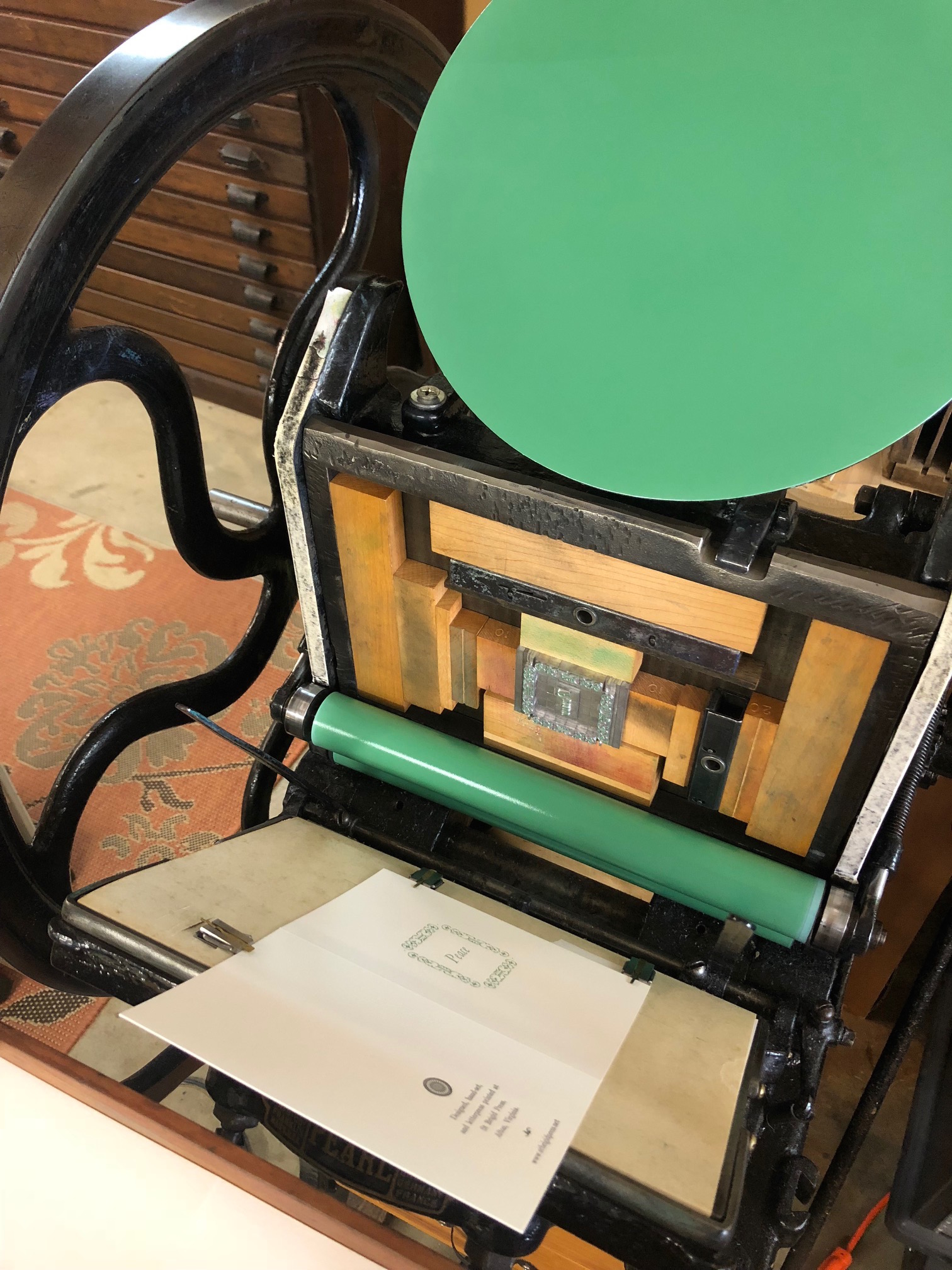
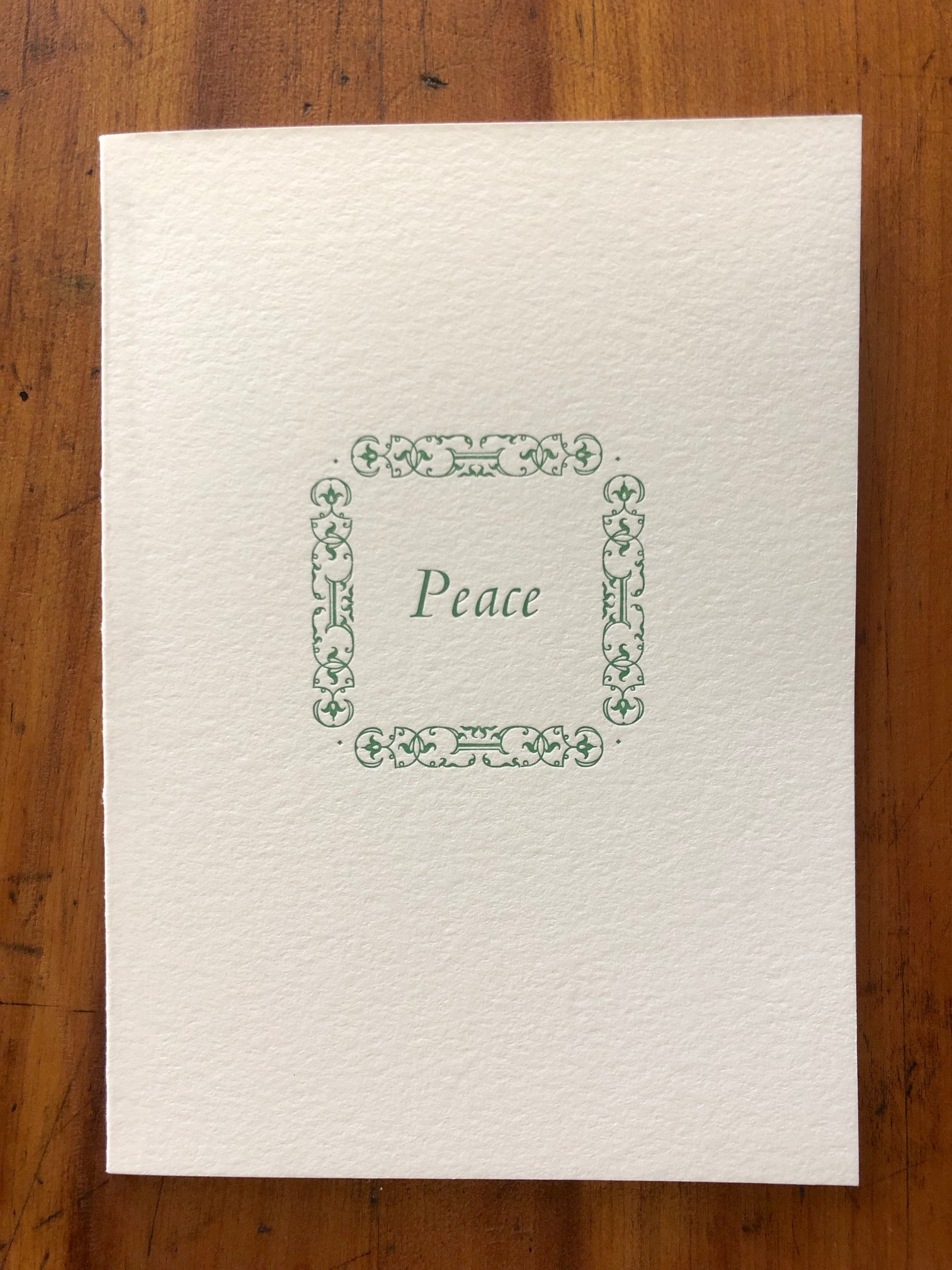
 A fit, graced end to this day of printing peace. 

IMG_6094.jpg

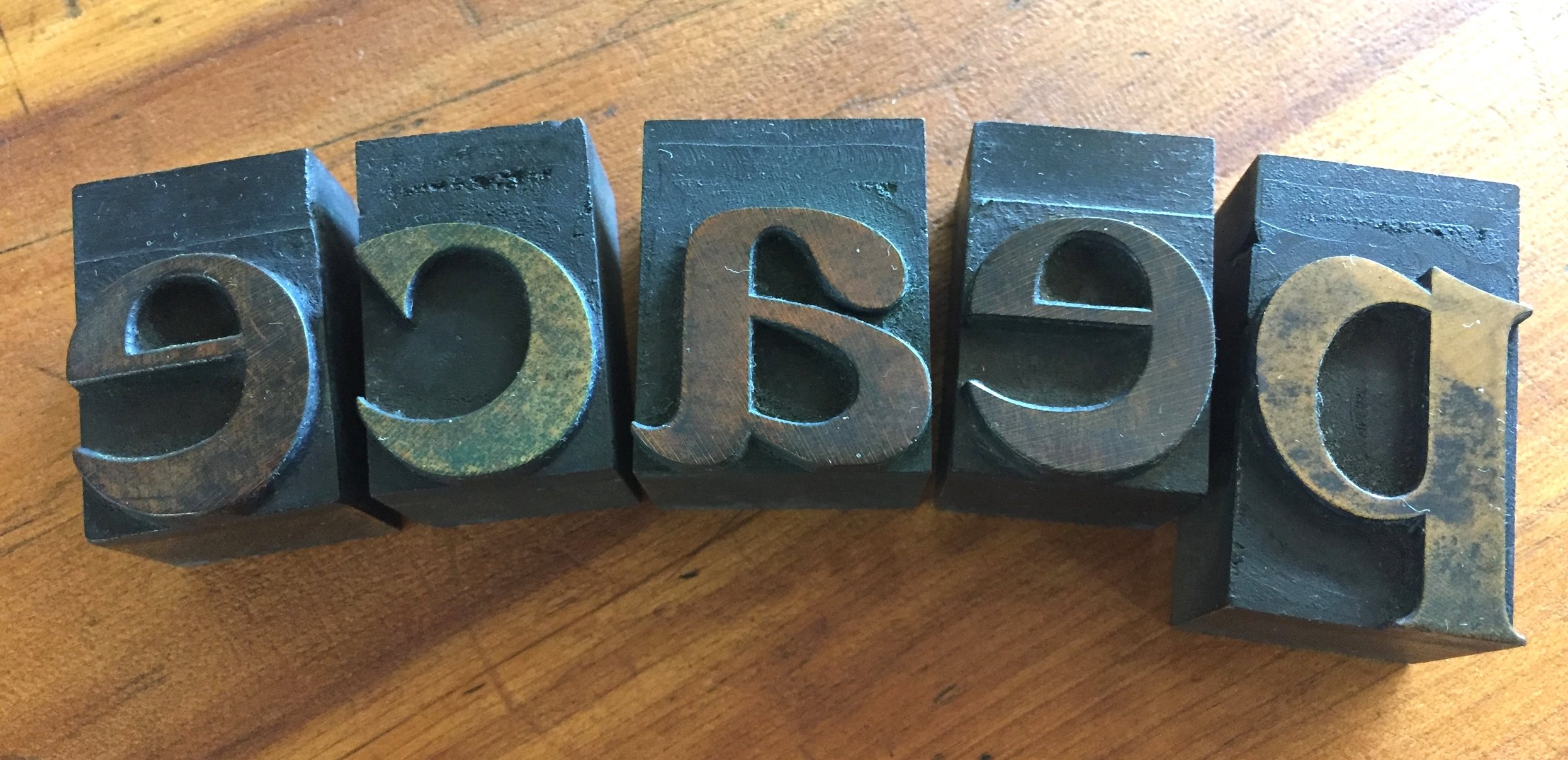
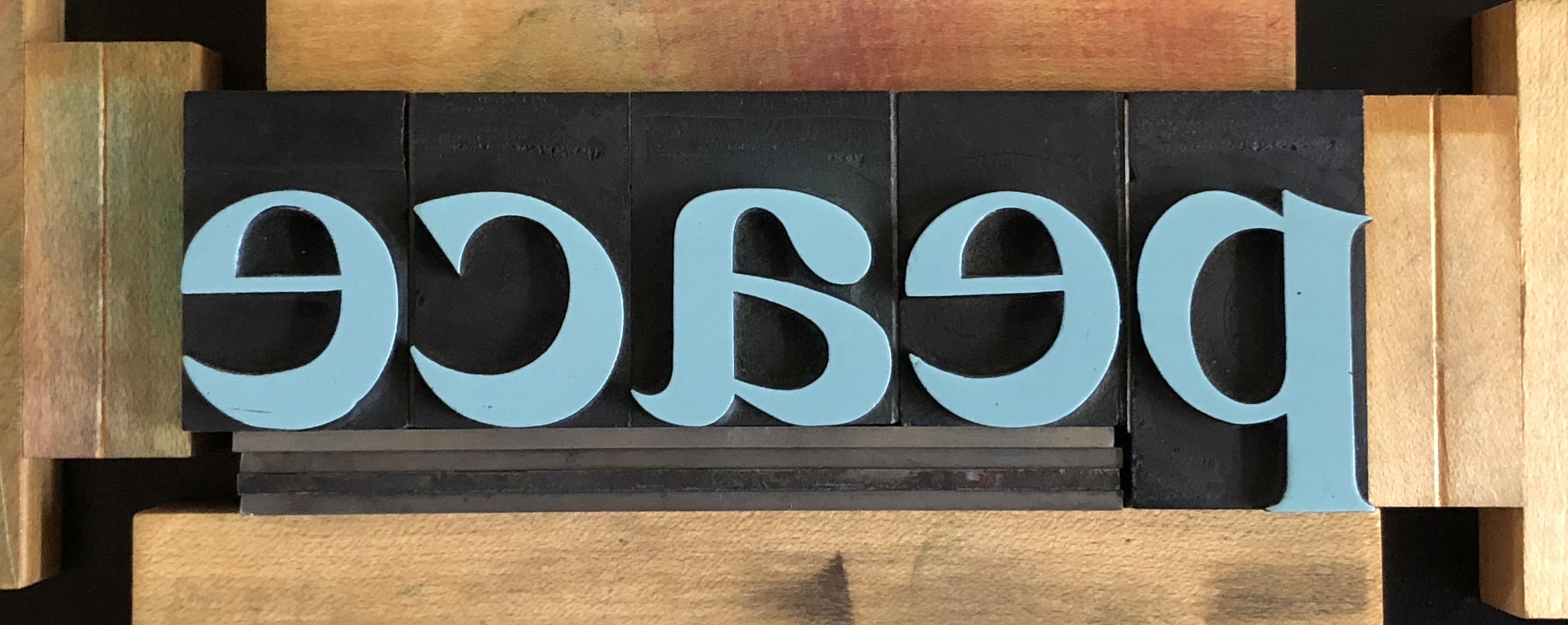
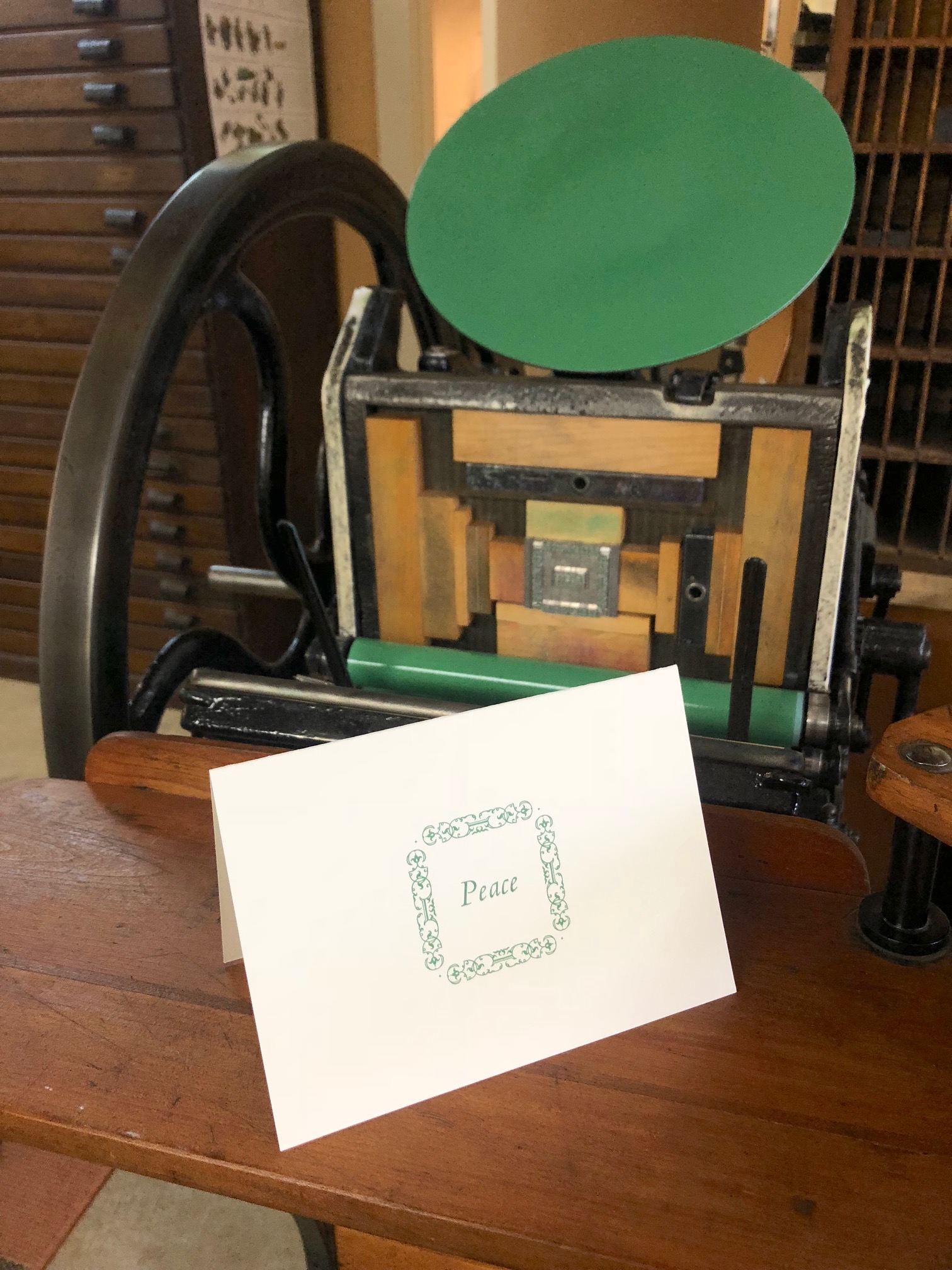
“peace” holiday cards on press this morning —

using antique wood type from the St Brigid Press collection

“Peace” holiday cards on press this afternoon —

composed with metal type and ornaments

And now, an evening by the fire.

May you all be well, warm, and filled with peace.

Our trusty Jøtel woodstove, warming us this chilly night.

2 Comments

Women in Literature: Past, Present, & Future

3 Comments

Women in Literature: Past, Present, & Future

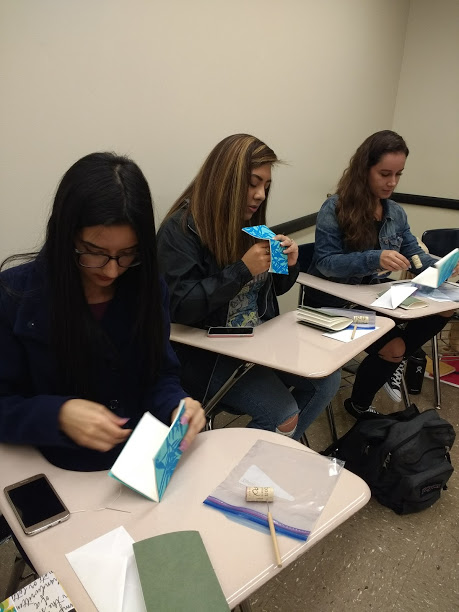
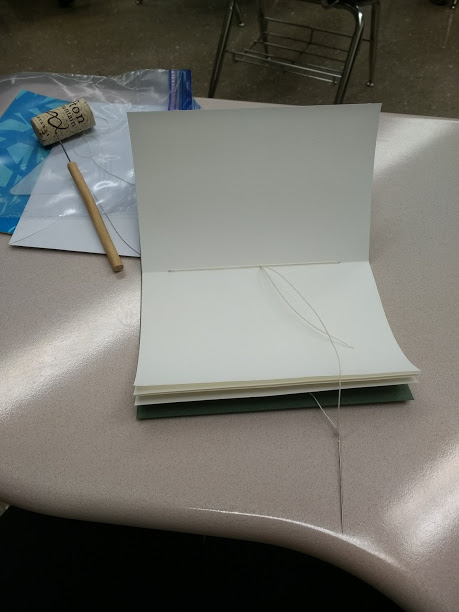
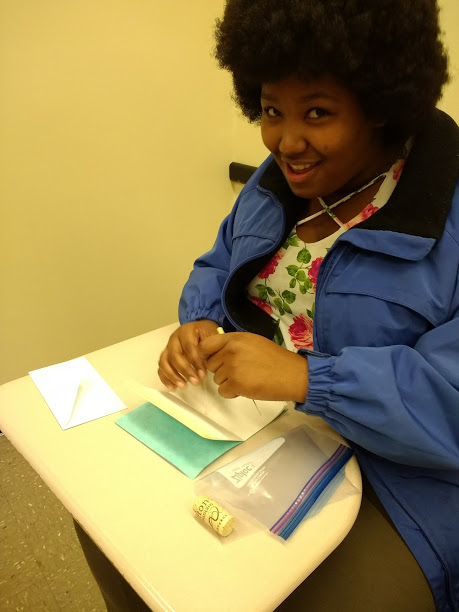
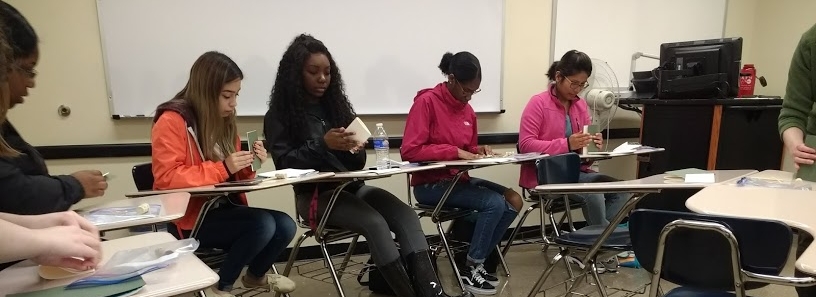
Last week, I had the great pleasure of being a guest in a Women in Literature class at Northern Virginia Community College (Woodbridge). Professor Indigo Eriksen, a fabulous poet and teacher whom I had met some years ago at a poetry festival, invited me to show her students a simple sewn binding technique that they could use for their end-of-term chapbook projects.

"Women in Literature" students hand-sewing their first notebooks.

"Women in Literature" students hand-sewing their first notebooks.

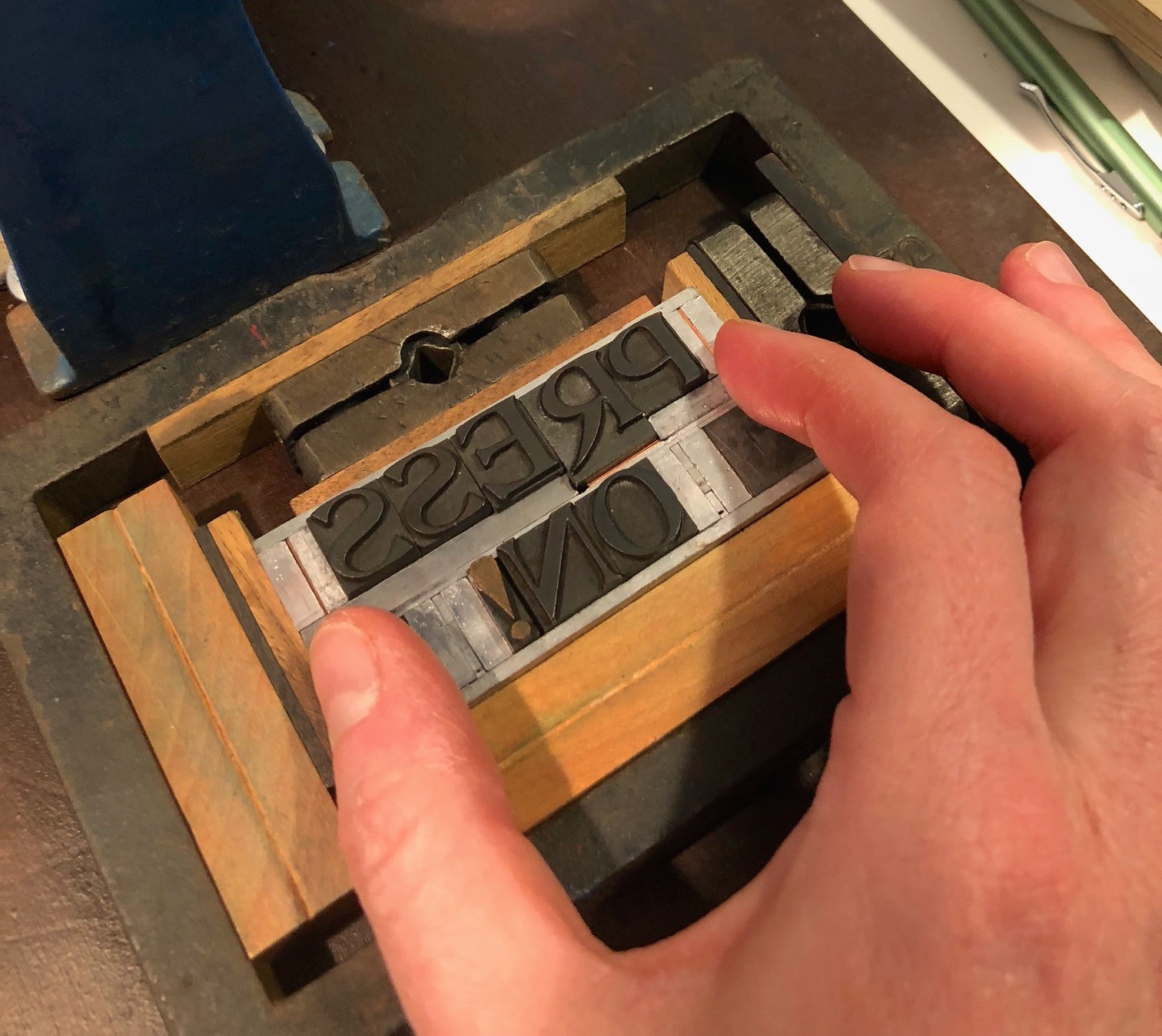
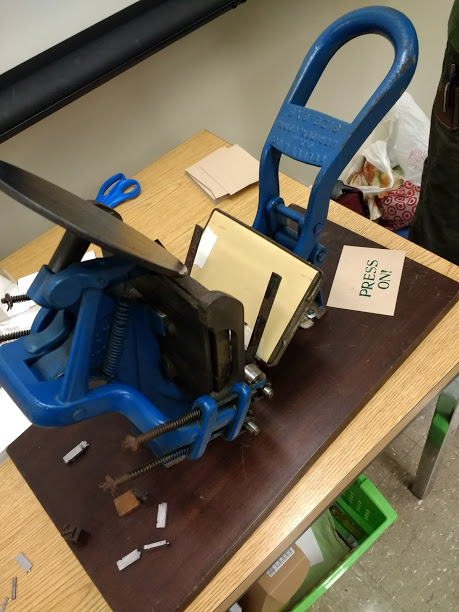
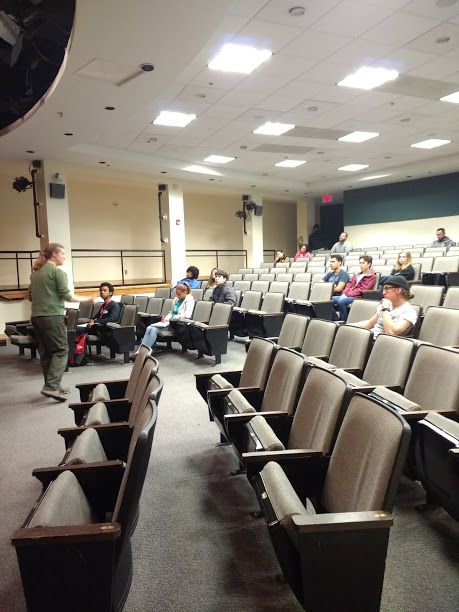
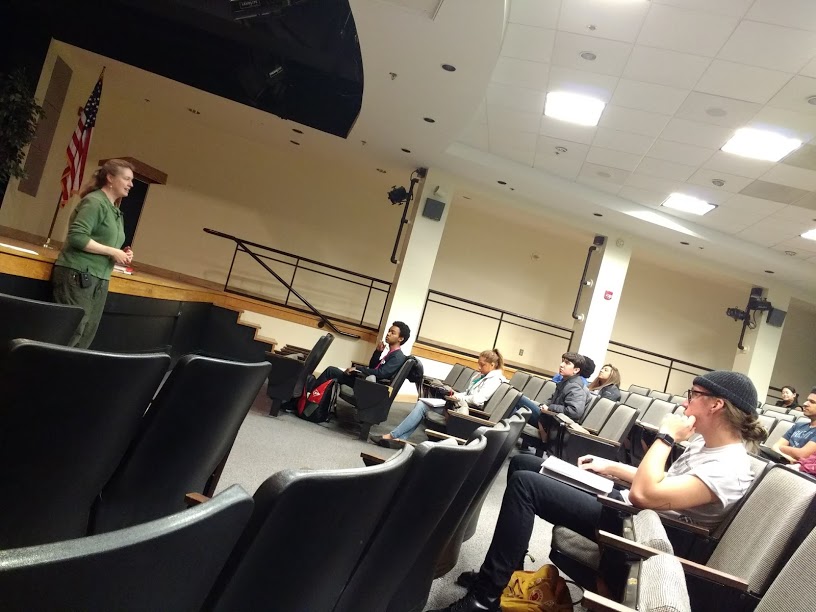
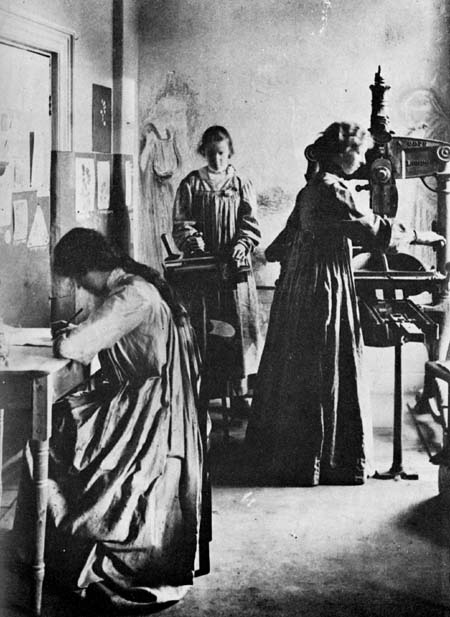
That initial intent blossomed into spending an hour and a half with her wonderful class, sharing about the history of women in printing and publishing, sewing a couple of notebooks together, and letterpress printing a keepsake on an old traveling press. Later that afternoon, I gathered with about twenty other students in the campus auditorium to talk about poetry, writing, language, and to read a bit from my own work in The Open Gate: New & Selected Poems

IMG_20180416_131335609.jpg
IMG_20180416_131253020.jpg

I was incredibly moved and invigorated by the engagement of these young women in the class, and the women & men at the reading. They were so present, interested and interesting, bright, and energized. They asked thoughtful, insightful questions, and deepened my own curiosity and understanding about language and literature. The students in the class took to sewing like ducks to water, and they are now part of the great lineage of women who have made a book! I am honored to have crossed paths with them all, and look forward to seeing their creative lives unfold. 
Here's a video of a happy printer ~ Janae printing her first letterpress piece on the 1930 Kelsey 3x5 press!

Here are a few photos from our conversation later that afternoon about poetry, writing, and publishing:

Here are a few slides from what I shared with the students about the history of women in printing and publishing. It's a long and vibrant history, one that they are now a part of!
Many, many thanks to Professor Indigo Eriksen, the fantastic students at Northern Virginia Community College Woodbridge, and Deans David Epstein & Michael Turner for inviting me to spend a wonderful afternoon with them!

All best wishes to all, 

Emily Hancock

3 Comments

 A Letterpress Lexicon, Part 4: Spacing Out

6 Comments

A Letterpress Lexicon, Part 4: Spacing Out

Hi, Friends of St Brigid Press!

Here is the long-awaited fourth installment in our occasional blog series ~ A Letterpress Lexicon ~ about the words and phrases that identify printing's particular tools and processes. Enjoy!

If you missed the first posts in this series, you can find them here:


A Letterpress Lexicon Part 4 ~ Spacing Out

We space out daily here at the Press ~ all for a good cause. ;-) 

You might already know that every single letter of the alphabet that we set and print here is a physical piece of metal or wood ~ a piece .918-inches tall, with the reverse image of the letter on the top, in relief. 

IMG_0864.jpg

Hand-set type:

Moveable type, which makes everything possible here at the Press. Here, the letters of the word "haiku" in metal.

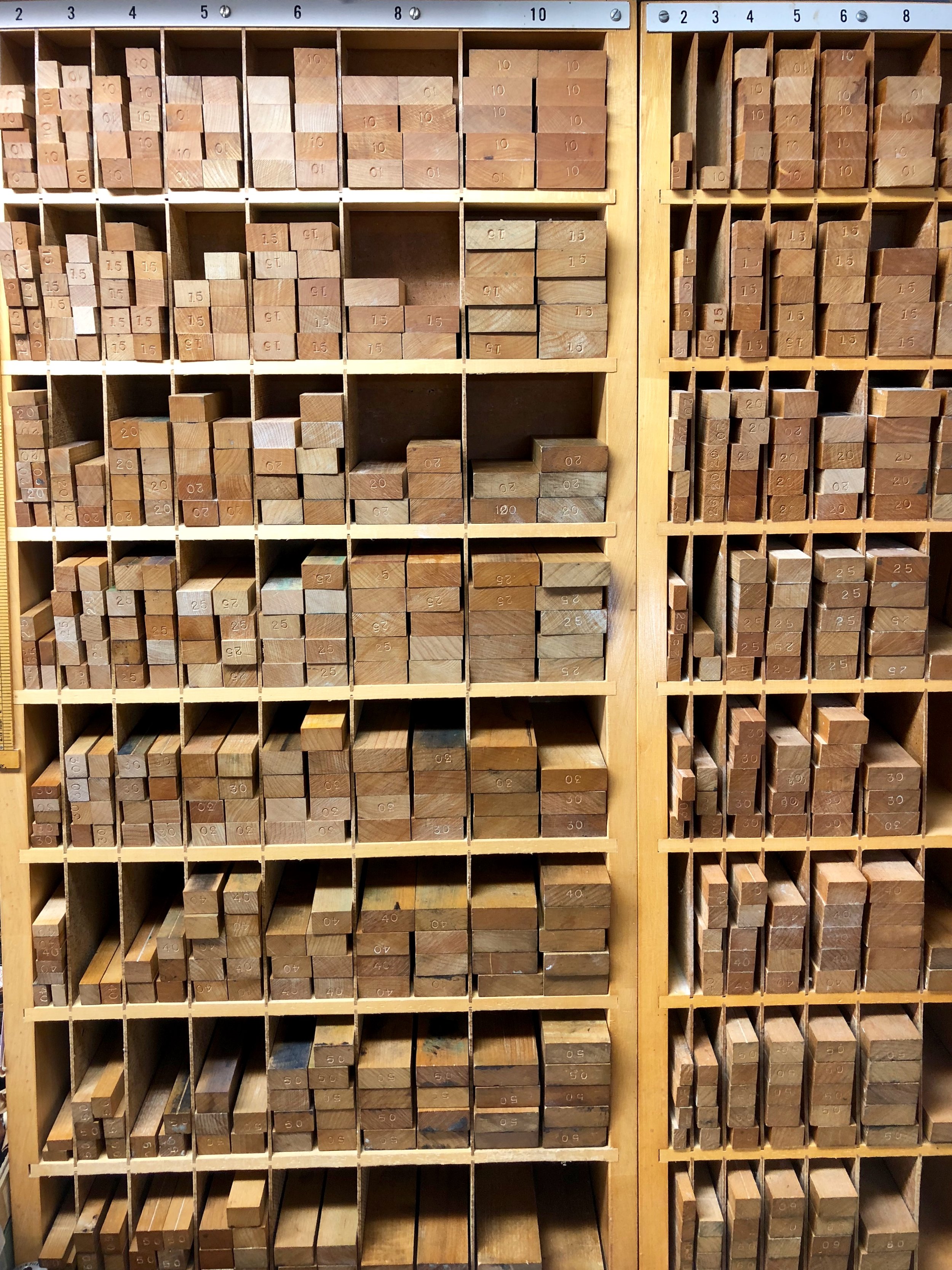
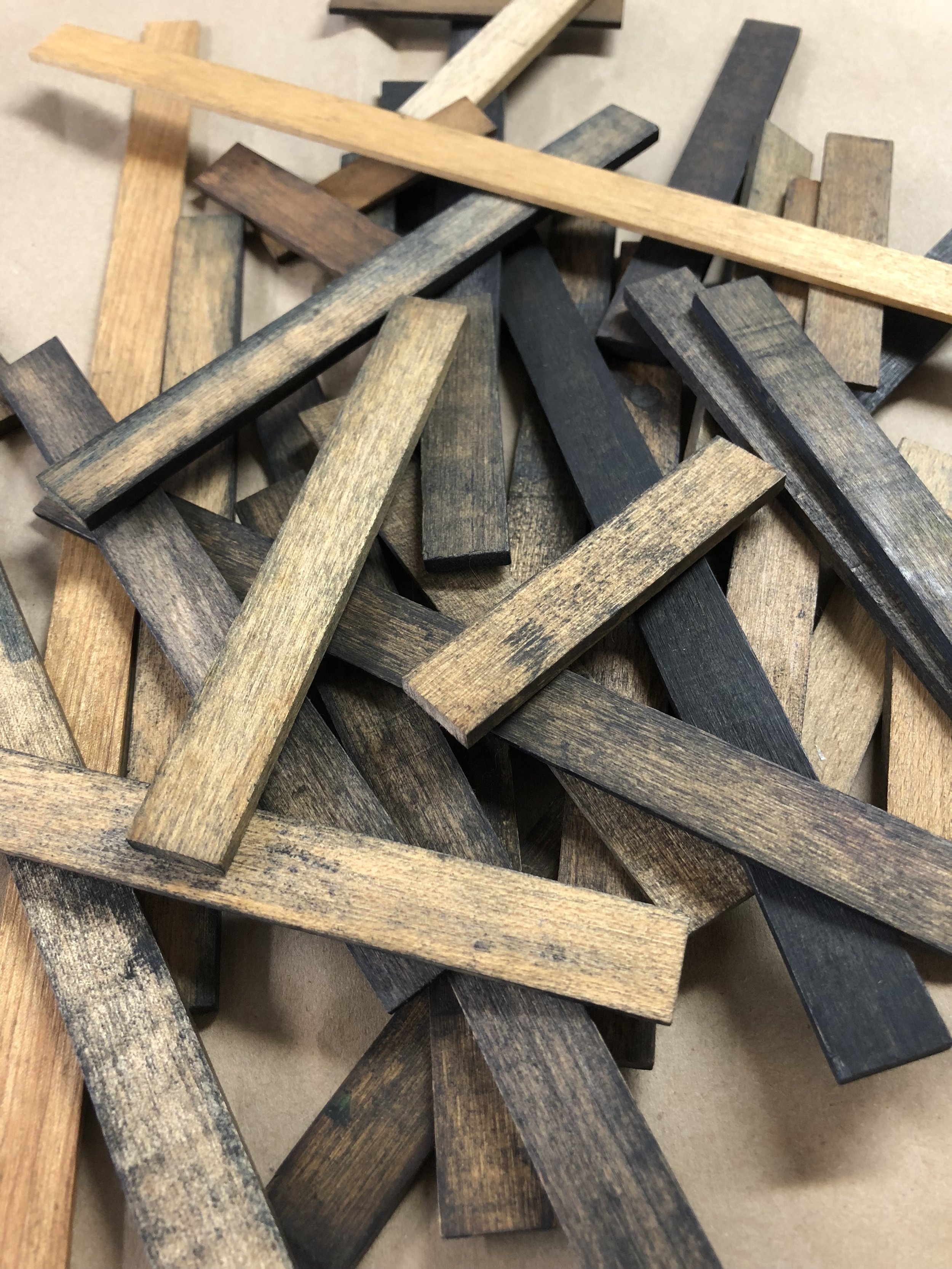
Well, every single SPACE between every word and every line is also a physical piece of metal or wood. These pieces are made a little lower than the top of the letters, so that they do not pick up ink.

IMG_7132.jpg

The forme:

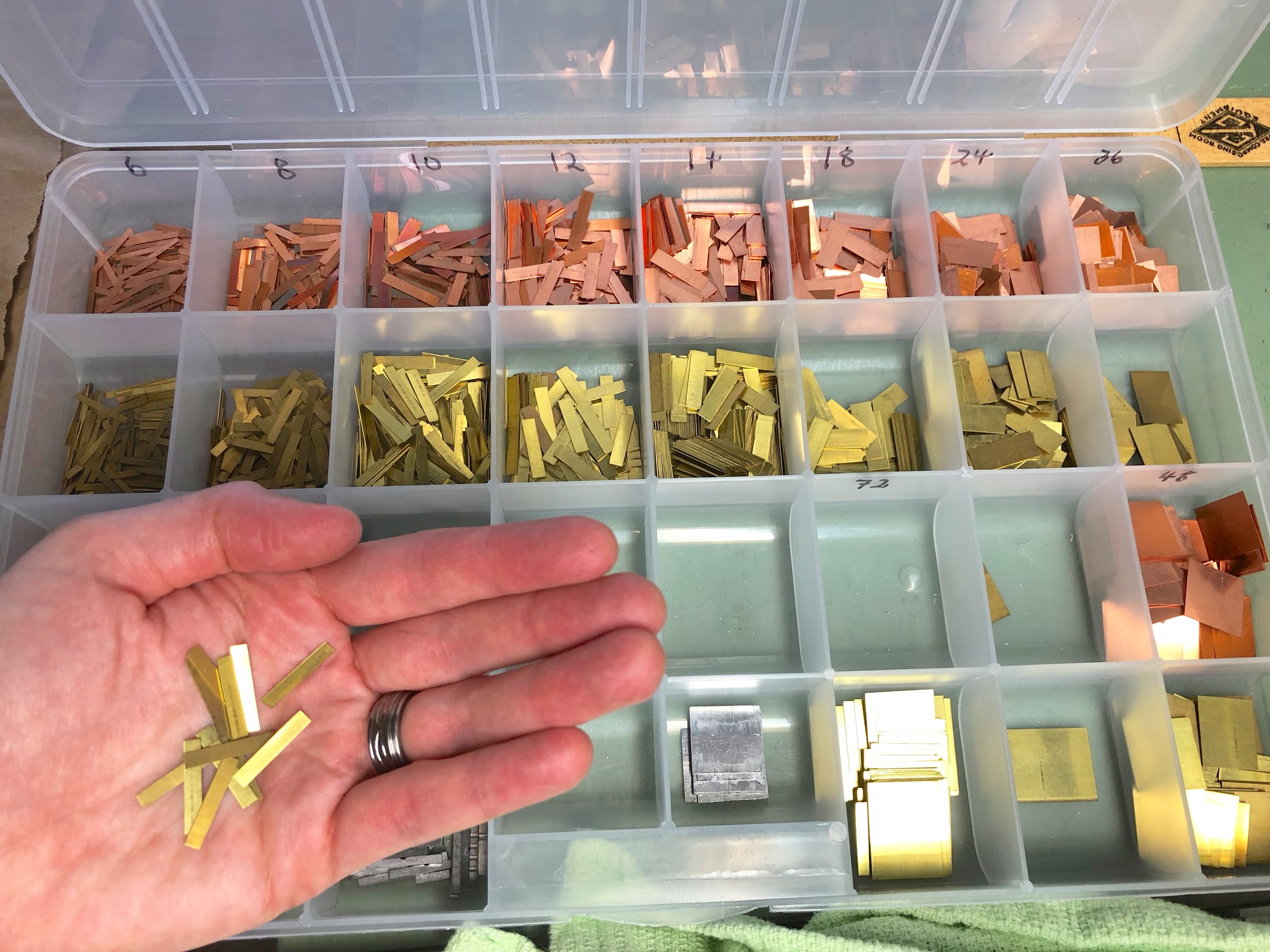
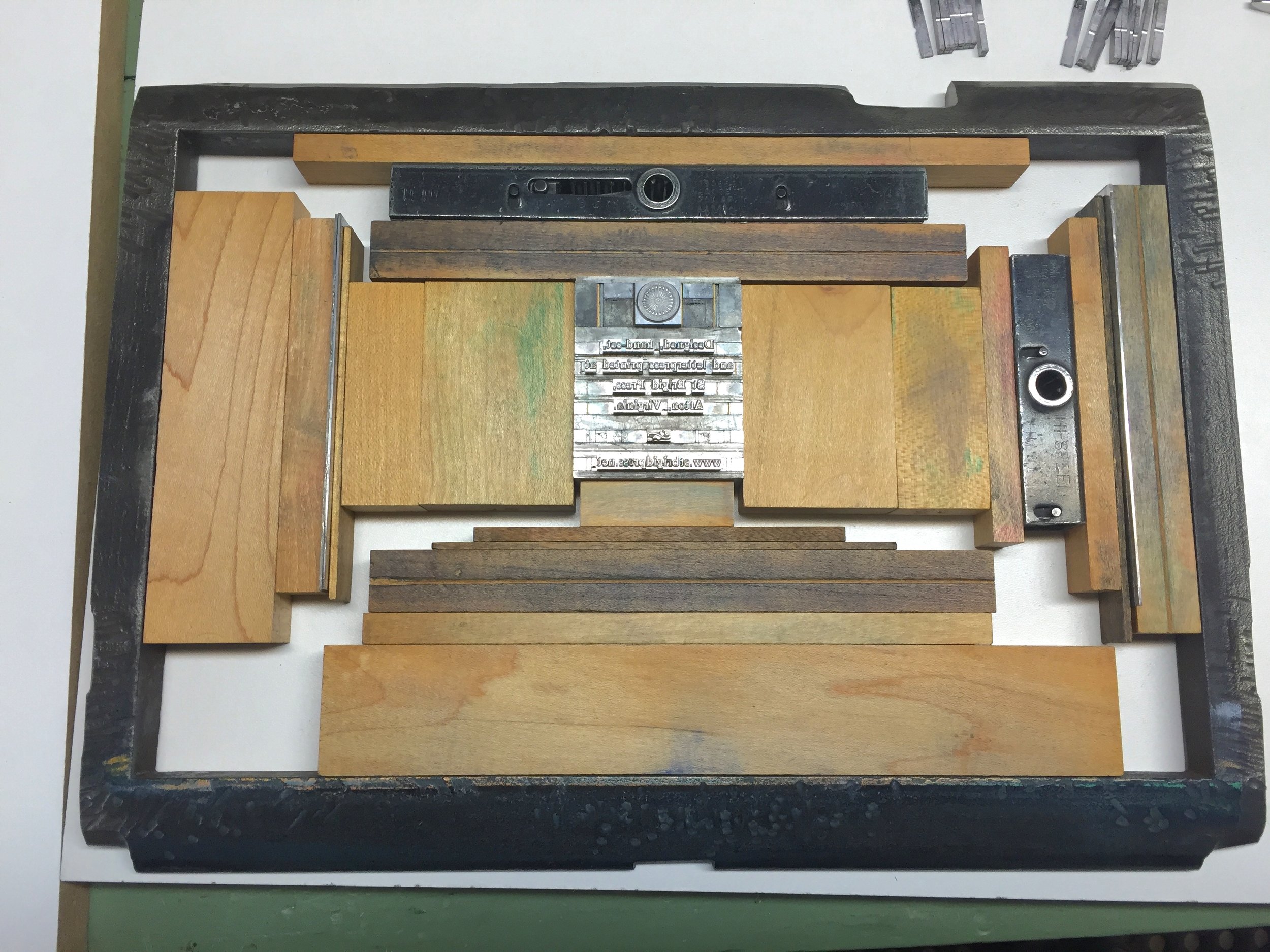
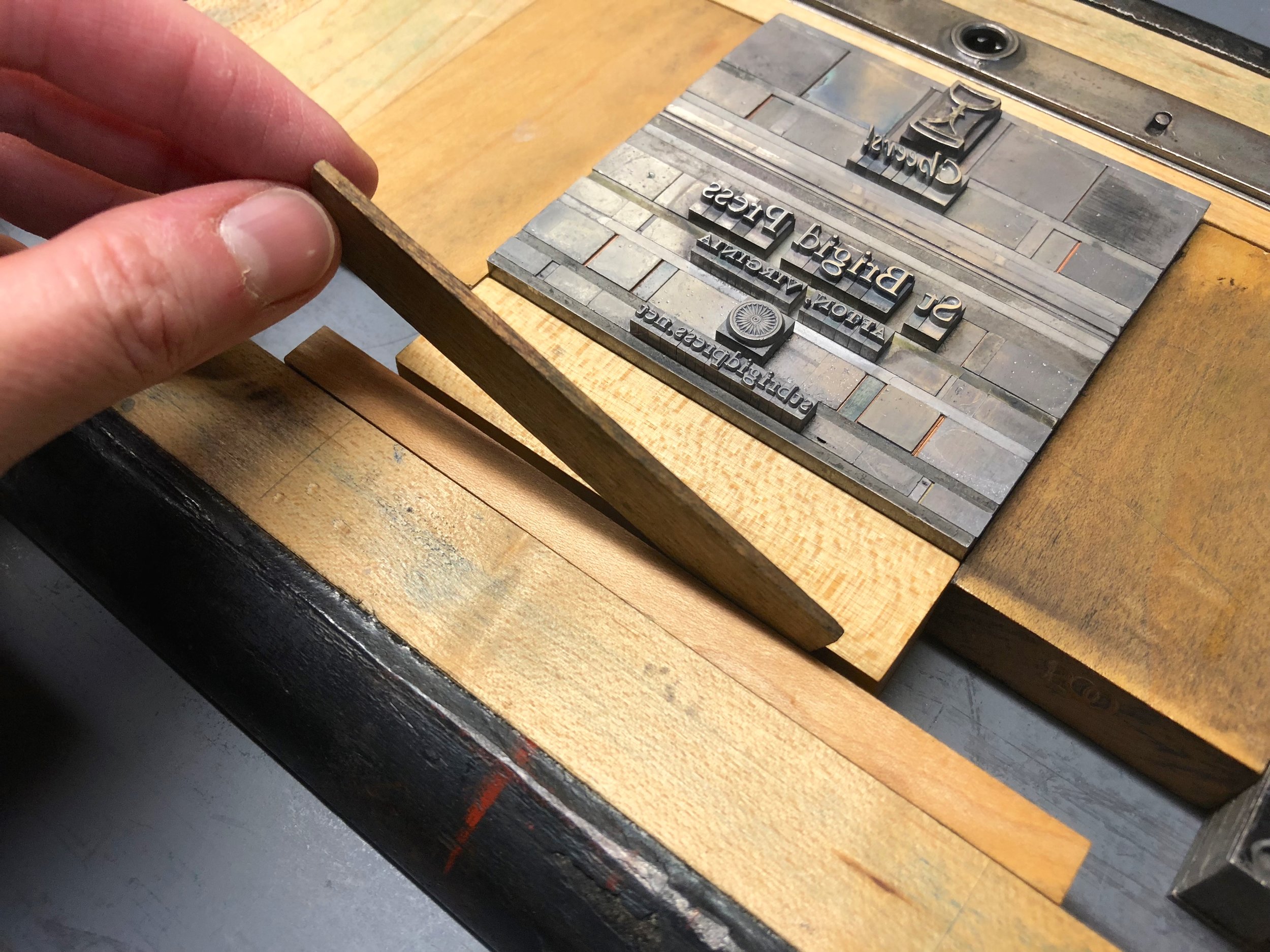
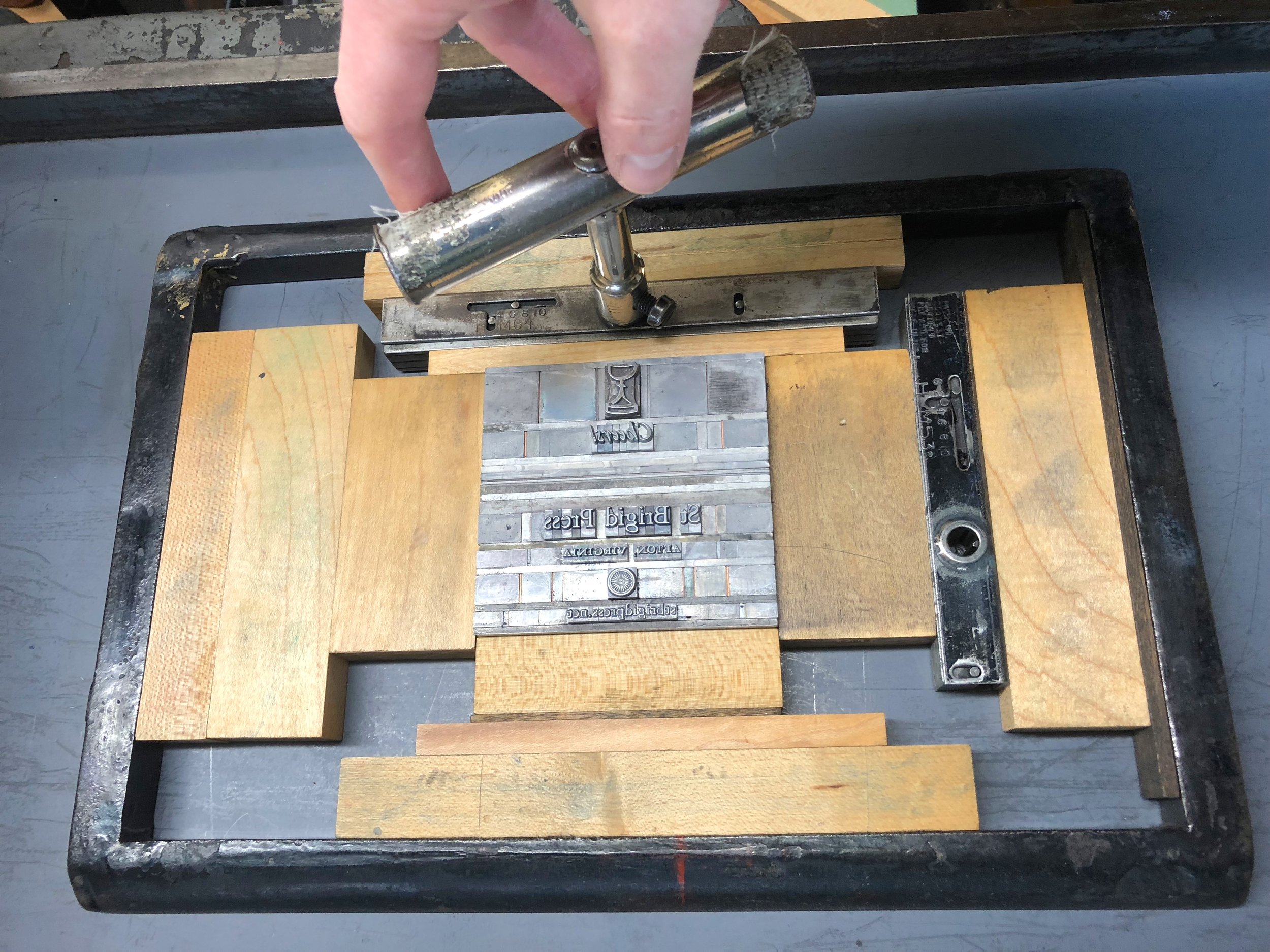
In this photo, you can see all of the metal spacing material surrounding the metal letters. The spacing material is a bit lower in height, so it does not get ink on it, and comes in various sizes according to the size of the type (12-point, 24-point, etc.). The spacing between the lines of type is also metal, cut to length.

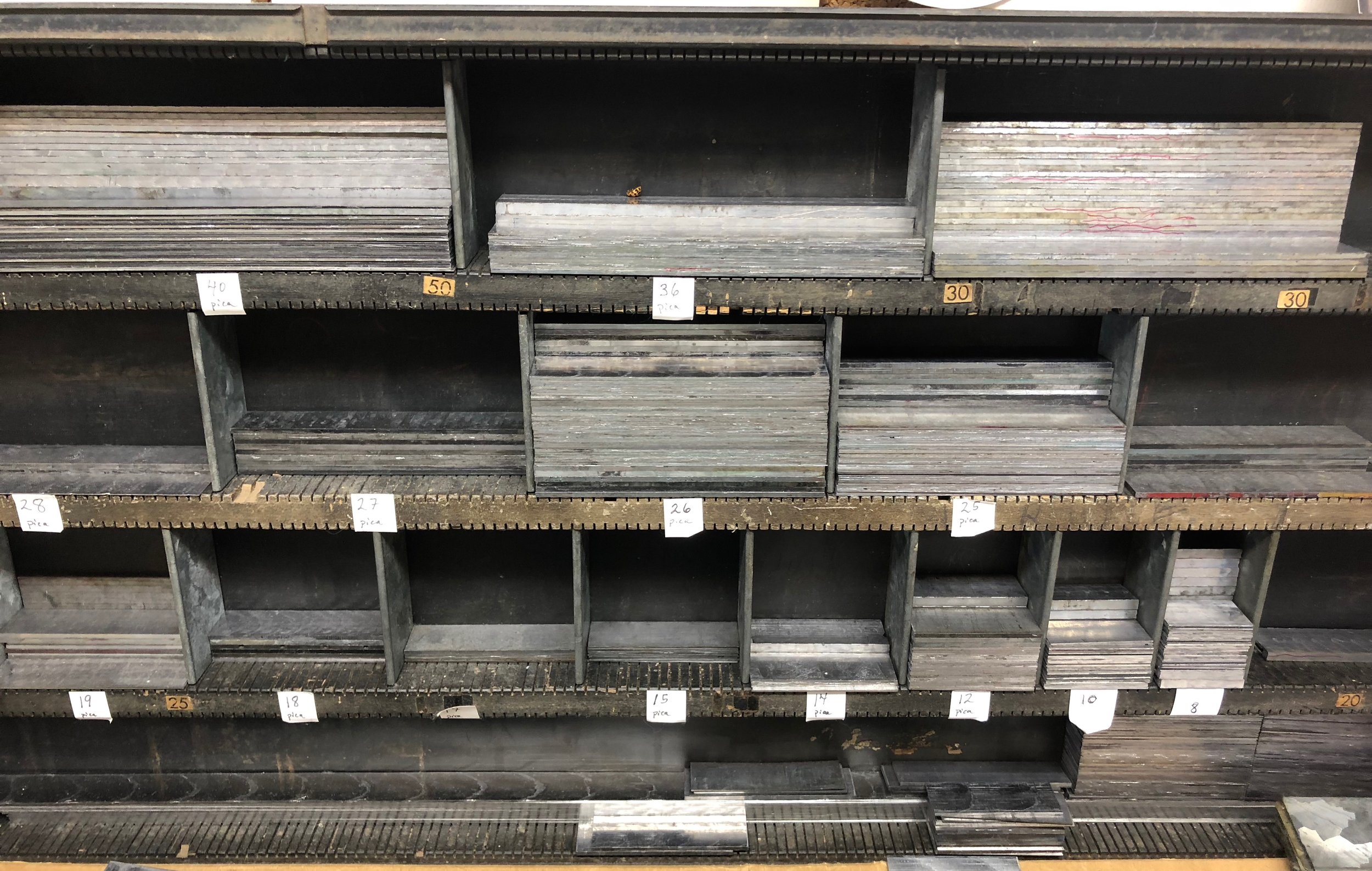
The spacing material is cast to a point-size matching the size of the type body being set ~ from tiny 6-point to giant (and heavy!) 72-point in our shop. Spacing is also cast in various standard widths, so the typesetter can put larger or smaller spaces between words, as desired. These widths range from multiples of an "em" (the square of the type body; for example, a 12-point-by-12-point square) to "thins" (brass and copper slivers to fill in the smallest gaps in a line).

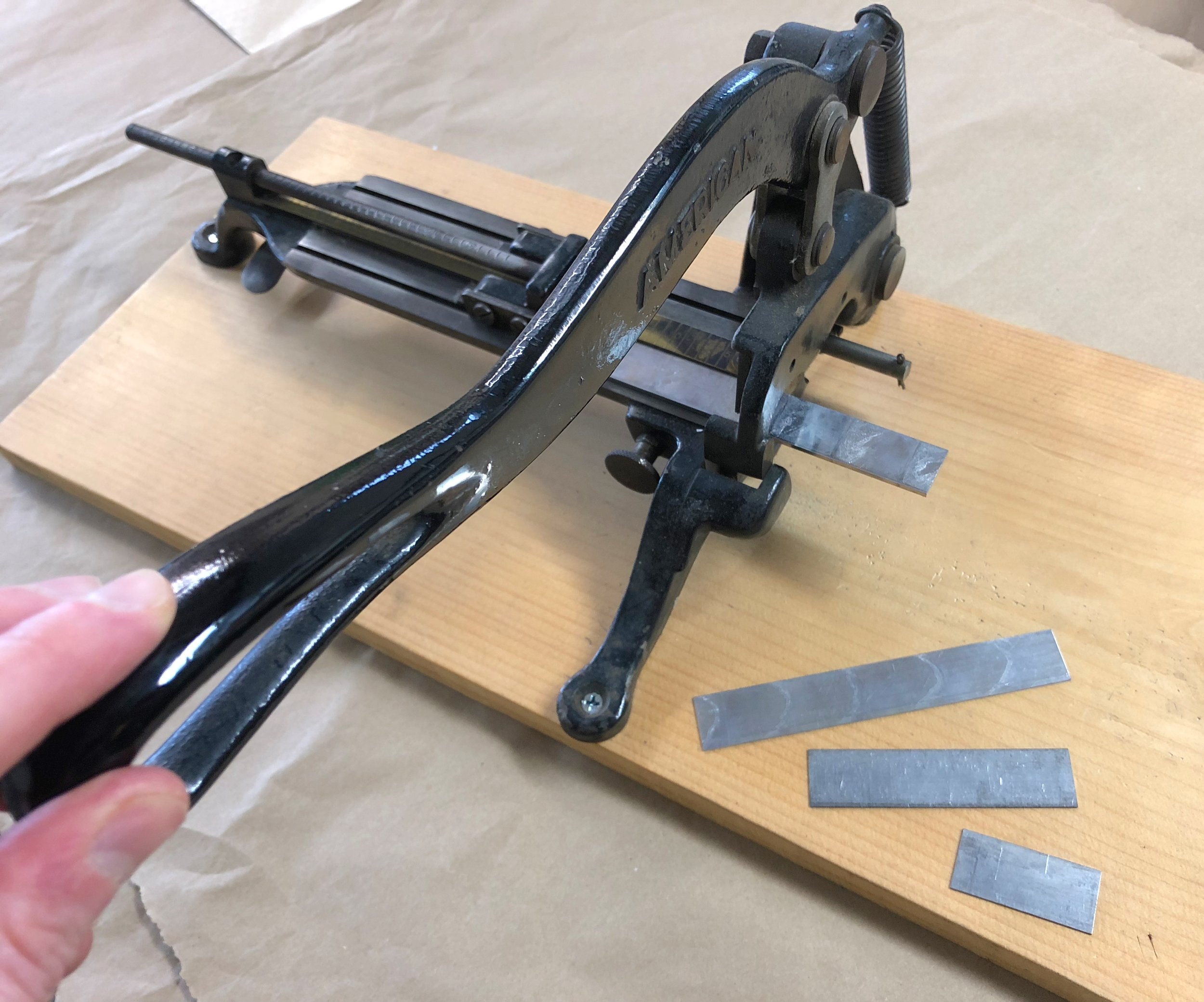
In addition to letter spacing, strips of metal also need to be correctly sized and set between lines of type ("leading" or "linespacing"). This strip material comes in various widths and can be cut to various lengths (also called "slugs") ~ all tailored to ordering the printed page. 

The whole point of spacing is to surround the letters and lines as snug as possible. A loose letter can print unevenly, and even become damaged. 

The final step before printing is to surround the whole forme (the letters and spaces) with "furniture" ~ blocks of wood (sometimes metal) in various standard sizes that fill out the chase. Two quoins (a kind of lock) are placed in as well, and when turned with a key the quoins tighten everything together. 

When the forme to be printed is locked up tight, I can lift it off the table and into the press without fear of everything collapsing onto the floor.

IMG_7134.jpg

The printer:

Emily, holding a tightly locked forme in mid-air. If the spacing material has been set correctly, the whole thing can be transferred easily to the printing press. If it has NOT been set correctly... well.. catastrophe can ensue. 

IMG_4595.JPG

The printed page:

Now, when you see a printed page, you'll think of the actual mass and work of all that "white space"! Shown here, a leaf from Jeff Schwaner's Wind Intervals.

So, that's the story of SPACE at St Brigid Press! 

Thanks for spacing out with us for a few minutes ;-)

6 Comments

Dwelling in Possibility: Adrienne Rich, Poetry, & Printing

1 Comment

Dwelling in Possibility: Adrienne Rich, Poetry, & Printing

Dwelling in Possibility:

Adrienne Rich, Poetry, & Printing

An introduction by Emily Hancock

Adrienne Rich. Photo copyright by Robert Giard.

Adrienne Rich. Photo copyright by Robert Giard.

There are some touchstone texts that seem to be always current, always resonant with wisdom, always “present” with us, whatever the year and however much the political and/or personal landscapes may have changed. 

Many of the essays of Adrienne Rich (1929-2012) are such touchstones. I first encountered the transformative work of this American poet and essayist in graduate school, in her prose collection Blood, Bread, and Poetry, in which she declares (with Audre Lorde) that poetry is not (and poets are not) superfluous, but as necessary and nourishing as food and air to the person—the people—we might be and become. Poetry is communion and it is frontier—the meeting of the other and the self.

Jacket for St Brigid Press' edition of Adrienne Rich's essay, printed letterpress on Thai mulberry "water drops" paper.

One of Rich’s essays, “Permeable Membrane,” is this sort of text—invigorating, relentless, and charged with readiness to affect (infect?) the reader with its power and possibility. Again and again. First published in 2006, “Permeable Membrane” is a short piece capable of waking us up, of challenging our complacency, our silence, and our siloed existences.

Convinced of the inseparability of art and society, poetry and politics, Rich argues for and invokes a relational understanding of language: "Art is a way of melting out through one's own skin. 'What, who is this about?' is not the essential question. A poem is not about; it is out of and to.” As individuals and communities and a nation, we exist in a dynamic ocean of thought, culture, politics. We’re in the conversation—“root-tangled in the grit of human arrangements and relationships,” as Rich writes—whether we know it, like it, or actively participate in it or not.

Rich navigates both mystery (the “ghostly” presence and process of writing poetry) and politics (solidarity movements, dictatorship, and the American political machine) with equal subtlety, drawing from sources historical and literary to illuminate the world we find ourselves in as well as some of the choices and consequences that are laid before us. With the precision and prescience of an artist who has her finger on our pulse, Rich’s essay that was first published 12 years ago reads like it hit the newsstand this morning.

St Brigid Press' letterpress printed edition releases on March 8th—International Women's Day.

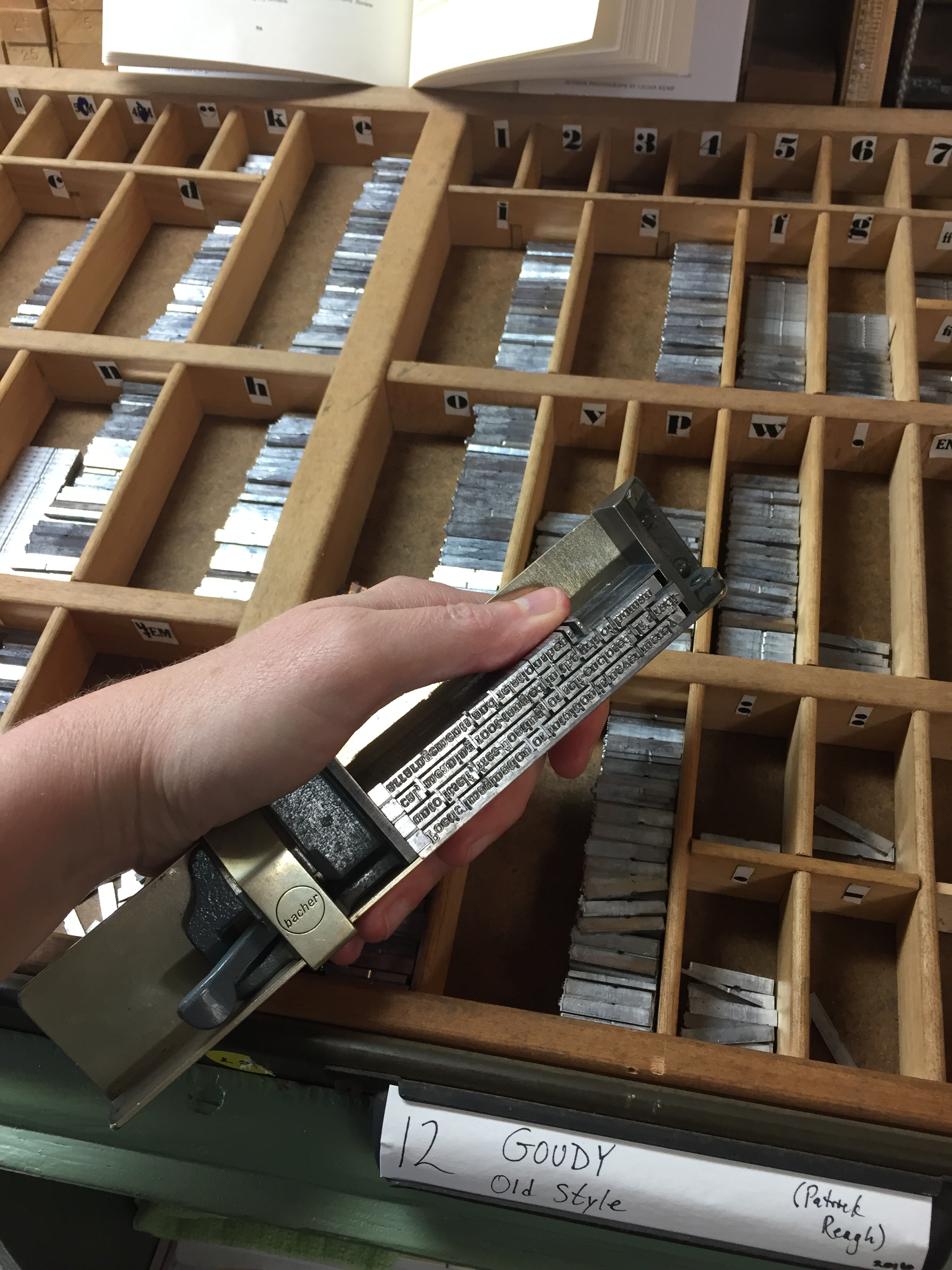
St Brigid Press' edition of "Permeable Membrane" was hand-set in Goudy Old Style type (cast by Patrick Reagh in California), printed on a hand-cranked press, and sewn by hand. 

Why print something that is still available in numerous books and anthologies? One answer is that part of the job of craft is to make new what is not; to re-new and re-connect us, from the craftperson’s hand to the receiver’s. From me to you. An energetic and artistic renewal, and a conversation, happens in this process. The poet and essayist Jane Hirshfield says, “A work of art is not a piece of fruit lifted from the tree branch: it is a ripening collaboration of artist, receiver, and world.”

Another answer is personal to me: as much as I believe in and engage with the fantastic literature that is emerging daily, I believe in and desire to offer anew the already written—works like Rich’s and Thoreau’s and King’s that for years have been leaping off pages, enlarging perspectives, and spurring creative engagement. Each time we return to these touchstones, their wisdom becomes present again, positive change for our communities becomes possible again, and we become empowered again.

My hope for offering this edition of Adrienne Rich’s “Permeable Membrane” is that you may lean with her into the conversation and perhaps join more consciously in the great current of art that is making and re-making us, the poetry that is “language intensified, intensifying our sense of possible reality.”


If you would like to order the St Brigid Press edition of "Permeable Membrane," please click HERE. Scroll down below for additional details and photos of the booklet and the process of creating it.


The booklet's technical specs:

  • Hand-set in Goudy Old Style metal types, with Phenix titling.
  • 16 pages, letterpress printed on Mohawk Superfine text paper, with Thai mulberry paper jacket.
  • Frontispiece print is a digital reproduction of an original watercolor by Nancy Maxson, commissioned specially for this publication.
  • Hand-sewn with Irish linen thread.
  • Limited edition of 190 numbered copies.
  • $28 each.

Very special thanks and appreciation goes to our friend and collaborator Nancy Maxson, who created a marvelous watercolor painting, entitled Mirror, to accompany this edition of "Permeable Membrane." The painting was digitally reproduced on fine vellum paper at Bailey Printing in Charlottesville, and serves as the frontispiece to the edition.

Thanks also to W.W. Norton & Company, Inc., for permission to reprint "Permeable Membrane."

If you'd like to read more of Adrienne Rich's prose writing, here are a few titles to get you started:

  • A Human Eye: Essays on Art in Society, 1997-2008 (the collection in which "Permeable Membrane" appears)
  • Arts of the Possible: Essays and Conversations (which collects Rich's earlier essay, "Blood, Bread, and Poetry")
  • What Is Found There: Notebooks on Poetry and Politics

Some photos of "the making of" our edition of "Permeable Membrane": click the images to see a larger photo and accompanying text.

1 Comment

Walking into Winter

8 Comments

Walking into Winter

One of the greatest gifts my parents and grandparents gave to me as a girl was the gift of walking. Of taking strolls along sandy roads at dusk, watching bats and stars appear. And hours-long rambles through rolling fields and woodlands—ears tuned to the drum of woodpeckers, eyes following threads of light among stands of hardwoods or pine. These walks wove the senses, and patterned the language that would eventually make poems from such experience. 

One of these poems is “Walking into Winter.” Included in my forthcoming book, The Open Gate: New & Selected Poems, it seemed a fitting piece to also offer to you all now, as the late November days begin to darken early and the last wild seeds are being cast to the wind. It’s a time of letting go, and of gathering in. 

Below, you can read “Walking into Winter,” listen to an audio clip as I read the poem aloud, and watch a brief movie of butterfly-weed pods opening in our field. As we journey into this winter season, may we each carry light and warmth within, tending the seeds that will sprout again come spring.


Listen as the author reads her poem:

Walking into Winter
Emily Hancock

Watch butterfly weed seeds in the breezy field at St Brigid Press. This native species of milkweed is slowly expanding on our land, providing food for insects.

If  you are in the area, please join us for the official book launch this coming Sunday, December 3rd, at 2pm, at Black Swan Books (Staunton, Va.). We'll have light refreshments, read some poems, and celebrate together.

If you can't attend, you may pre-order the book on our website here: 

8 Comments

Printing, Circa 1776

4 Comments

Printing, Circa 1776

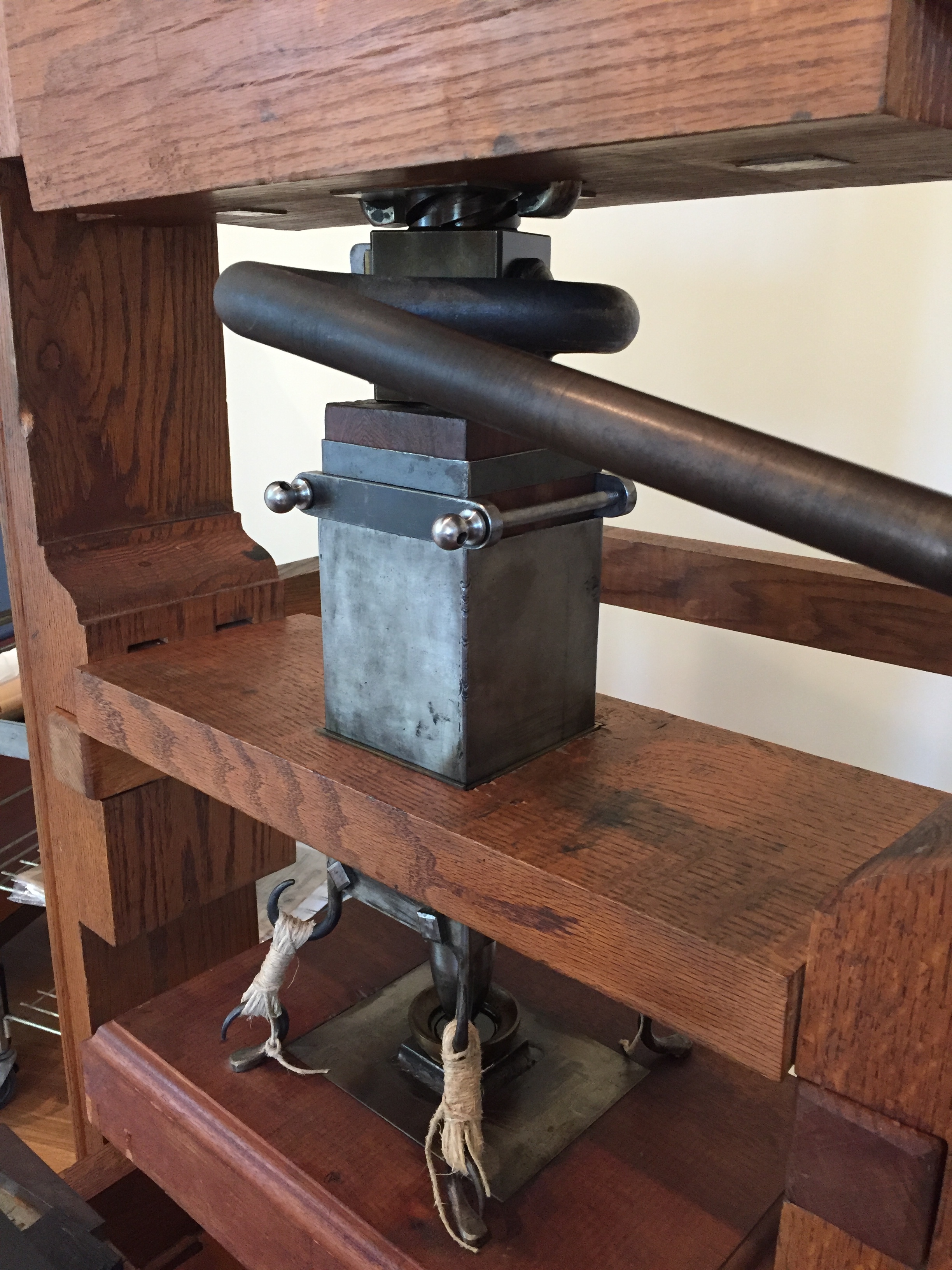
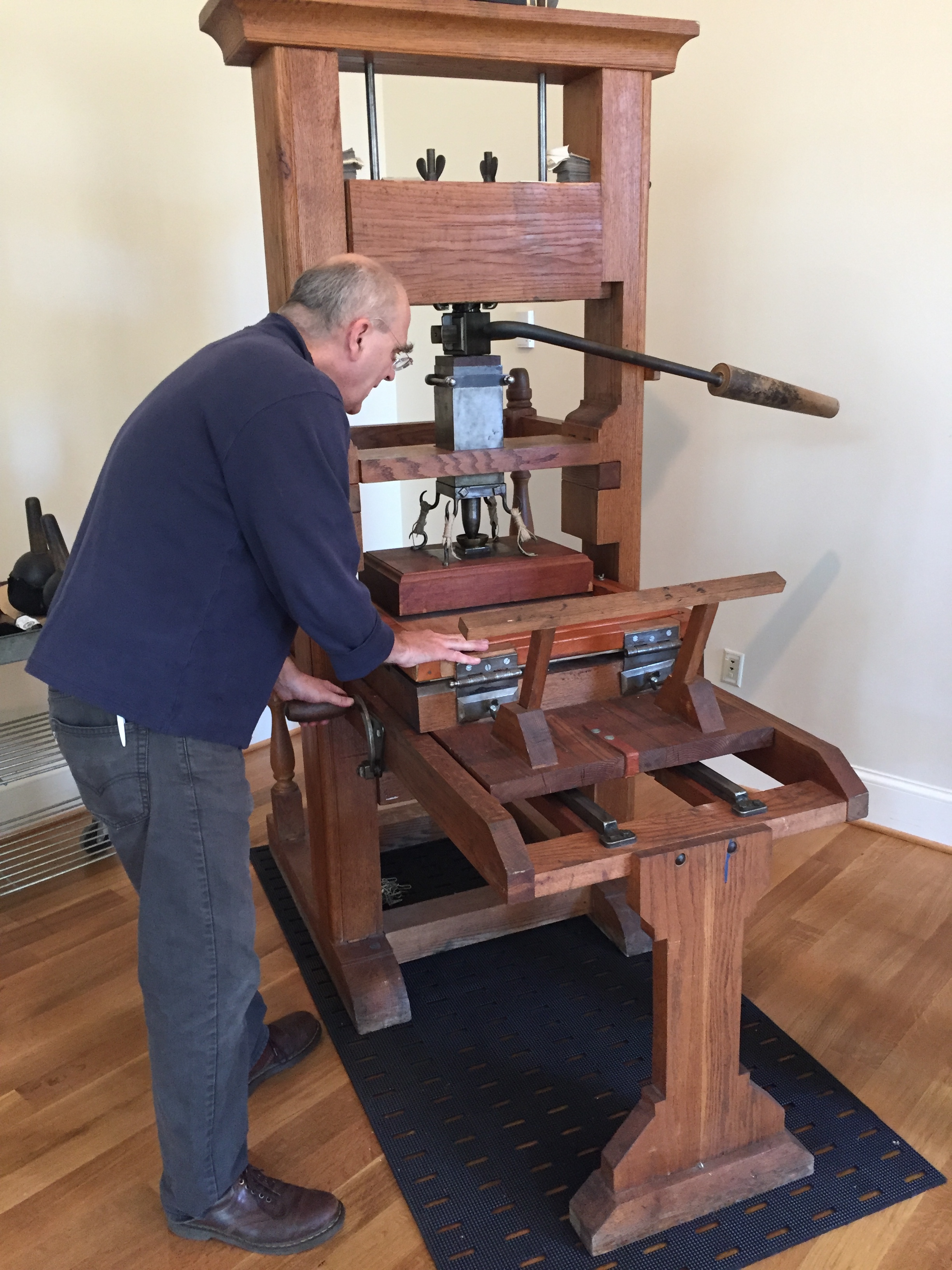
Last week I had the pleasure of attending a demonstration of the University of Virginia’s replica wooden common press:

The common press at the University of Virginia.

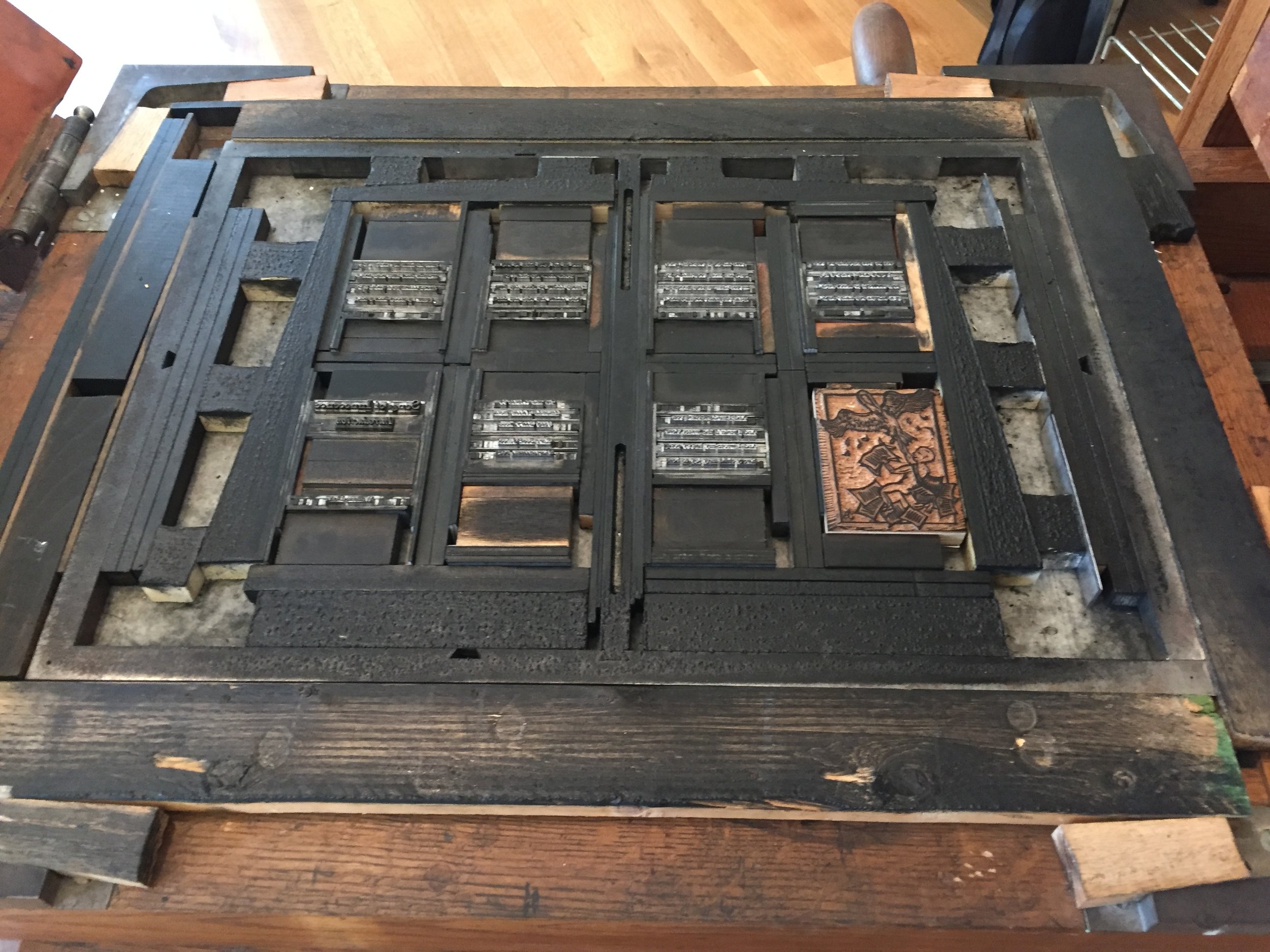
The earliest printing presses in Europe, from the time of Johannes Gutenberg and his associates Peter Schöffer and Johann Fust, were constructed primarily out of wood. Using similar technologies as contemporary agricultural presses (for winemaking, papermaking, olive oil extraction, and linen pressing), these 15th century printing presses used a wooden screw to lower a heavy wooden plate onto a bed holding cast metal type. The screw was turned by pulling a lever, or "bar" (also called the Devil's Tail ;-). Wooden common presses remained in use until the early 1800s, when iron handpresses and new types of cylinder and platen presses were developed.

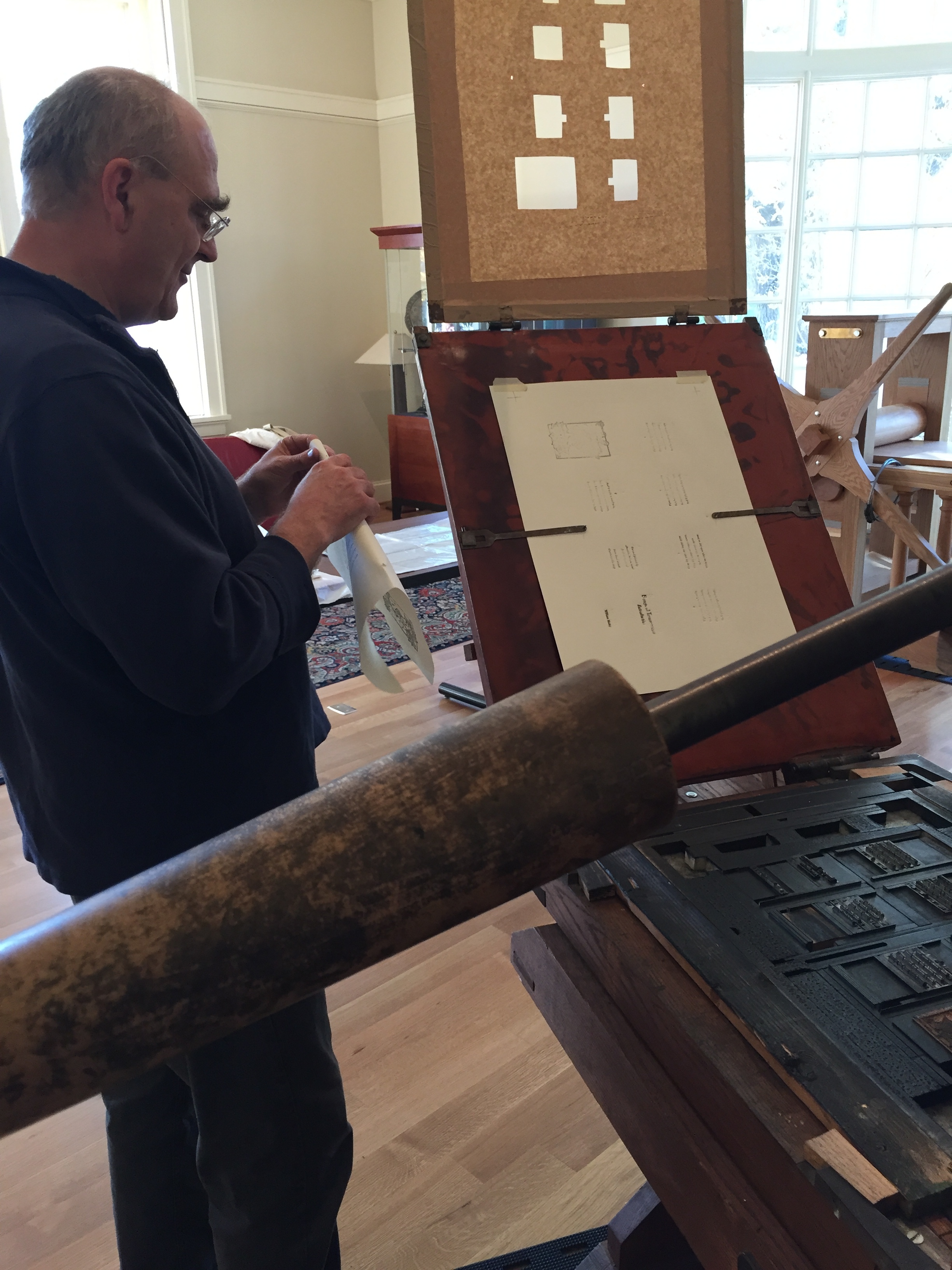
Josef Beery demonstrating UVA's wooden common press.

UVA’s common press was constructed in the 1970s, as a result of research at the Smithsonian Institution on the "Franklin" common press. It is on display in the Harrison Small Building’s South Gallery. Though the bar is kept locked for safety most of the time, you can still walk right up to the press and examine much of its design and function. Occasionally, folks associated with UVA’s Rare Book School offer working demonstrations.

The session I attended last week was lead by Josef Beery ~ book designer, letterpress printer, woodcut artist, papermaker, educator, and cofounder of the Virginia Arts of the Book Center in Charlottesville. A practitioner of the printing arts for many decades, Beery is a perfect guide to the history and use of this fascinating press.

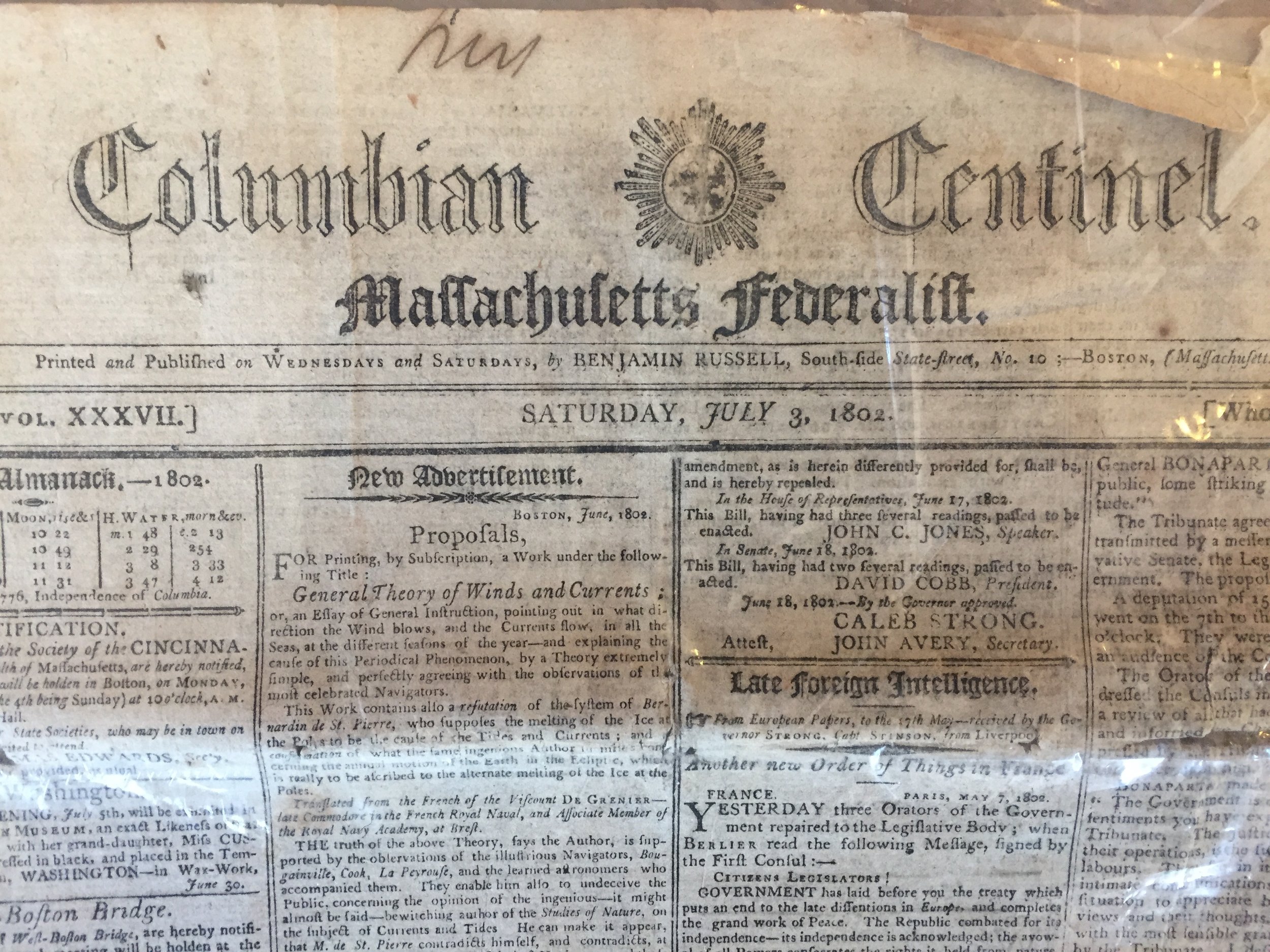
When you finish marveling at the wooden common press, head downstairs to the Albert & Shirley Small Special Collections Library. A highlight of the Library’s wonderful collection of rare books and manuscripts (including significant holdings in the history of books and printing) is a rare first-printing of the Declaration of Independence, printed the night of July 4th by John Dunlap. It’s on permanent display along with many other early printings of the document (the world’s most comprehensive collection of these) near the Library’s entrance.

If you're ever in the vicinity of Charlottesville, Virginia, don't miss this chance to see the common press, the Declaration of Independence, and many other artifacts of printing-circa-1776!

* For more information on early American printing history, visit the American Printing History Association (APHA) website.

* To follow the fascinating process of reconstructing a wooden common press, visit Seth Gottlieb's blog post series at APHA.

* Watch Josef Beery demonstrating the traditional method of using ink balls to apply ink to the type on a common press:

Josef Beery using traditional ink balls to apply ink to the type on the University of Virginia's replica wooden common press.

4 Comments

Simple Binding for Single-Section Booklets

2 Comments

Simple Binding for Single-Section Booklets

Sometimes a little bit of extra effort gives a lot of extra elegance to a project. Such is the case with this style of binding a single-signature booklet to a jacket-with-a-spine. 

I learned this from the fabulous Myrna Keliher of Expedition Press, and she learned it from the wonderful printers and binders at Stern and Faye

Below is a step-by-step outline of the binding style. But first, here's a two-minute video I took in my shop, showing the basics of affixing the pamphlet-sewn booklet to the scored-and-printed jacket:

THE BASICS: 

  • Sew your single-section booklet. In my video example, it's a five-hole pamphlet stitch pattern.
  • Prepare the jacket you wish to encase your booklet in, printing any text on the cover, and scoring the paper stock where you want the folds to be. In my video example, I determined how wide I wanted the spine to be (a quarter-inch) and how wide I wanted the flaps to be (about 3 inches), then made the scores and folds. (I use an inexpensive Martha Stewart brand "scoring board" to make accurate creases.)
  • With a narrow brush (quarter-inch or so), run a thin line of glue along the back of the last sheet (your booklet's endpaper), about a half-inch in from the sewn edge.
  • Position the booklet, back (glued) page down, on the inside back jacket cover, and press gently to adhere the page to the jacket.
  • Fold in any flaps, and close the jacket over the booklet.
  • Voila! A sweet, simple, smart-looking book!

All the best to you in your own creative adventures!

St Brigid Press

*** For more information about the book shown above, A Handbook for Creative Protest: Thoreau, Gandhi, & King in Conversation, please see our post HERE.

2 Comments

Excerpts from "A Handbook for Creative Protest"

3 Comments

Excerpts from "A Handbook for Creative Protest"

Here are three short excerpts from the writings of Henry David Thoreau, Mohandas K. Gandhi, and Martin Luther King, Jr., plus the book's Preface, as published in A Handbook for Creative Protest: Thoreau, Gandhi, & King in Conversation. Read by Emily Hancock.

From "Civil Disobedience" by H. D. Thoreau (1849)
Read by Emily Hancock (1 min 17 sec)
From Mahatma Gandhi's writing in "Indian Opinion" (1907)
Read by Emily Hancock (50 sec)
From "Letter from Birmingham Jail" by M. L. King (1963)
Read by Emily Hancock (1 min)
The Preface to "A Handbook...," by E. Hancock
Read by Emily Hancock (4 min 32 sec)

3 Comments